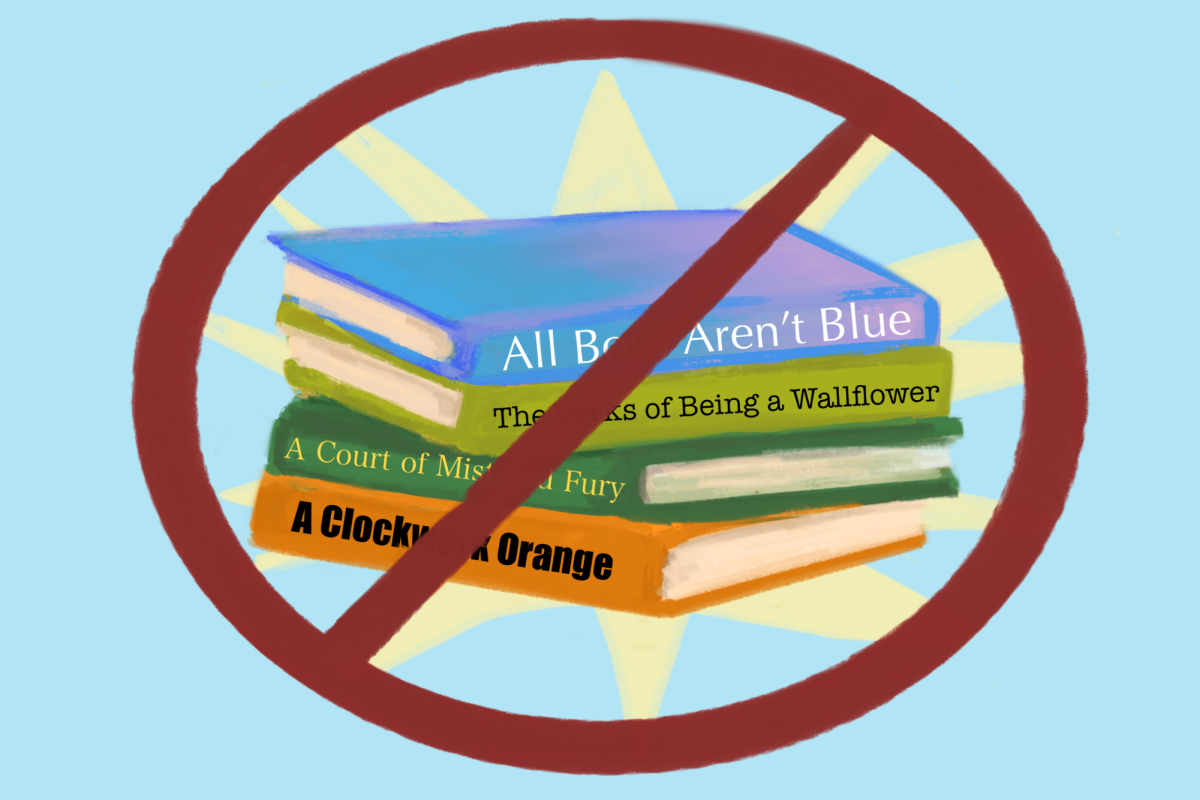
The Urbana Free Library’s annual Banned Books Week has returned in enthusiastic fashion, with new activities set to engage people of all ages and reading levels. Running from Oct. 5-11, the library hopes to continue its goal of protecting and bringing awareness to the values of free speech and expression.
According to newly released data by the American Library Association, book censorship attempts are now commonly started by organized groups, which include elected officials, board members and administrators.
However, these attempts have also gone underreported, and legislative restrictions are focusing on targeting “controversial themes,” which include references to LGBTQ+ communities and gender ideology, references to sexual violence and books about racism with characters of color or explorations of critical race theory.
Joel Spencer, a patron services librarian at the Urbana Free Library, says it’s important for the community to come together and challenge these ideas of censorship.
“We need to celebrate our ability to learn from each other,” Spencer said. “The library is here to provide access to information for everyone, and that’s as important as it’s ever been.”
Get The Daily Illini in your inbox!
The events are meant to be participatory, including a jigsaw puzzle race themed around banned books, with refreshments and snacks. Spencer hopes events like this will bring awareness to the community and can lead to greater impact and understanding beyond the library walls.
“I’m vehemently against censorship, and books being banned is a dangerous concept,” Spencer said. “We need to celebrate reading and the idea of being challenged.”
In the 2024-25 school year, PEN America noted 6,780 instances of book bans amassing nearly 4,000 titles. This is across over 23 states and 87 school districts across the country.
Claire Stewart, the University’s dean of libraries, says these bans are similar to the McCarthy era, showing how people can be targeted for speaking out about certain ideas.
“This type of banning is not new, but the speed and volume at which we are seeing book challenges is unprecedented, and I would attribute that to the type of information system we have now,” Stewart said. “The internet and social media have algorithms that are designed to tap into people’s emotions, and with stronger reactions to negative things, those are the types of messages that are getting amplified.”
Stewart also believes there is never a situation where it’s okay to ban books and describes the importance of learning from our past mistakes by having access to and knowledge about them.
According to Stewart, the best way to keep students engaged and aware within the community on past and current events is to create spaces where people can be in each other’s spaces and simply talk.
“We have the advantage of faculty who are still very highly trusted by society at large, and the trick is to create those environments where kids can get comfortable and then start to ask questions, working up towards more difficult subjects,” Stewart said.
Lev Friedman, freshman in Division of Exploratory Studies, says he’s never felt like he couldn’t express his opinions on campus and thinks it’s any student’s right to feel that way.
“I don’t really think there’s any situation where books should be banned or inaccessible to students,” Friedman said. “People should be able to think and learn what they want without any sort of institution stopping them.”