The Hip Hop Convene came to a close Friday evening under dimmed lights and amplified voices, ending its run with a powerful focus on women in the culture.
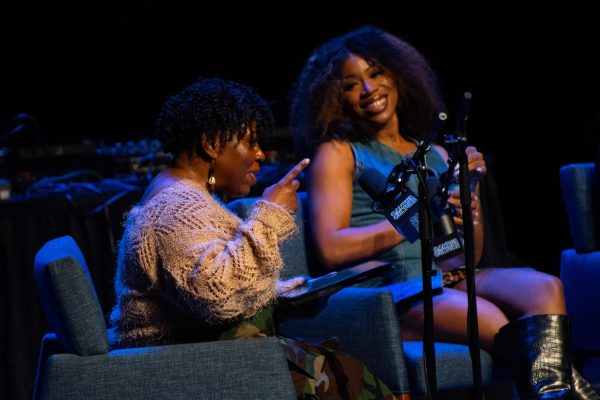
Her Voice, Her Rhythm: Women Shaping The Culture took place at the Krannert Center for the Performing Arts’ Colwell Playhouse. Featuring women in hip-hop, Klevah and TRUTH of Mother Nature, Asha Omega and Suzi Analogue, the event combined a panel discussion with live performances by each guest.
As the lights dimmed, Lamont Holden, professor in FAA and host of the Campus Culture podcast, stepped onto the stage and reminded the audience they weren’t just spectators. The evening’s discussion would be audio-recorded for the podcast, turning the crowd’s energy and responses into part of the episode itself.
With that, he welcomed Carolyn Randolph-Kato, director of engaged research in FAA, to moderate the panel. As a hip-hop head, cultural theorist and spoken word artist, Randolph-Kato has spent years training and engaging with hip-hop.
“To be able to sit down with women who have powerful voices, and really be able to speak to the kind of thought that goes behind hip-hop, not just as the final form or product that we share, but an actual whole culture-making system, for me was really a feeling,” Randolph-Kato said. “We would not have hip-hop without women.”
Get The Daily Illini in your inbox!
During the discussion panel, the profound impact of hip-hop was explored on personal and societal levels.
Analogue attributed hip-hop’s success to Sylvia Robinson, honoring the “mother of hip-hop” for laying the groundwork that allowed the genre to flourish. Analogue shared how hip-hop is her heritage, a culture shaped by people who innovate, create and carve a path even when none seems possible.
That spirit of resilience echoed throughout the panel. Mother Nature, both University alumni, reflected on how they first met through W.O.R.D. and traced the origins of their collaboration during the panel. According to TRUTH, the pair emphasizes valuing their work without letting mental health or pressures diminish it. Klevah shared how hip-hop provided a voice of survival and a sense of
community amid personal challenges like depression and family incarceration.
Omega shared how the universe is consistently showing her that when she speaks, people feel heard.
“My final raps are my journal; I put my spells, affirmations, stuff I don’t want to have anymore and stuff I want to come to fruition in there,” Omega said. “I think that people just need that realism, vulnerability. I needed that escape.”
The panelists agreed that women have long been central to community building, cultural preservation and boundary-pushing innovation, shaping hip-hop far beyond the spotlight.
Those values carried over from conversation to performance as each artist took the stage for her set.
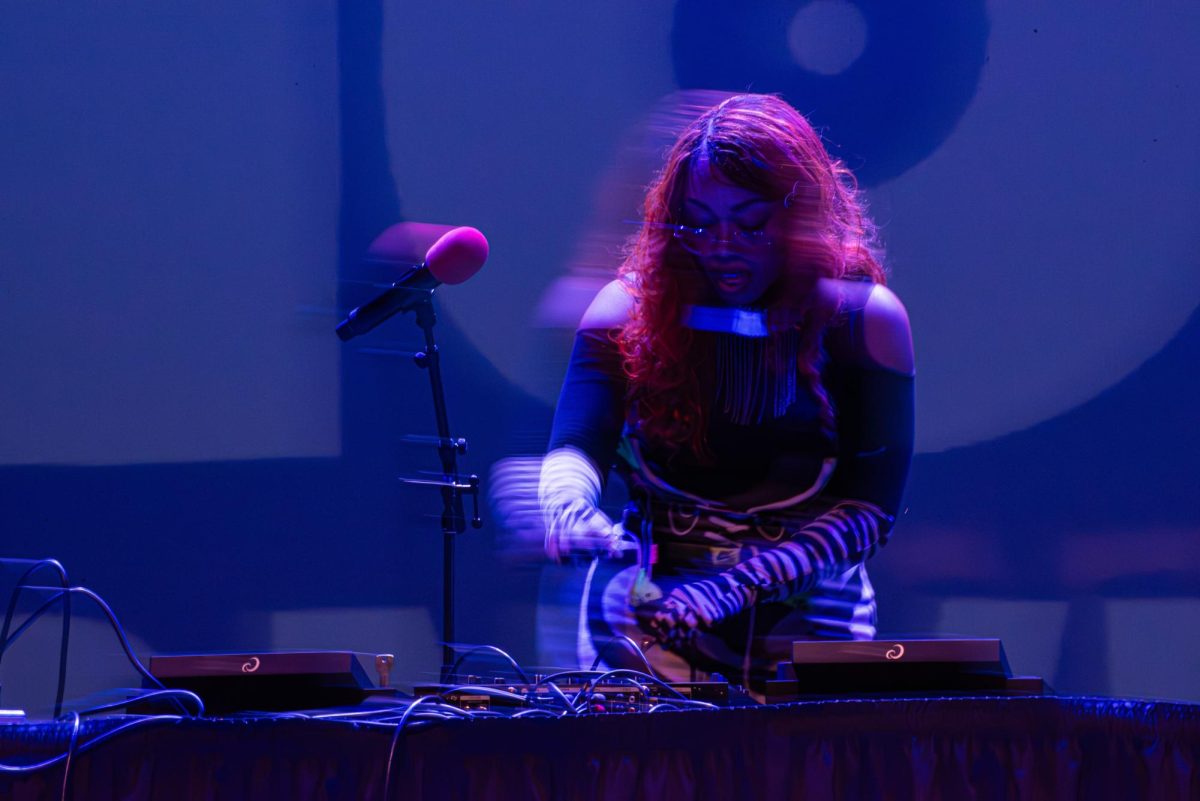
Analogue was the first to take the stage, blending live DJ production with vocals and a cover rendition of Donna Summer’s “I Feel Love.” Fluorescent, multicolored lights pulsed across the audience as she moved in sync with the music. Analogue closed her set with a high-energy medley, weaving in tracks like “DARE” by Gorillaz and “TGIF” by Glorilla.
The energy carried into the next set with Omega guiding the crowd through an affirmation, saying, “I know who I am and I know who I ain’t. I don’t know where it came ’cause I stick to the plan.”
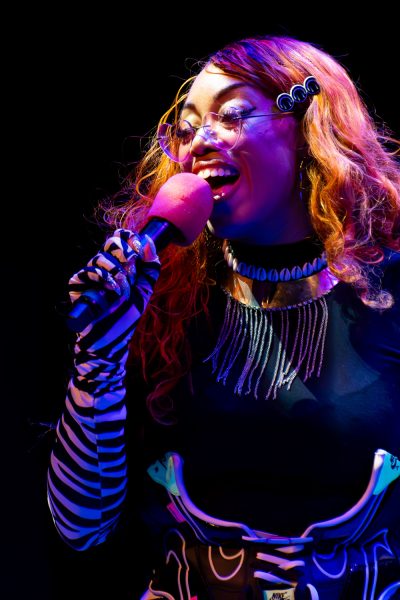
Performing songs like “GOOD MOURNING” and “energy,” Omega infuses inspirational themes within her lyrics, igniting hope and potential within her listeners. She closed her set with “Who I Am,” intertwining the affirmation from earlier and turning the lyrics into a call-and-response that had the crowd singing back with her.
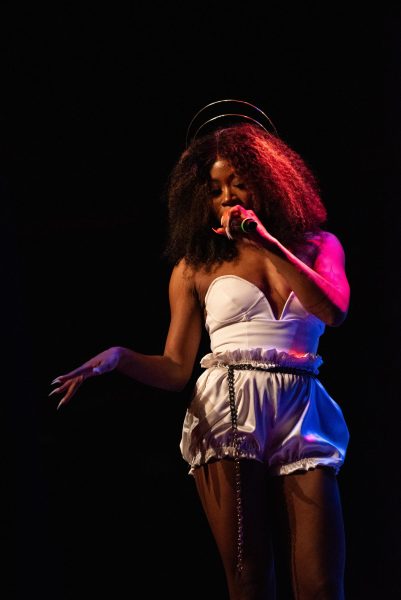
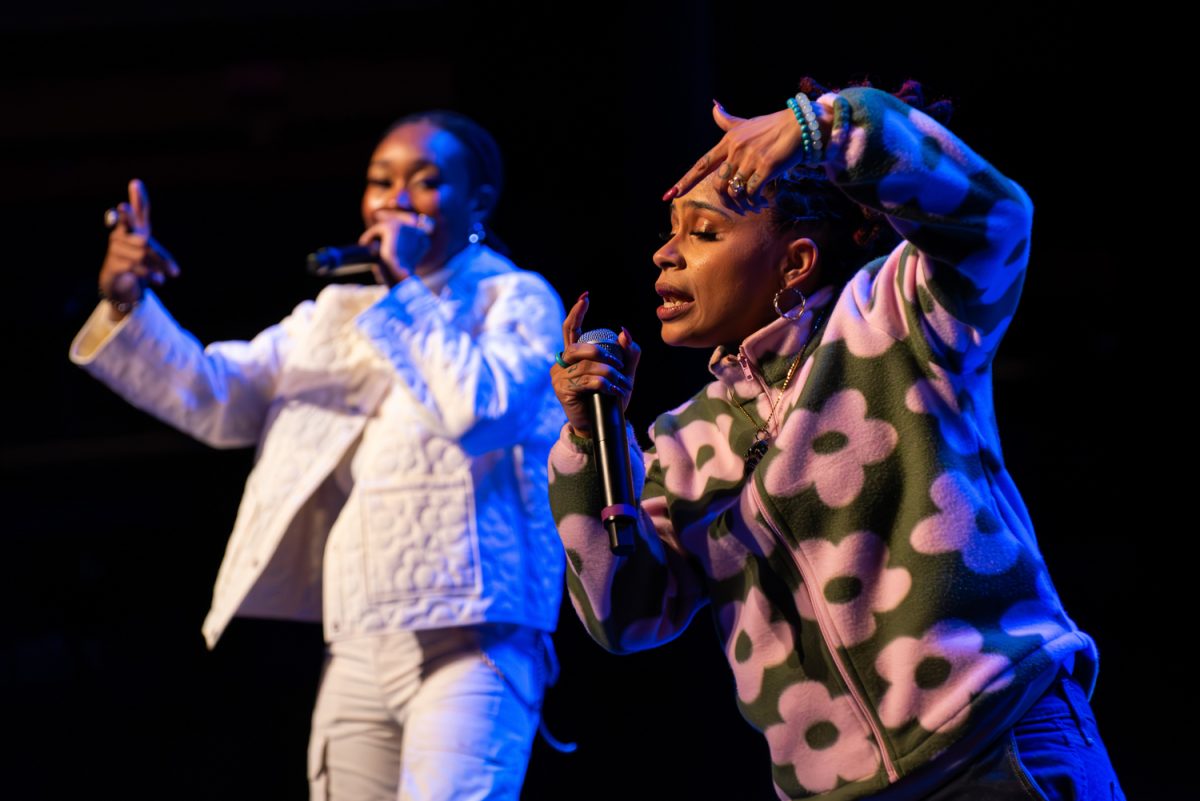
Following Omega’s set, Mother Nature took the stage as the evening’s final performers, bringing their own energy and story to the audience. Before performing, TRUTH fired up the crowd with a bold instruction to scream, “F— ICE,” a declaration that set the tone for their set.
Klevah then guided the crowd through the “Mother Nature experience,” performing “Rotationz” and filling the space with the dynamic hip-hop sound that has become their hallmark. The duo was accompanied by a trumpet and saxophone player, melodies weaving along with the rappers through the performances of “Sequoia Treez” and “Crystal Cadillac.” On “Antidote” and “Auraz,” the two traded verses seamlessly, flowing back and forth one another with effortless rhythm.
Keeping with the chill, carefree atmosphere vibe they set off, the duo closed their set with “Do Sumn,” inviting the audience to get up on their feet and feel the music.
As the final notes faded, the audience had witnessed a night of performances that emphasized both the artistry and influence of women in hip-hop. Each act brought their own unique charm to showcase their side of hip-hop: Analogue with techno-house production, Omega with lyrical motivation and Mother Nature spitting bars about real-world truths and reality.
From panels examining cultural influence and community engagement to live sets that blended rap, DJing and live instrumentation, the Hip Hop Convene offered both insight and entertainment.
Jessica Ji, freshman in FAA, has attended all the convene’s events to better understand and educate herself as a hip-hop dancer.
“I think it is extremely helpful to have the accessibility to education outside of class; the fact that we could just come to the events and the tickets were free helped me understand various perspectives,” Ji said. “I got exposed and was able to understand people who are older and have been in this industry for longer.”
According to organizers, the convene’s mission is to create a community-wide gathering celebrating hip-hop through performance, learning, creativity and shared experience. Community involvement from KCPA, Spurlock Museum, Illinois Soul, Dr. William Patterson Hip Hop Innovation Center, Campus Culture, Gallery Art Bar, the College of Fine & Applied Arts, The Grainger College of Engineering, and Illinois Arts Council all contributed to the event in an effort to keep hip-hop culture alive.
The convene is dedicated to the memory of William Patterson, co-founder and co-director of the Hip Hop Innovation Center, continuing his legacy of amplifying local and emerging voices. Through that commitment, the events honor and reflect the genre’s constant evolution and ability to push past barriers.