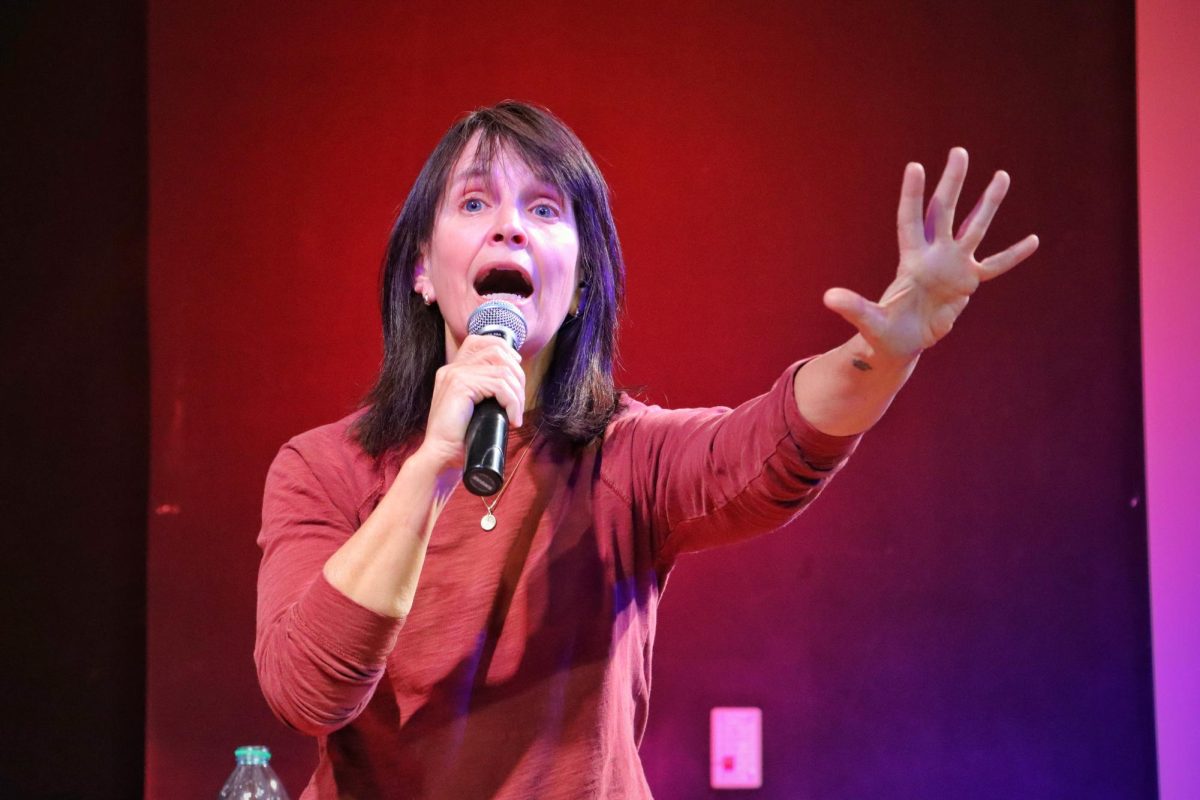
On Monday, the Illini Union welcomed actress Marissa Bode for a lecture on her experience advocating for accessibility and her career in Hollywood.
The event was supported by the Craig H. Neilsen Foundation, an organization committed to supporting both scientific research and programs to improve the quality of life for those living with spinal cord injuries. The event was sponsored by Disability Resources and Educational Services, the Illini Union Board, the Gender & Sexuality Resource Center and the Women’s Resources Center.
Before the event, attendees dressed in shades of pink and green filled the Union as they eagerly awaited Bode’s arrival. In one corner of the room, a young girl sat beside her Nessarose figurine doll.
Bode began the event by sharing how at age 11, she was paralyzed from the waist down after a car accident — a moment she said ultimately pushed her to advocate for accessibility rather than hold her back.
“We can never make space to learn and grow if we don’t take risks,” Bode said. “When it seems the fight is bigger than you, know you have a voice.”
Get The Daily Illini in your inbox!
Despite the challenges she faced, Bode said she didn’t let the fear of the unknown stop her from pursuing her dreams. She later went on to graduate from the American Musical and Dramatic Academy, where she developed a passion for not only acting, but creating short films as well. In 2021, Bode wrote, directed and produced her first short film titled “You’re Adorable.”
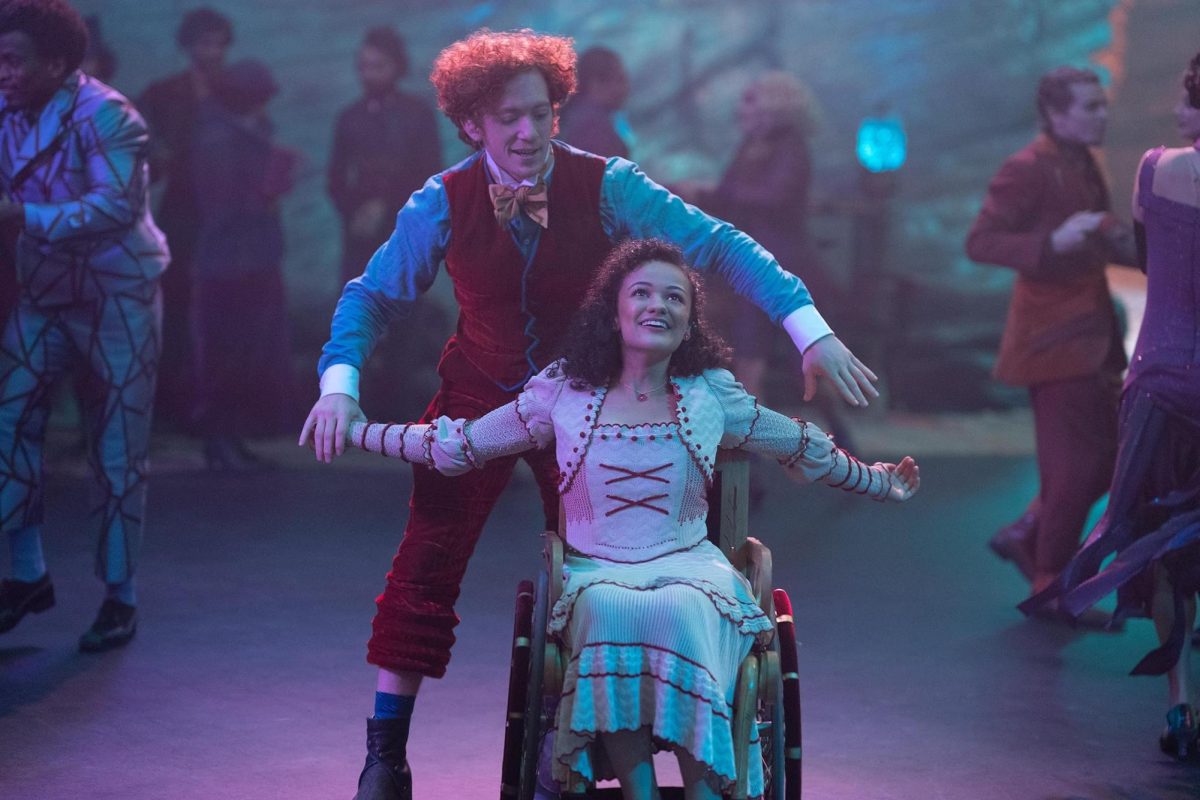
Bode’s career took a turn in 2022, when she was cast as Nessarose in the 2024 film adaptation of “Wicked.” In this role, Bode made history as the first authentically disabled actor to play Nessarose — a role traditionally played by non-disabled actors.
Audience members had the opportunity to submit questions prior to the event for the Q&A portion of the lecture. Questions ranged from Bode’s journey with her disability in the acting industry to her time on set playing the character of Nessarose.
Bode shared moments from her experience filming “Wicked” that she said remain etched in her heart. She recalled meeting Cesily Collette Taylor, who played a young Nessarose in the movie, receiving a bouquet of flowers from Ariana Grande with a notecard that said “Welcome to Oz” and feeling supported enough to be her authentic self on set.
Brendan Michael, sophomore in LAS, recognized Bode’s talent on the big screen as well as her ability to advocate in such a high-profile role.
“To hear about her experience in such a big movie like ‘Wicked’ was inspiring,” Michael said. “It was a wonderful experience and she was a wonderful speaker.”
Stephanie Wheeler, head coach of the University women’s wheelchair basketball team, was also in attendance and said that exposure to lectures like these is extremely important to have on a college campus.
“It has a social impact,” Wheeler said. “(Bode is) really changing how disability is seen and presented. … Bringing her here to the University, where we had such an impact on disability at large, is huge.”
The University is regarded as one of the most disability-friendly campuses in the nation, with support services like DRES providing accessibility for students on campus.
“When we make spaces where everyone can have access, no matter what the space is — whether it’s an acting set or college campus — it makes it inclusive for everyone, and makes it a space where everyone feels like they’re welcome and they belong,” Wheeler said.
The audience applauded following Bode’s speech and Q&A session. Throughout the night, Bode fostered a positive atmosphere and discussed issues that enlightened the audience.
Michael said he felt inspired by Bode’s activism for the disabled community, adding that the experience itself was meaningful.
“Whether or not you’re affected by (the injustices in the system), one should try to change what you can and advocate where you can,” Michael said.
Even after having a successful acting career, Bode said she still experiences inaccessibility every day. Bode encouraged attendees to advocate for inclusive spaces and said that people shouldn’t wait for a disabled person to speak out to take action.
“The truth is, the real odds I’ve defied are inaccessibility, which you shouldn’t have to face in the first place,” Bode said. “Disability isn’t inherently a bad thing; it’s not a life sentence.”