Rating: 9/10
In the world of “Project Hail Mary,” humanity looks down the barrel of a crawling, unstoppable threat to its planet and way of life. As the world grows cold one day at a time, the people play ostrich, and Earth is left to watch as an alien microorganism threatens to blot out the sun.
And while it differs on the specifics, Andy Weir’s 2021 novel of the same name does offer us an awfully pertinent question: What can you do when the world is ending? According to scientist-turned-astronaut Ryland Grace, all you can do is follow the light.
Directed by “Spider-Man: Into the Spider-Verse” and “Spider-Man: Across the Spider-Verse” shepherds Phil Lord and Christopher Miller, “Project Hail Mary” is the latest in a line of humanistic sci-fi epics owing their roots to works like “Contact” or “Ad Astra.” What makes “Project Hail Mary” so distinct is a rarity today, the film’s unshakeable belief in the human spirit.
Get The Daily Illini in your inbox!
Weir’s fiction has always worn its heart on its sleeve, see “The Martian,” but the goofy sappiness of his source novel is so all-encompassing that it’s almost impossible to rebuke. At a point where deflation and self-effacement have become the standard for any big-budget Hollywood effort, “Project Hail Mary” is an unyielding promise that no matter what, we will persist.
As Grace journeys into darkness on the shred of hope that he might save the world, he becomes the audience’s hope for a brighter future — and maybe the most winning protagonist of the decade. Everyman Ryan Gosling brings a wonderful depth to the character, taking Grace from his most defeated to his most triumphant without losing an ounce of relatability.
The film derives much of its charm from the Hollywood multitool that is Gosling, but he meets his match in the deeply lovable Rocky, puppeteered and eventually voiced by James Ortiz. Rocky is Grace’s only companion on his journey, an alien crab-puppy made out of rocks who matches wits with Grace as they find a common mission to save the dimming sun.
Rocky is arguably the star of the film, stealing the spotlight scene after scene by bringing chaotic physical comedy to the eerie stillness of outer space. Gosling quite literally finds chemistry with a rock, and their science-bro dynamic is infinitely charming.
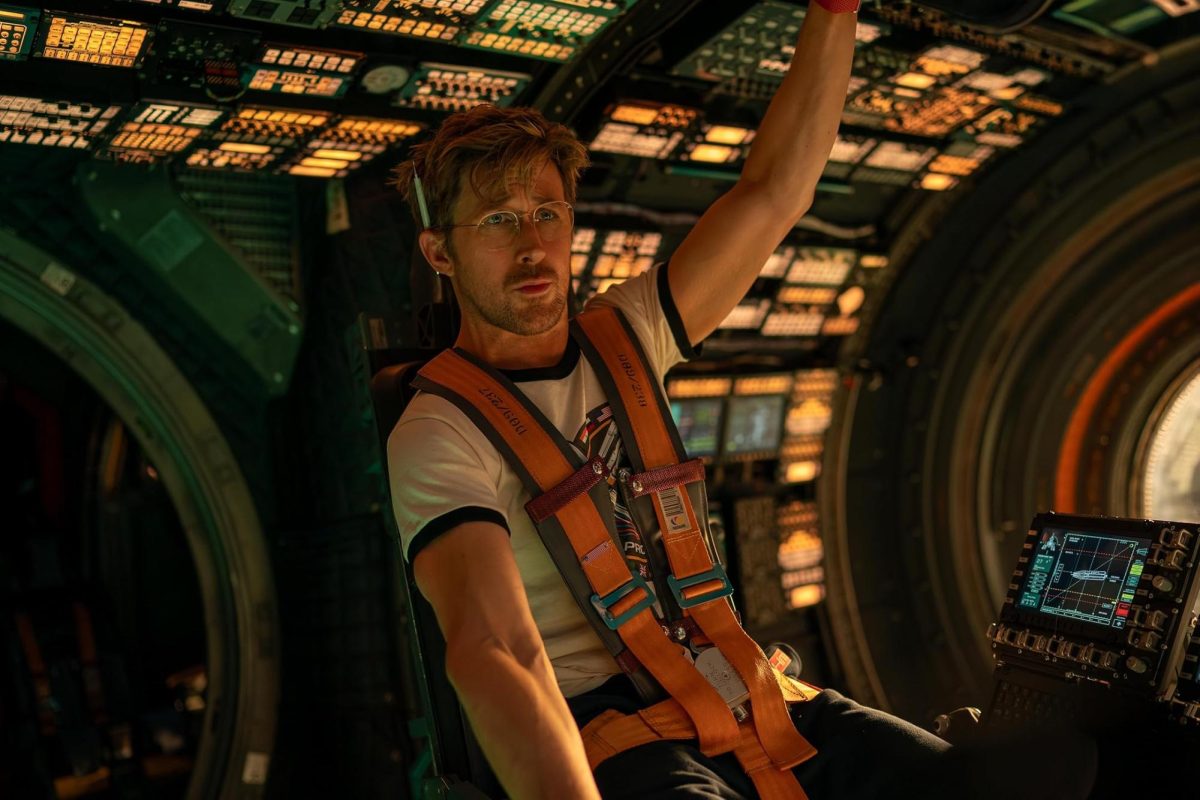
This levity is reflected by the visual feast that cinematographer Greig Fraser brings to the table, making a nearly two-hour-long argument that space is more than darkness. From the retro-futurist interior of the titular spacecraft to the swirling greens and reds of a distant star system, “Project Hail Mary” is as visually resplendent as the sci-fi genre has ever been. Color and light are their own world within this movie, projecting a beautiful and unknowable danger while embodying hope in its purest visual form.
Composer Daniel Pemberton’s score is inextricable from the film’s imagery, and the “Spider-Verse” maestro’s warbly strings are crucial to some of its most memorable sequences. In tones ranging from “afterschool special” to “life-threatening catastrophe,” Pemberton gives a metronome to Grace and Rocky’s journey, both deftly utilizing the film’s many motifs from minute to minute.
Serving as something of an intermission to “Project Hail Mary’s” developing narrative is a short handful of flashbacks, appropriately scattered throughout the film when it’s time for Gosling and the audience to reflect on their circumstances. With an unusually strong cast including Sandra Hüller and Lionel Boyce, these interludes are a reminder of the human brainpower that goes into such towering efforts. Although they offer a nice breather from the frantic sci-fi happenings aboard the Hail Mary, the earthbound elements can feel a little undercooked in comparison to the back-and-forth witticism and technical prowess aboard the ship.
It’s a film with remarkably few stumbles, and its shortcomings are only out of a clear loyalty to its source material. There’s a sense of skipped time when it comes to Grace’s sudden scientific breakthroughs, and the novel’s structure lends itself to a sort of overextended second ending.
The climactic sequence of the film comes a bit early, leaving a strangely stilted decline in momentum over the last act. However, for as noticeable as these changes are, they’re ultimately a net positive for the pacing and tone overall. The film wisely skims over the 50-page stretches of “Yeah, science!” realism that Weir loses himself in, even if it’s a mild overcorrection.
The film at large is remarkable — a rare vote for optimism that neither sacrifices honesty for idealism nor plays loose with the gravity of its ideas. Lord and Miller balance their visual playfulness with a sobering sincerity about the nature of hope, finding an extraordinary emotional core in their work. Uncompromising in its humanity and unprecedented in its spectacle, “Project Hail Mary” is here to save us.