The Krannert Center for the Performing Arts is usually crammed with older crowds of music heads or college students with discounted tickets. But on Tuesday, the center was filled with chatterings of small children anticipating a show. The red theater seats rumbled with youthful conversations and cheers as various classes from local schools came into the room single-file.
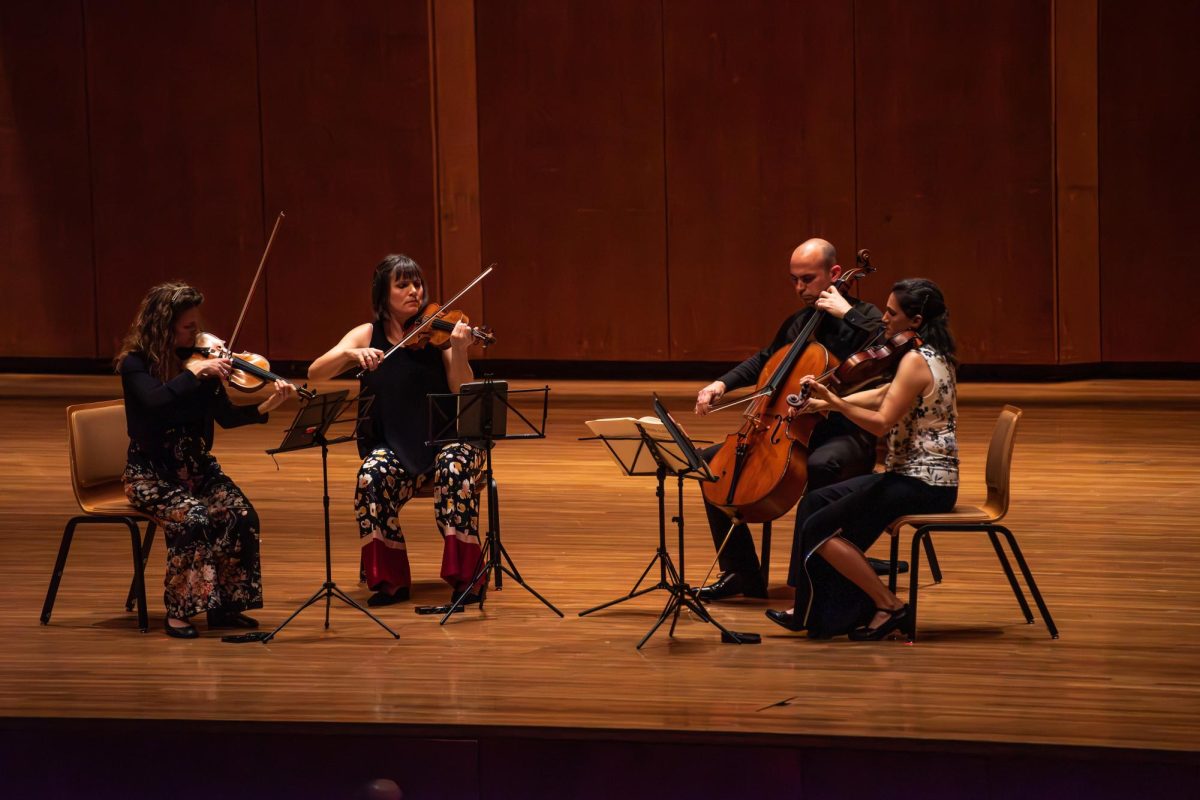
The Champaign-Urbana Symphony Orchestra put on an educational performance titled “The Composer’s Toolbox,” for local elementary and middle school students, introducing a younger generation to classical music and the inner workings of an orchestra. The event was interactive, as the crowd’s applause dictated the artistic decisions of the orchestra, and has been held annually since 1964.
The event was part of the Krannert Center Youth Series, in which KCPA aims to expose children to an array of performing arts. Public, private and home schools within the area are invited to bring their classes to experience the talented musicians and artists in Champaign-Urbana.
This event’s main component broke down the elements of composing classical music — including melody, rhythm and the color of different instruments. Throughout the show, large notecards were placed in the front of the stage for each component that the orchestra focused on. CUSO Music Director and Composer Stephen Alltop talked directly to the audience for the duration of the event and worked through the musical pieces with the children.
Each element had its own interactive segment, where the orchestra played a few different instruments for each movement. The melody of each piece would be played by four different instruments, to which Alltop would then ask the audience to applaud for which instrument they thought best fit the piece. Each time, the children overwhelmingly chose the instrument the piece was composed for.
Get The Daily Illini in your inbox!
“Active listening and engagement is a very important aspect of this event,” Alltop said. “When the kids are engaged and you’re talking to them, they’re actually listening and absorbing the music.”
According to Alltop, introducing all of the orchestra’s instruments at the beginning of the show and gradually moving through the different aspects of musical pieces helped the young children understand the concepts. The many interactive elements gave the children agency with the classical music and kept an infamously antsy audience fully attentive.
“They were totally engaged with classical music and saw all the instruments,” said Gerri Kirchner, executive director of CUSO. “I think it brings an excitement to music that they maybe don’t see because there’s nothing like live music.”
Alltop said he chose the pieces performed because of their recognizability. All were well-known classical pieces, with some featured in children’s movies that the kids would recognize, adding to their excitement. The first piece performed was Edvard Grieg’s “Morning Mood,” featured in cartoons like “The Simpsons” and “Phineas and Ferb.” When the opening melody played, gasps were heard from among the seats.
“Kids are surrounded by symphonic music in media all the time,” said Emily Laugesen, director of community engagement at KCPA. “It’s kind of the emotional soundtrack to a lot of other things that people experience, so I think it’s really special when young people get to actually see it and experience it in (Foellinger Great Hall) with its great acoustics.”
The children in the audience were at the age when many start playing instruments and getting into music. Kirchner said that in past years, they have received letters from inspired children hoping to become just as skilled at their instrument one day. The event organizers also hoped the performance would inspire other children to pursue their own music talents.
“A lot of these kids maybe have already started playing music, but other children might get inspired by this, right?” Kirchner said. “It might just trigger their own desire to play an instrument.”
As each new piece began, some children danced in their seats and whispered amongst themselves if they recognized the music. When they participated in the interactive activities, the children’s applause and screech-like cheers filled the auditorium with a kind of music of its own.
“Seeing the kids respond to the music and get engaged, it’s heartwarming,” Laugesen said. “It makes the days when you’re dealing with crazy logistics or something doesn’t go right, it makes it really worthwhile.”