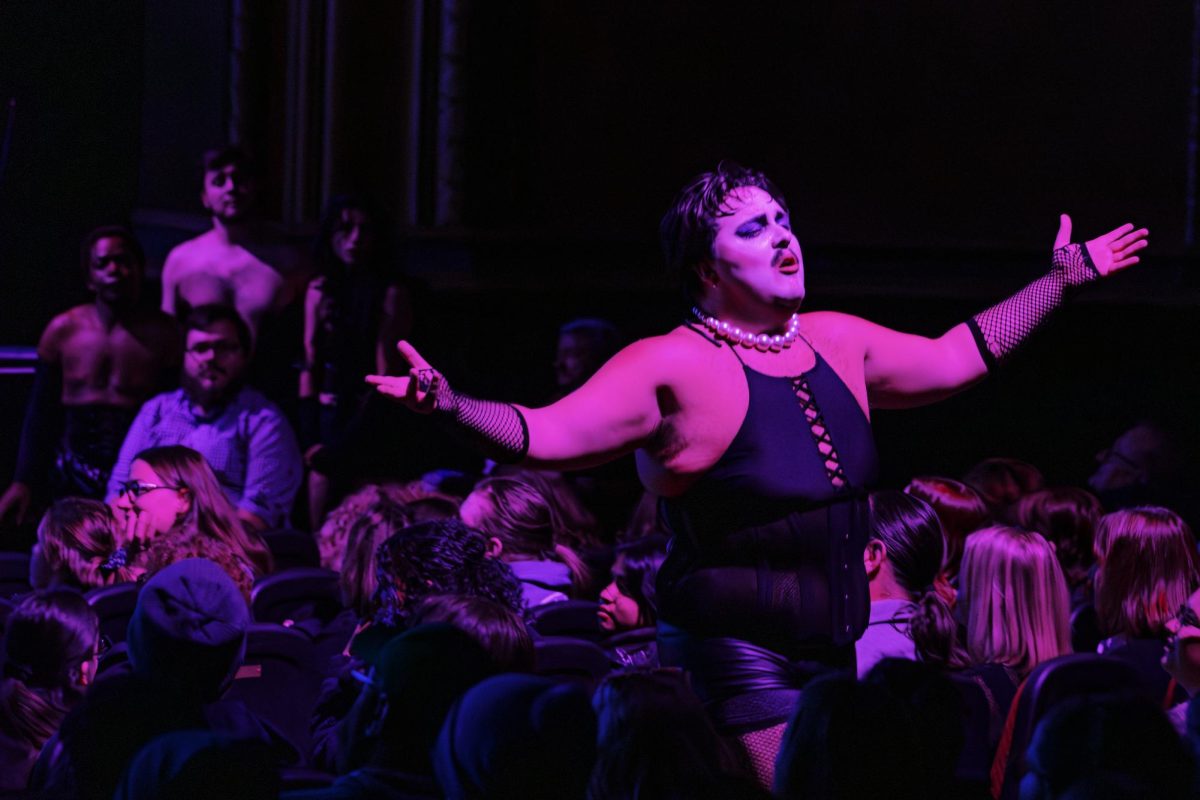
January Dance has returned to the stage at Krannert Center for the Performing Arts, bringing a dynamic evening of original choreography to the University campus. The annual recital features a range of dance styles and creative perspectives from choreographers pertaining to this year’s theme, Black on Black: A Celebration of Black Dance.
There were four movements in this year’s concert, each choreographed by a different choreographer. Each dance was different, but still held the same theme of an avant-garde performance in body movement. The first dance, titled “Taking Care of the Dirt,” created by Nik Owens, graduate student studying dance, features a co-ed dance group of seven members.
According to the program notes, Owens’ work “seeks to manifest the rapid and relentless frictions, ‘almosts,’ and dissonances experienced through our various identities.” On stage, the dancers move through the different emotions of digging, finding the truth and taking care of what they find.
“I feel like we’ve seen work that’s somehow reflective of the tension between ideas being expressed through form, and form being a space to grapple with ideas,” said Anna Rogovoy, a University alum.
The second dance was titled “The Way She Wears It” by Alexandra Barbier, professor in FAA. The dancers were portrayed as models decked head to toe in nude-colored undergarments. Each dancer emerged one by one, representing a different symbol of femininity.
Get The Daily Illini in your inbox!
In the program notes, Barbier aims to reflect the inner workings of the fashion industry by encapsulating the clothing aspect, consumer strategies and feminism. In a transition phase of the performance, the dancers started chanting “Buy it, buy it, buy it,” to reflect the way clothes are sold by the models.
“These pieces are using choreography and recognizable movement vocabularies in vastly different ways,” Rogovoy said. “This is what the breadth of dance can do.”
The third performance featured a piece called “Gleaming Grasshoppers,” choreographed by Ty Lewis, a University alum. The set features an abundance of nature, plants and fog, creating a space resembling a rainforest. The dancers, dressed in earthy Wiccan-style clothing, fit into the scene as part of the environment.
“The art students were all a part of making the scenes,” said Marisa Kunz, whose daughter participated in the show. “It was a very inclusive process.”
The performers crafted their movements in ways that gave the illusion of magic. The background scoring also gave the piece a feeling of metaphysical presence. The dance was meant to enchant the audience, not just through the set dressings, but through flowing movements.
“The piece was based on a random occurrence where a grasshopper came into the studio one day,” said Cheyenne Smith, junior in FAA.
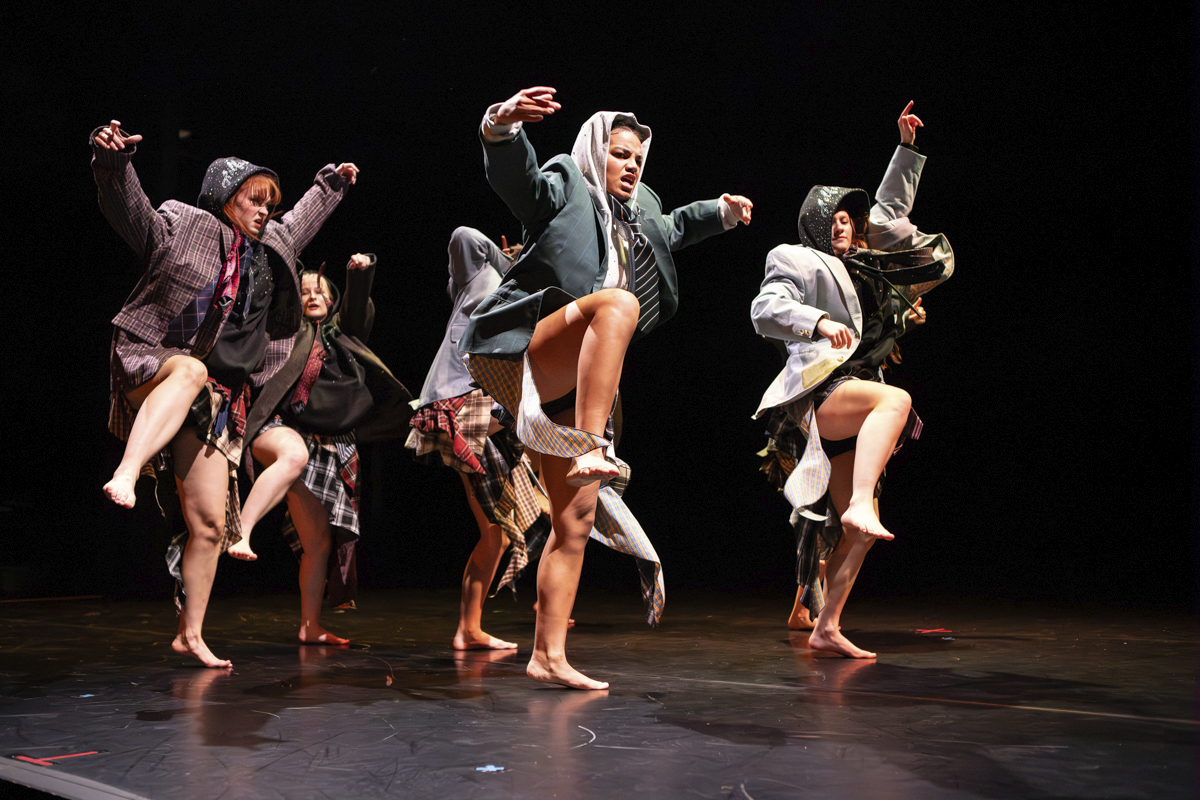
The final performance titled “Echoes of the Unbroken: The Revolution Will Dance,” created by Laina Reese Werner-Powell, a University alum, features another all-female group, this time, dressed in gender-neutral clothing. In the program notes, the dance is stated to represent a “reclamation of joy, movement, resilience, and resistance.”
Dancers moved to jazz rhythm section beats in percussive motions with their feet pulsing against the floor, feeling out the tempo. While this movement still fit into the show’s avant-garde nature, there was more fluidity between dancers.
As the University waits to see what next year’s January Dance has in store, Champaign-Urbana can take the time to reflect on the creativity that lives within the dance community on campus. There’s so much culture to be found within the Department of Dance, and this performance is one of its many representations.
“This style of art is so important because of all the different representations of creativity and diversity,” Kunz said.
The concert as a whole was meant to represent the different works Black artists create in the dance environment. The Black community is home to unique dance forms, and each dance in the program serves to highlight a new side to those movements.
“There’s so many different avenues Black dance and Black choreographers can take,” Smith said. “I feel like this show truly embodies that in each piece because each one is so different from the next.”