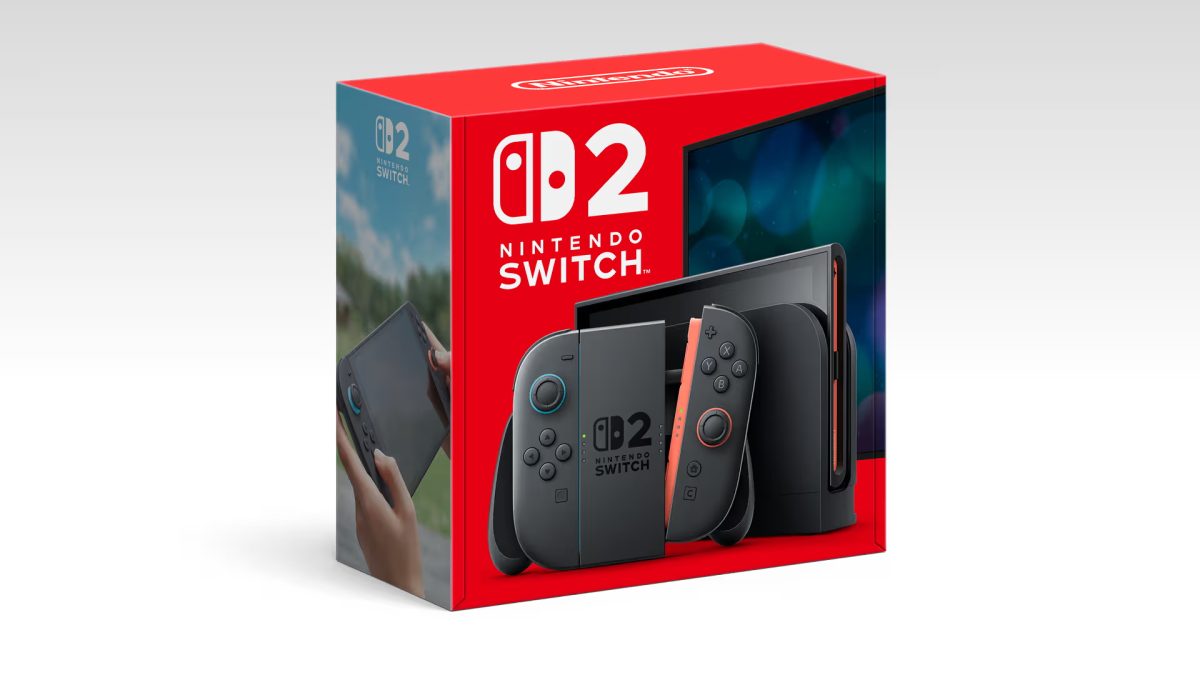
Japanese multinational video game company Nintendo fully revealed its newest console, the Nintendo Switch 2, following a livestream event Wednesday.
The company often organizes prerecorded livestreams entitled “Nintendo Directs.” They present Nintendo’s newest projects, including upcoming games, hardware and media projects.
On Wednesday, Nintendo dedicated their most recent Direct to their new gaming system. This Direct was first teased in January, following leaks that gave fans an early look at the console.
The Direct revealed that the system will launch June 5, with a manufacturer’s suggested retail price of $449.99. Nintendo released its predecessor, the Nintendo Switch, at a price point of $299.99.
Additionally, a system bundle consisting of the system and the new “Mario Kart World,” the sixteenth game in the racing series, was announced. The game and system combined have an MSRP of $499.99. The price matches that of a PlayStation 5 (disk edition) or an Xbox Series X, both of which are the latest consoles in the current generation of gaming.
Get The Daily Illini in your inbox!
Not only has the system’s price increased, but so have its games and accessories. This includes amiibo, a line of collectible figurines. The figurines connect to consoles and unlock multiple in-game items and ways to play.
These toys were originally priced at $15.99 for a single figure and $24.99 or $29.99 for two. However, the Direct revealed that their newest line of amiibo figures, coinciding with the Switch 2 version of “The Legend of Zelda: Tears of the Kingdom” will be priced at $19.99 each. Additionally, Nintendo will price the amiibo for the Switch 2 version of “Street Fighter 6” at $29.99 each.
These price points sparked debate in online gaming forums, with many people criticizing Nintendo for raising costs in this new era of games.
Despite cost increases since the Nintendo Switch came out in 2017, analyzing the list of upgrades from the original hardware helps clarify how the company got that estimate.
Nintendo Switch 2 boasts a 7.9-inch LCD touchscreen with a resolution of 1920-by-1080 pixels. It also features HDR10 support for high dynamic range, enhancing the color contrast. The display enables a frame rate of up to 120 hertz, allowing for fluid gameplay.
When plugged into TV mode via HDMI, the system outputs a maximum resolution of 3840-by-2160 pixels at 60 fps and 1920-by-1080 or 2560-by-1440 pixels with support up to 120 fps, all of which support HDR10. This is great for more graphically demanding games, as the system will display them in higher resolution, allowing for clearer gameplay.
Additionally, the console will have 256 gigabytes of built-in storage compared to its predecessor’s 32 gigabytes. The controllers, also known as Joy-Cons, have also seen some critical reworks. One rework features a mouse sensor on the rail of the controls. This will allow them to function as a mouse for games, such as first-person shooters.
All of these features enhance the gaming experience, but there are also some drawbacks to the system. One of these drawbacks is the battery life. According to Nintendo’s website, the Switch 2 has an expected battery life of 2 to 6.5 hours, depending on what games you play. In contrast, estimates place the first Switch’s battery life at 4.5 to 9 hours.
Additionally, although the Switch 2 has the capability for expandable microSD storage of up to 1 terabyte, it now requires microSD Express cards. These cards transfer and open files quickly, allowing for games to open at a faster speed.
Only time will tell if these upgrades are worth the high price point. Until its release in June, the Nintendo Switch 2 looks to be a powerhouse of performance. It will pave the way for a new era of gaming from one of the industry’s most influential companies.