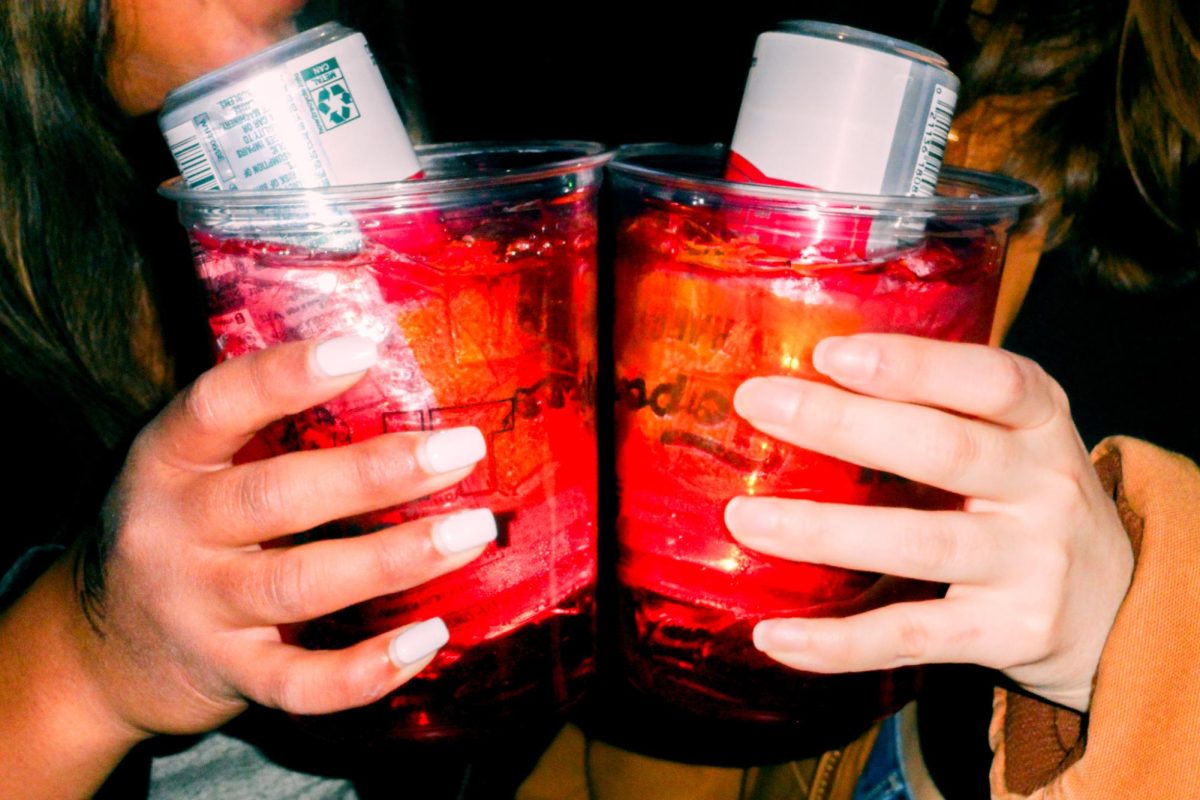
Going out on the weekend can prove to be a daunting task. There are all kinds of little details to work out: what to wear, who to go with, and most importantly, whose turn is it to buy the alcohol?
With bars spread down Green Street, brick houses lining frat row and liquor stores anywhere you can imagine, University nightlife is buzzing, and there is an abundance of ways to get drunk on a Friday night.
For many, college and drinking simply go together, and easy access to alcohol is a key reason that drinking plays such a large role in student life.
Being part of the Big Ten and a nationally recognized party school also doesn’t hurt.
While going out on a weekend without being drunk is doable, senior in LAS, Joe Wilson, often finds himself drinking more often than not on a night out.
Get The Daily Illini in your inbox!
“If I’m going to go out, I’m going to drink,” Wilson said. “Otherwise, I’ll struggle to have as much fun … There are plenty of people who go out and don’t drink, and they have a good time. But for me personally, I enjoy it more if I’m having a drink than if I haven’t.”
Being an introvert, Wilson believes that alcohol helps him connect with other students and provides him with the needed confidence to meet new people.
Catharine Edith Ann Fairbairn, associate professor in LAS, studies the correlation of alcohol and social relationships, and how social motives factor into both normal drinking habits and more problematic patterns.
Fairbairn’s research on alcohol effects, social effects and cognitive effects informs her understanding of student behavior at the University and helps make sense of beliefs like Wilson’s — that alcohol helps him connect.
“People are really social creatures,” Fairbairn said. “It’s what defines us. It’s what makes us great as a species … but because we crave the connection so much, it can be a source of anxiety.”
According to Fairbairn, college is a time when social relationships are especially important and when she often sees people using alcohol to build relationships with people.
While for some, alcohol is just a way to occasionally let loose and enjoy the social atmosphere on campus on a weekend, both the short-term and long-term effects are plentiful — and dangerous.
Alcohol worsens any already serious health problem and negatively affects almost every bodily system, and according to Fairbairn, you don’t have to be an alcoholic for problems to occur.
“It’s this weird kind of irony that there are some major negative effects of alcohol that will affect a little lighter drinkers who just occasionally overindulge more,” Fairbairn said.
Many complications take place in the brain, negatively impacting mood and coordination as well as causing memory and speech problems. Alcohol can also affect overall appearance, causing dull skin and inflammation, something that Fairbairn says may be particularly relevant to college students.
Alcohol’s large role in campus life is far from secret, and while preaching abstinence may not be reasonable, University leaders still attempt to educate students on mindful drinking.
Required programs like ACE IT inform students about alcohol culture and promote healthy drinking practices on campus, while optional workshops like Creative Alternative Alcohol Plans are a space for students to ask questions and share their experiences with alcohol.
Despite these resources, Wilson says it doesn’t make a difference.
“I feel like people already know what’s safe and what’s not, and people just choose to ignore it,” Wilson said. “Even if they were to educate, better, so to say, I don’t think it would make a difference. I feel like people just do what they want, anyway.”
Despite Wilson’s beliefs about college drinking culture, alum Trent Voss doesn’t think drinking is mandatory. With plenty of alcohol-free social gatherings, he sees drinking as more of a choice than a necessity.
“I think the nice thing about here is that most of the time you’re … not going to be peer pressured,” Voss said. “They’re not going to force you to drink.”
Similar to Voss’s interpretation of college drinking culture, Fairbairn has seen a promising trend in younger generations’ alcohol use.
“Younger people and people in college in general around the world are tending to drink less than they used to,” Fairbairn said. “I think there is increasing normalization and awareness about some of the negative health effects of drinking and also increasing understanding that it’s okay to not drink. It’s okay to be sober.”
While the drinking culture may have declined over the past several decades, it remains a significant part of University life, and as students begin another academic year, now may be the time to reflect on alcohol use.
According to Fairbairn, there is one important question that students need to ask themselves to engage in healthy drinking practices: “Am I drinking too much?”
“If you’re getting intoxicated from more than five drinks in a sitting on weekends, or that’s happening once a week or more, then that’s a good reason to reevaluate your drinking,” Fairbairn said.