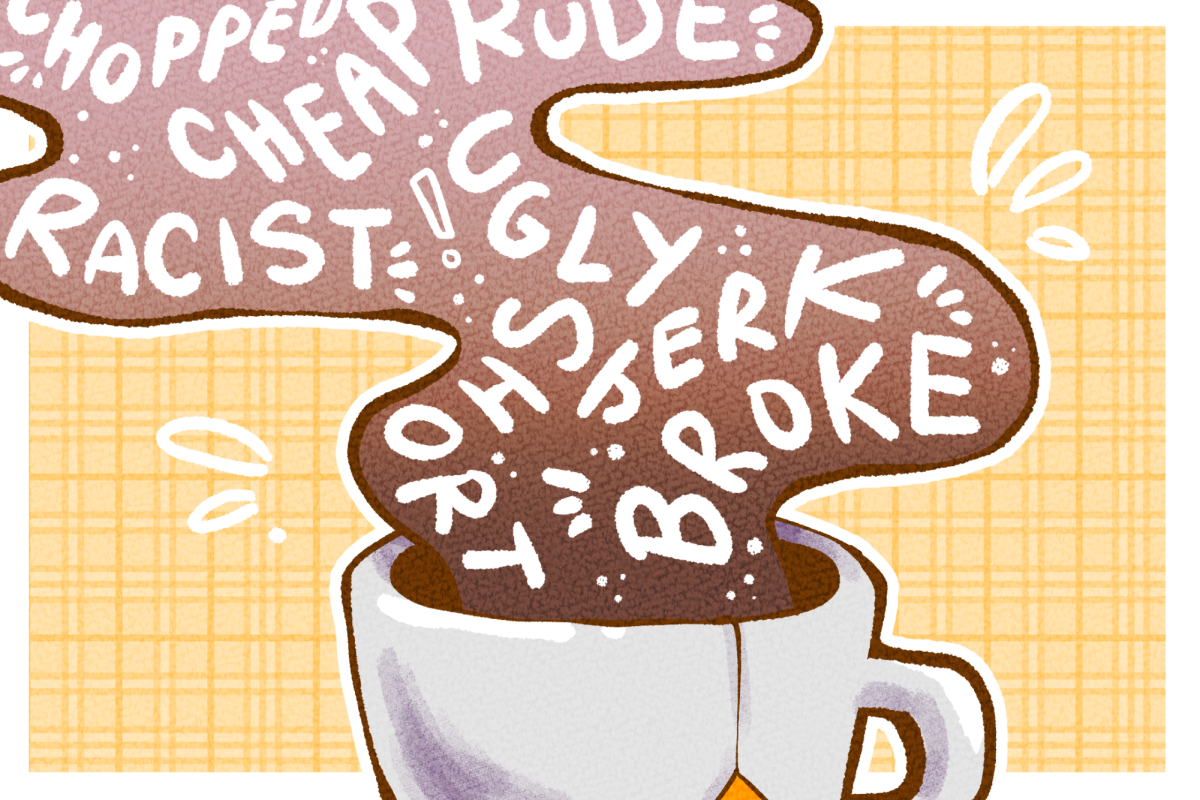
College students on social media are no strangers to the Tea app, a women-only platform used to “spill tea” about men to warn other women about potential bad dates.
Designed with confidentiality in mind, the Tea app allows users to anonymously share “red flags” and “green flags” about men they’ve gone on dates with. For many women like Liliana Amador, freshman in ACES, the app can be a helpful tool to warn women about potential bad experiences.
“I feel like people use the Tea app just to get some reassurance on a feeling they have already about the person,” Amador said. “They just go on the Tea app to see if that feeling is mutually shared with the other people that they’re talking to.”
Promising security, Tea requires first-time users to submit a photo of their face to determine their gender for its advertised “female-only” feature, offering reassurance that all opinions are seen by women only. Additionally, the app keeps users anonymous for safety reasons. If a male does get past the security checkpoint, no “red flags” shared can be tied to a specific user, removing the fear of exposure or retaliation.
With the growing popularity of online dating, it’s difficult to know who exactly is behind the screen. Because of this, Tea serves as a way to get some peace of mind — or an early warning — about a potential date. Both Amador and Lily Tallitsch, freshman in Engineering, turn to the app to double-check if a person has been reviewed by users.
Get The Daily Illini in your inbox!
“I genuinely do think the app is a supportive space,” Amador said. “It’s anonymous, number one, and then you need to get your identity verified. So, I do think it’s a supportive space.”
Recently, however, people have found ways to get around this security checkpoint, essentially infiltrating the intended safe space the app was supposed to create.
“I feel like for the most part it’s a safe space, but I know there are other ways you can get onto the app without being a girl,” Tallitsch said. “I saw a TikTok where a guy used his mom’s face to get onto the Tea app and stuff like that.”
Along with the security issue, the actual content on the app can be misleading or have no factual basis for users who turn to the app for information. Without any way to fact-check what users say, much of the content is inaccurate, making it easy to dismiss posts and leaving women questioning what is true or not.
Despite its questionable validity, the app remains popular. After going viral on TikTok, a platform used by over half of college students, Tea gained over 11 million users, both because of the sudden boom in relevance and its exclusivity factor. However, it also introduced a new outlet for gossip.
“People like gossip,” said Sebastian Vittore, freshman in Business. “They like seeing what people have to say about other people, and you know, it’s a social campus … so they go on the app, they find somebody they’re talking to, and they’re like, ‘Oh, no, look at what they have to say about them.’”
Even with its efforts to make online dating safer and less risky, the app has also inadvertently made it harder to form relationships in modern dating culture, according to Amador.
“People don’t want to have a committed relationship, and they’re going on the Tea app to excuse it,” Amador said. “It’s also becoming really hard to get to know a person organically rather than from what other people say about the person.”