As the leaves fall and moods shift in the crisp autumn air, many people experience a change in music taste. Seasonal soundtracks and pop-culture eras are effective in encapsulating the feeling of a season.
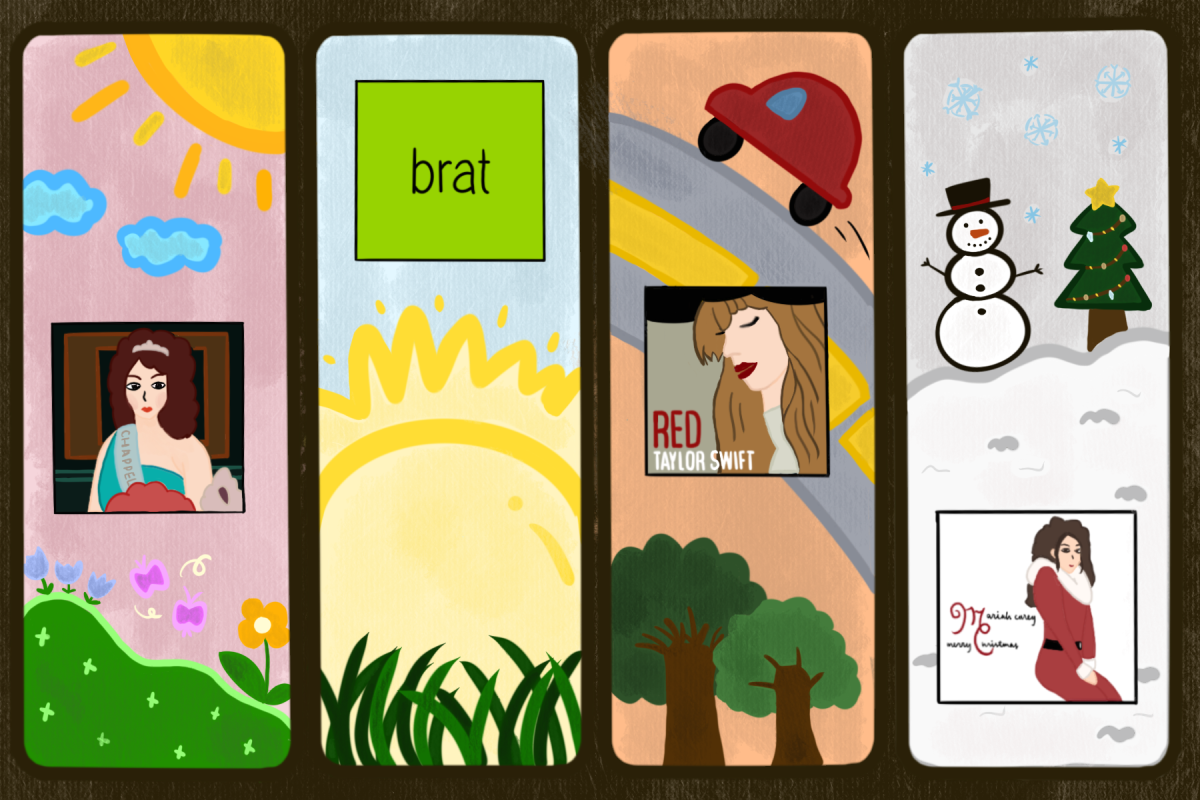
Take, for example, the phenomenon of “brat summer” in 2024. Charli xcx’s sixth studio album, “Brat,” brought party music back into the mainstream, while its minimalist cover — bold black text on a lime green background — sparked a new visual trend.
As summer fades and talk of the “song of the summer” winds down, radio dials and playlists are turning toward warmer, moodier tones to welcome the arrival of “sad girl autumn.”
Clarabella Tochimani, sophomore in FAA, lets the rhythm of the seasons guide her playlists, listening to specific music when it fits the mood of the moment.
“Right now it’s fall, and it is usually like my indie era, consisting of indie rock and soul,” Tochimani said. “These sounds match with fall being very earthy, leaves are falling, weather gets cozier and the sky starts reddening. The album ‘Wild Heart’ by Current Joys really speaks fall to me.”
Get The Daily Illini in your inbox!
Many music artists pick up on the sounds trending with each season. Taylor Swift’s famous fall-themed album titled “Red” is a fall staple to many Swifties. When the album was rereleased in November 2021, Swift also dropped a remix of “All Too Well (Sad Girl Autumn Version)” to stay in style with the season’s mood.
“Instrumentation, tempo and timbre enhance songs that describe the four seasons,” Tochimani said. “girl in red’s ‘we fell in love in october’ is such a big song during this time, not only because of the month being in the title, but also because of the acoustics and rhythms that make the listener captured in a fall scene.”
While some focus on the emotional or sonic qualities that define seasonal music, others look deeper into how our brains process these connections. Bloom Dawson, sophomore in LAS, studies the way people psychologically connect to music, whether it be the emotions that come with each season or how different cultures respond to seasonal musical sounds.
“What you listen to while having certain experiences correlates with the music we listen to for each season, especially with lyrics in songs that storytell and make us think of these memories and experiences,” Dawson said. “A lot of that is adapted with what we associated with the temperature outside when we were younger and the music curated towards us.”
Spring and summer are colorful seasons where the sun is shining, people are out celebrating and partying. During this time, upbeat tracks like pop, rap, country and EDM are commonly heard at clubs and beaches. These genres often reflect the lively atmosphere of longer days and golden hours, evoking a sense of energy and ease in many places around the world.
“Music is such a universal language,” Dawson said. “We have this implicit understanding that as the seasons change, there’s going to be a different tone to it. It’s interesting how it varies across cultures and how different cultures are presented altogether, but they all have very similar themes without ever communicating them.”
The link between music and seasons isn’t just a cultural phenomenon, but it also contains roots in personal memory and historical patterns. Kiara Kearns, sophomore in LAS, studies history and how historical eras interpreted music within societal movements, trends and modernization.
“I actually have a playlist called ‘feeling historical’ on Spotify,” Kearns said. “I wouldn’t say that I associate it with a specific event in history, rather than an era. The songs I put in that playlist heavily reflect the Renaissance and Baroque periods with instruments like the harpsichord. I really enjoy listening to those and kind of putting myself into what it could’ve been like to listen to it during the period.”
Kearns provided historical context on how different cultures experience music around the world, highlighting how, in Japan, the cherry blossom season evokes both happiness and sadness. Because the blossoms are so fleeting, the music associated with this time of year is often melancholy, carrying a distinctly bittersweet tone.
“The Romantic period in art and literature connected emotions to seasonal changes all the time, and even earlier than that, there were projects like Vivaldi’s Four Seasons that directly connected music to a specific time of year and how it makes you feel,” Kearns said. “In a way, we haven’t stopped doing that. Modern artists still use seasons as symbolism for moods, whether through lyrics, visuals or how they market their album.”
Music is an art form open to interpretation by both the artist and listener. Whether it’s through lyrics, rhythms or memories reminiscent of a time of year, the way people connect with sound is deeply personal. It is shaped by both the world around them and the one within.