The lights were low at a crowded University party when the DJ switched songs. As soon as the opening notes of Justin Bieber’s “Sorry” came on, students shouted the lyrics, phones lit up and for a moment, it felt like the middle of the 2010s again.
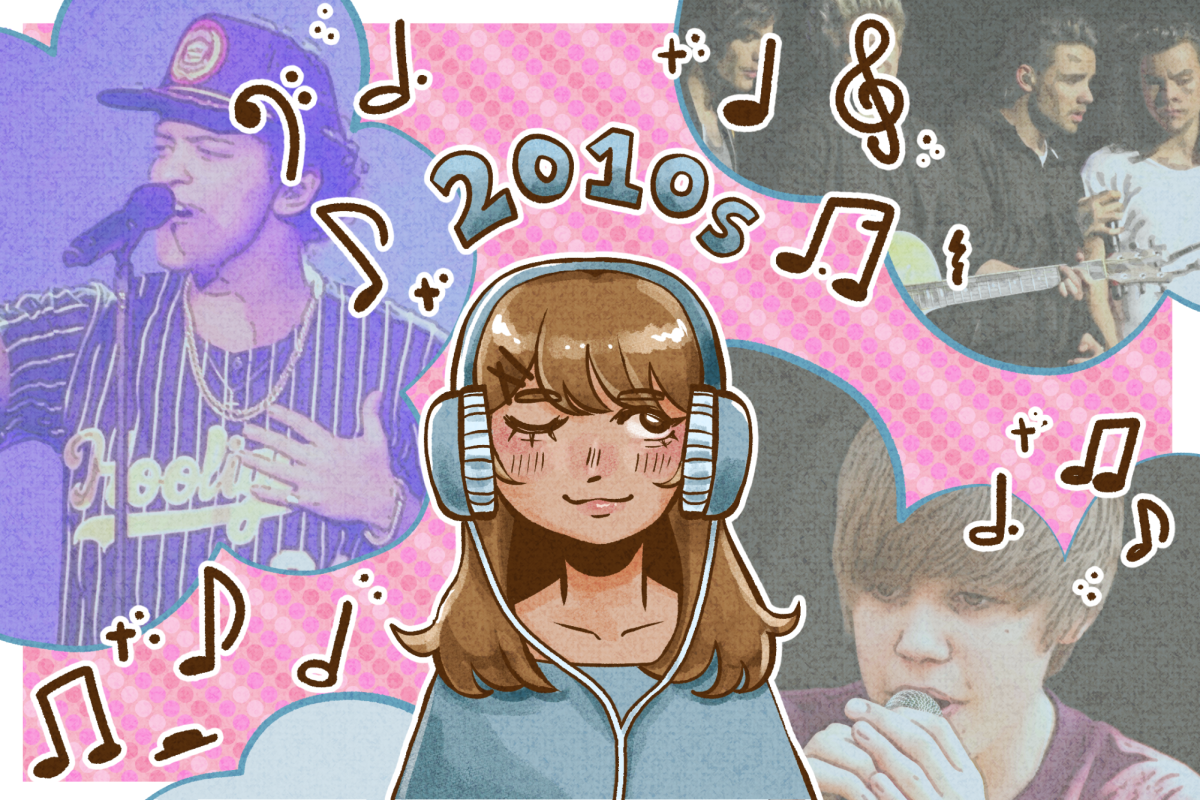
Even though the decade ended years ago, its music still runs through campus playlists and social media feeds. Why these songs have maintained their popularity is up for debate. Researchers, students and media scholars say nostalgia is a major reason, along with streaming and the artists who shaped the decade.
Melodie Zhao, graduate student studying media, remembers how artists like Justin Bieber, Taylor Swift and Lady Gaga defined the sound of that era. The decade’s impact also comes from how young listeners formed their identities during that time. Songs tied to school events and childhood memories tend to stay powerful even as trends shift.
“The 2010s had more melody-driven music,” Zhao said. “Hip-hop sounded different than it does now, and electronic dance music wasn’t everywhere yet. You could recognize singers and songs. Today, you mostly hear clips on TikTok without knowing the artist.”
When Zhao came to the United States in 2011, charts and early streaming platforms helped her understand what people were listening to. The songs that first helped her adjust to American culture still show up today in campus spaces, from gyms to dorm communal bathrooms.
Get The Daily Illini in your inbox!
Even now, Zhao said she notices how quickly music trends shift. She hears fewer full songs and more short audio clips, which makes it harder for newer tracks to feel as memorable as the ones she grew up with.
“The music that never dies always speaks to the heart of people,” Zhao said. “Technology changes, but those echoes stay with you.”
For many students, those echoes feel personal. Sara Jarosik, senior in FAA, said the decade’s sound brings back memories of growing up. Music from the 2010s lasts because it feels tied to specific memories.
Growing up during the rise of YouTube and early streaming, songs from the 2010s were often the first tracks kids chose for themselves rather than the ones their parents played. That sense of ownership makes music feel more meaningful and harder to let go of.
“I listened to Pitbull, Beyoncé and Katy Perry,” Jarosik said. “That older music had something that made you want to dance. It felt more free and open to anybody. Today’s pop can feel stiff.”
She said 2010s tracks still show up constantly on campus. This music persists because it works for groups with different tastes.
“You’re never going to find a party that doesn’t play them,” Jarosik said. “They’re icons. It’s nostalgia, but also the rhythm and beat. The way they’re made just makes sense to move to.”
Streaming platforms help keep those songs in rotation. Even with new music dropping every week, recommendation systems often send listeners back to what they already know. Zhao said that the cycle reinforces itself.
Algorithms have changed how nostalgia develops. When older songs remain visible on charts and playlists, new listeners treat them as current rather than outdated.
“Algorithms push what you already like, so those older songs keep coming back,” Jarosik said.
Zhao said another reason 2010s music stays strong is that fewer new artists rise to the same level of mainstream fame. Justin Bieber has millions of fans, One Direction filled stadiums and Selena Gomez was constantly in the spotlight. Many major artists active today first became famous in that decade.
The decade also produced a mix of genres at once; pop blended with EDM, hip hop went fully mainstream and R&B ballads stayed popular. Jarosik said that variety helped the music reach more listeners.
“It wasn’t about one niche,” Jarosik said. “Everyone could find something in it.”
Students on campus feel that variety today, too. Stephanie Marin, sophomore in LAS, said artists like Rihanna, Lorde and Nicki Minaj define the sound of the early 2010s for her.
The decade blends easily with new music, which is one reason it keeps getting played. Even when people are listening to current artists, 2010s tracks still fill the background.
“That music was more electric and fun and poppy,” Marin said. “A lot of pop doesn’t really sound like that anymore. Rihanna’s music was super upbeat and energetic.”
Marin said she mostly hears 2010s tracks in campus stores and public spaces, even if some parties lean more toward newer music. For her, the decade’s appeal is tied to childhood.
“It came at a time when we were really young, so it was the music we grew up listening to repeatedly,” Marin said. “It’s nostalgic. It reminds us of being kids.”
Social media also keeps the decade alive. TikTok trends often bring back songs from artists like Rihanna, The Weeknd and Drake. Short clips use 2010s tracks for edits and outfit videos, helping melodies spread quickly.
Zhao said this changes how people experience music today. The constant flow of short clips makes listeners connect to songs in smaller pieces rather than full albums.
“You don’t always know who sings it,” Zhao said. “You just recognize the melody from TikTok or streaming recommendations.”
Online nostalgia culture also keeps the decade relevant, creating “throwback” playlists, glow-up reels and childhood memory edits using 2010s songs. On Instagram and YouTube, creators match those tracks with specific moods and aesthetics, making the decade feel constantly present.
In the end, 2010s music continues to thrive because it connects people. It brings back memories, energizes parties and still feels current in a fast-paced digital world.
As Jarosik said, “It’s always such a vibe. Those songs are staples. They’ll never die out.”