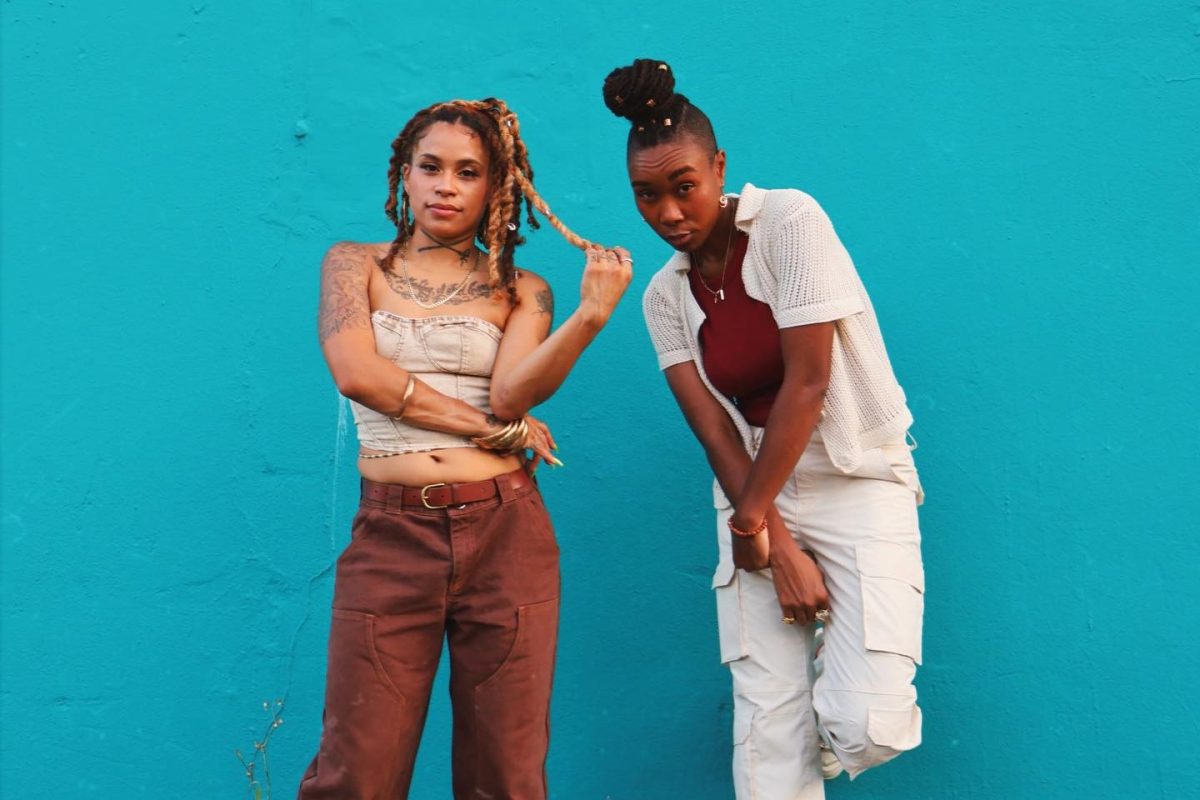
The Champaign-Urbana area is home to many student bands. The Meantime is one of them. To the average house showgoer on campus, its name may sound familiar.
In November, the band put out its first record, “Beat of Abyss,” a monumental moment for them as musicians. The album is filled with clean guitar riffs, energetic drum buildups and heartfelt lyrics. The Meantime has much to say on this record, and this translates smoothly into its 47-minute runtime.
The Meantime is composed of Sam Layton, senior in Engineering, Zach Slade, senior in Engineering, Quenton Bian, senior in ACES, and Jaz Wilkins, senior in FAA. The current arrangement of the band took a couple of years to sort out. The band first met in the since-dissolved RSO Band Side.
Band Side would sort its members into groups depending on factors like what genre they were interested in playing and their experience that was determined by how they auditioned. From the band arrangement given to them by Band Side, Slade, Bian, former singer Elizabeth Ruiz, who graduated in Spring 2024, and former drummer Jay Piser, who graduated in Spring 2025, met and formed The Meantime. After Piser and Ruiz graduated, the band found its current composition, with Layton on guitar, Slade on drums, Bian on bass and Wilkins on vocals.
They started making music together in 2024.
Get The Daily Illini in your inbox!
Making “Beat of Abyss” was no easy feat. With different school schedules and summers keeping them apart, creating this record was a labor of love.
“It started last summer,” Slade said. “Writing riffs that sounded good and somehow making ideas connect. (The songs were) really rough ideas. Some songs were made with us sitting in a circle and jamming and seeing what sounds good, other songs were made individually.”
Slade explained that some songs were more of an individual project a band member would tackle and bring to the group afterward.
Notably, the band mentioned how there were a few songs off its album that bassist Bian would write at home. From that writing session, he would bring in a demo that Layton and Slade would add their own touches to.
Layton described how they then recorded the album around mid-spring, just before the end of the semester. Being on campus with each other was the only time they could get together, so all mixing and producing took place apart.
“We had to listen to the same mix and just text back and forth like, ‘I think it sounds kind of like this’ and ‘I think these changes need to be made,’” Slade said. “But it sort of came down to just one of us taking on one song and making it their project and really getting nitpicky with it until it drives you crazy, and then you can stop.”
Despite everyone having their own methods of production, that was never an issue with the overall sound of the album.
Band members described how they had worked with each other and the songs long enough to share a similar vision for what they wanted their music to sound like. The changes they offered each other were minor, and Slade noted how there were never any huge arguments or changes when it came to mixing tracks by themselves.
Once recording and mixing were done, the final touch was Wilkins adding lyrics and vocals.
The Meantime’s way of making and producing music often prioritizes instrumentals, when usually it is often the case that lyrics may lead the direction of a song. For them, the music is the guiding voice of each track.
They found a way of making music that worked for them, but that doesn’t mean it’s the only way. As the band continues to make music, they find themselves exploring different ways to make a song. Whether it’s starting a song with lyrics and vocals first or building the soundscape around a melody, they note that the most important thing to them is staying flexible throughout the music-making process.
The best thing to do, Slade explained, is to think of the bigger picture the song exists in.
“At the end of the day, you have to just like sit back and be honest with yourself and be like, ‘Does that serve the song?’” Slade said.
This album is evidence of the band’s natural versatility. Each song has a different structure and sound, yet continues to flow seamlessly across each track.
When discussing a song on the album called “Glass Blues,” Layton described how, although it may feel a little more mellow compared to the other tracks, it’s not completely out of left field for them.
“That’s one thing that I’m really, really proud of with the album is not only ‘Glass Blues,’ but I would say a lot of the songs are very different from one another,” Layton said. “I don’t feel like we put a lot of thought into things like, ‘Okay, we want a cohesive sound, and we want everything to flow perfectly.’ I think we kind of just write what we want to write and explore a lot of different styles.”
The Meantime is a band that doesn’t like to be put into a specific genre, but if they had to, Layton said it would be alt-rock, saying it is often compared to The Smashing Pumpkins or The Cranberries. In the future, the band members hope to explore different ways of making music and taking on more lyric-heavy aspects of songwriting.
With its album finally out and their senior year about halfway done, the music careers for Slade, Layton, Bian and Wilkins are up in the air. Instead of thinking about what’s next, they prefer to celebrate what they’ve done and what they’ve learned from it.
“We plan to put out more music,” Layton said. “We don’t plan to stop until graduation and jobs and grad school prevent us from continuing.”
They note that, while they will continue making music together, “Beat of Abyss” is likely to be the only album the band will put out. Despite this, they are proud of this accomplishment and all they’ve learned from it.
The Meantime isn’t done yet. With upcoming shows and a full spring semester left, anything is possible for it. For now, it’s eager for its audience to listen to the album.
“It’s super special,” Slade said. “I’m sure I’m gonna look back on it, like, super fondly. This is one hell of a cool project. We’ve all just learned so much about so many broad aspects of the process, and we’ve gotten closer to each other. We’ve gotten better as musicians.”