Champaign-Urbana could be viewed as a less-than-ideal setting for a video game. The cornfields and undeniable prairie vibe of the University and its surrounding area don’t provide much substance.
But for University alum Dustin Schrader, his alma mater presented the perfect canvas.
Inspired by open-source text editor Vim, the movie “Persona” and a bottle at his barber that said “ghost” on it, Schrader got the idea for a “ghost in the machine” themed story. That story has now morphed into a technological horror game set to release in March.
“I love this campus; I love this town,” Schrader said. “And I know it keenly well. I can visualize it pretty easily, even though I don’t live there right now. And so I’m like, ‘This is easy enough to create an ambiance.’”
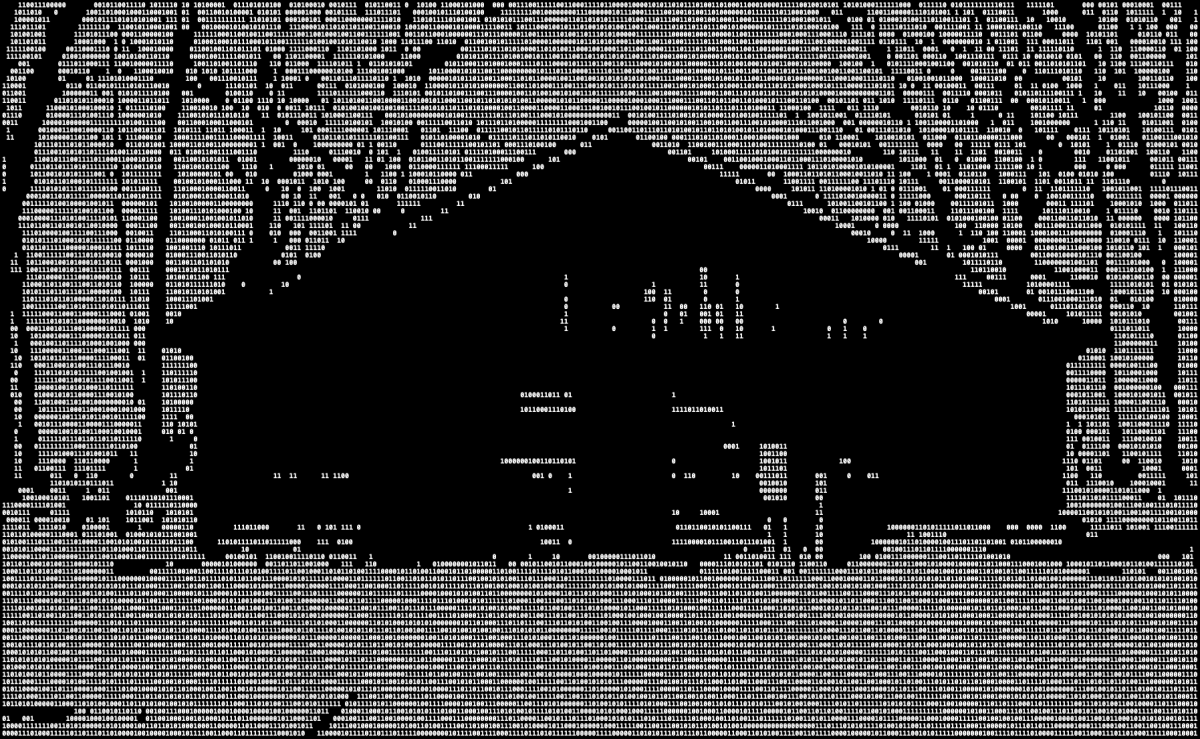
“> Terminal,” Schrader’s first gaming project, follows 30-year-old protagonist Tera on a December night in C-U as she confronts a ghost embedded within her computer. Through a series of short inputs, players must work their way through the two-dimensional text-based horror game while exploring the relationship between human and machine.
Get The Daily Illini in your inbox!
Schrader, class of ’08, claims not to be a big gamer himself — though he reflected fondly on playing “Halo” during his undergraduate years in Bromley Hall. He described “> Terminal” as less of a video game, but rather a story in interactive form.
“I think of it as a writing project,” Schrader said. “I don’t necessarily think it’s going to appeal to people from a pure gaming perspective, right? It isn’t designed to do that. It’s designed to tell a story about a woman’s life and her relationship with technology. It visually depicts that relationship in a very real way — within the terminal window that she is facing herself at night on December 11th, 2022.”
The game consists of six chapters, each filled with stages that players must advance through to complete the story. Schrader has accounted for the game’s complexity, providing features to prevent gamers from getting confused and even a “full text” input option where curious players can simply read the story on its own.
Schrader explained that if players receive an unexpected text response, entering an identical input again could still result in a new output. Typing “help” pulls up a help menu for each chapter, ensuring players can still progress. The game includes around 1,300 unique outputs, all written by Schrader.
Schrader has dabbled in writing ever since graduating from the University with a bachelor’s degree in political science. Currently stationed in Austin, Texas, he is a self-proclaimed horror lover with a fondness for C-U that was easy to work into video game form.
Along with encapsulating the vibe of the University, Schrader pays heavy attention to the prairie aspect of central Illinois, using a theme he has coined “prairie futurism” to add his unique touch to the game.
“I really lean into the farm and the semi-rural nature of it,” Schrader said. “(Tera’s) a townie; she’s from Urbana; she’s spent her whole life there. I put (in) a lot more references to corn and fields and open space and nature and stuff like that than I do college buildings.”
Further relating to C-U, the game draws heavy inspiration from HAL 9000, the fictional antagonist of “2001: A Space Odyssey,” who was created in Urbana. Tera’s birth date is notably the same as HAL’s (according to the film version of the story) — Jan. 12, 1992.
HAL 9000 is far from the only local nod present in the game. Schrader said, “The entire game is an Easter egg,” including several names University students may recognize, such as references to John Bardeen, the Main Stacks and featured images which Schrader took across town.
C-U’s significance as a center of innovation and technology is essential to the game, according to Schrader. “> Terminal” follows the human relationship with technology, specifically through Tera, who seeks to use her computer as a sort of release. Schrader described the game as largely about “isolation and loss of identity.”
“Tera seeks out technology as a way to kind of capture some stuff that she feels she’s missing, to escape some of what she thinks the future holds for her, and to escape the fate that others around her have already faced,” Schrader said. “She sees technology as kind of this outlet for that.”
Schrader, on the other hand, finds comfort in familiarity with the world outside of technology. While his game may be centered around it, his relationship with C-U hasn’t been altered after the creation of “> Terminal” and the story within it.
“I’m a big believer that as much as technology progresses, as much as we’re thrust into the future through it — a lot of our lives are still the same,” Schrader said. “You walk around this world-class computer science campus: It still feels like a rural town.”
As a solo developer, Schrader said he used the free platform Godot to create “> Terminal.” While the story only took a few months to write, the programming was the brunt of the work. According to Schrader, audio and visual elements, which are present in certain chapters of the story, required an abundance of trial and error.
Schrader’s advice for anyone thinking of making their own game?
“Don’t do it, please,” Schrader said. “I mean, if you’re a writer, don’t try it; it’s probably not worth the effort. I don’t know if I would do it again … It is a lot of freaking work, and it’s for people that love to do it, and I get why people would love to do it.”
Schrader did comment, however, that he had other potential projects in mind, with a conclusion of “never say never.”
While he isn’t sure he’ll embark on another solo developer project, “> Terminal” will reach Steam later this year as his initial achievement in the gaming world. As players embark on Tera’s journey with her computer, Schrader hopes they will enjoy the plot and characters that come with it.
“I think the story stands on its own, and I hope it does — obviously that’s my value proposition, that’s what I bring to the table as a creator, as a writer,” Schrader said. “I like the story a lot. I like Tera; she’s very imperfect and flawed and complicated. I like the antagonist, the little terminal itself. It’s a fun story.”