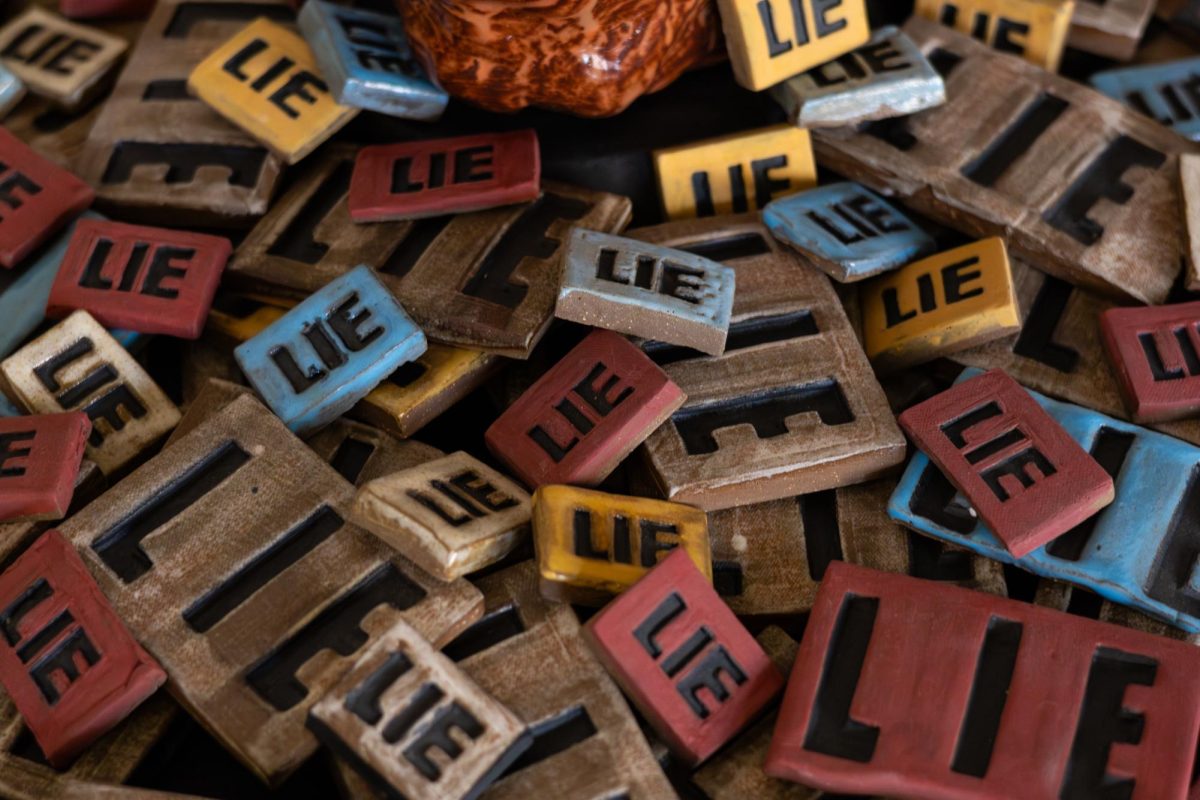
If you came across the “Art of the Resistance: A Community Conversation” exhibition in the University YMCA, you’d see a diverse and mixed-media display of art pieces. Looking beyond these differences, there are two uniting themes: resistance and reactions to a tense political and social climate.
In 2016, following the presidential election, curators Shannon Percoco and Katie Snyder began hosting what they call Resist Art Shows, where artists could sell their pieces, showcase their work and express their feelings toward the administration.
The events also featured musicians, a bake sale and a makerspace, where attendees could make their own creations. All proceeds went to organizations supporting marginalized communities.
Over the course of President Donald Trump’s first term, they ended up organizing four of these events. Taking a short break when former President Joe Biden was elected, they held their most recent one in May.
In September, Percoco and Snyder had the idea of doing a curated show as an offshoot of these events. Percoco then pitched this idea to the University YMCA art board, where she is a member, and the exhibition went up in late January.
Get The Daily Illini in your inbox!
On the opening day of the exhibition, over 100 artists and community members gathered to view and discuss the art. According to Snyder, this was particularly moving amidst growing tensions across the country, specifically the killing of Alex Pretti in Minneapolis five days before.
“There are very good reasons to be scared, but it was really, really nice for that moment in time for people to come together and talk about it,” Snyder said.
The exhibition displays art from people from all different backgrounds, including students who have never participated in an art show before and community members who make art for a living.
Along with being a curator, Percoco is also a featured artist in the exhibition. One of her paintings, titled “Chaos,” is nontraditional to her style, but was very indicative of how she was feeling at the time.
“Not only do I feel chaos in my soul, but I feel like the world is pretty chaotic right now, and, just by creating that, it helps bring me some peace and control,” Percoco said.
Although Percoco usually likes to incorporate some level of hope and beauty in her art, she thought it was especially important in this show to display her raw emotions.
Artist Viktoria Ford found out about the exhibition after Snyder and Percoco invited the artists of a past show she was part of.
Ford made the piece she submitted, an oil pastel painting entitled “Howl,” after Trump’s first election win.
“I was so appalled by his rhetoric about women and his history with women,” Ford said. “At that point there were charges of rape, there were charges of indecent expressions toward women that he had power over, and so this piece just kind of came out of me.”
Ford sees her art as a way of resisting, which she believes is especially valuable in the current state of the world.
“I guess my resistance has a lot to do with creativity,” Ford said. “I’m not saying it completely gets rid of the pain or the revulsion, but it does focus it outside of yourself by doing creative work, and that’s why I do it. It’s a way of not accepting the status quo.”
Vera Mak, artist and graduate student studying social work, submitted a piece after receiving a newsletter saying the exhibition was open for submission.
When thinking about the idea of resistance and his reactions to the current climate, Mak decided to base their work on the idea of the struggle to find one’s identity, and the hope and dread of coping with it through escapism.
The piece, a digital illustration titled “Cross My Heart and Hope to Die,” specifically explores escapism through media and how it brings comfort and allows us to get away from real life.
Inspired by Japanese funerary pictures, a ribbon and bow featured at the top of the frame represent an ego death of self, and how indulging in escapism for too long can make you lose a sense of self and reality.
Mak views the theme of resistance through identity, which they view as directly related to politics.
“As an Asian American who immigrated from Taiwan, my whole existence is political,” Mak said. “I think for everyone, their whole entire existence itself is political as well.”
Through viewing the exhibition and engaging with the art, Mak hopes that community members engage in open dialogue with each other and acknowledge their differences not as something that divides but unites them.