In an era dominated by streaming services and digital libraries, physical media is quietly making a comeback.
In 2025 alone, U.S. vinyl record sales increased by 8.6%. Physical album sales also increased by 6.5% while U.S. digital album sales decreased by 15.9%.
Additionally, brick-and-mortar bookstores are expanding. Barnes & Noble has recently announced plans to open new locations across the country, reversing a long period of closures and signaling renewed demand for physical books.
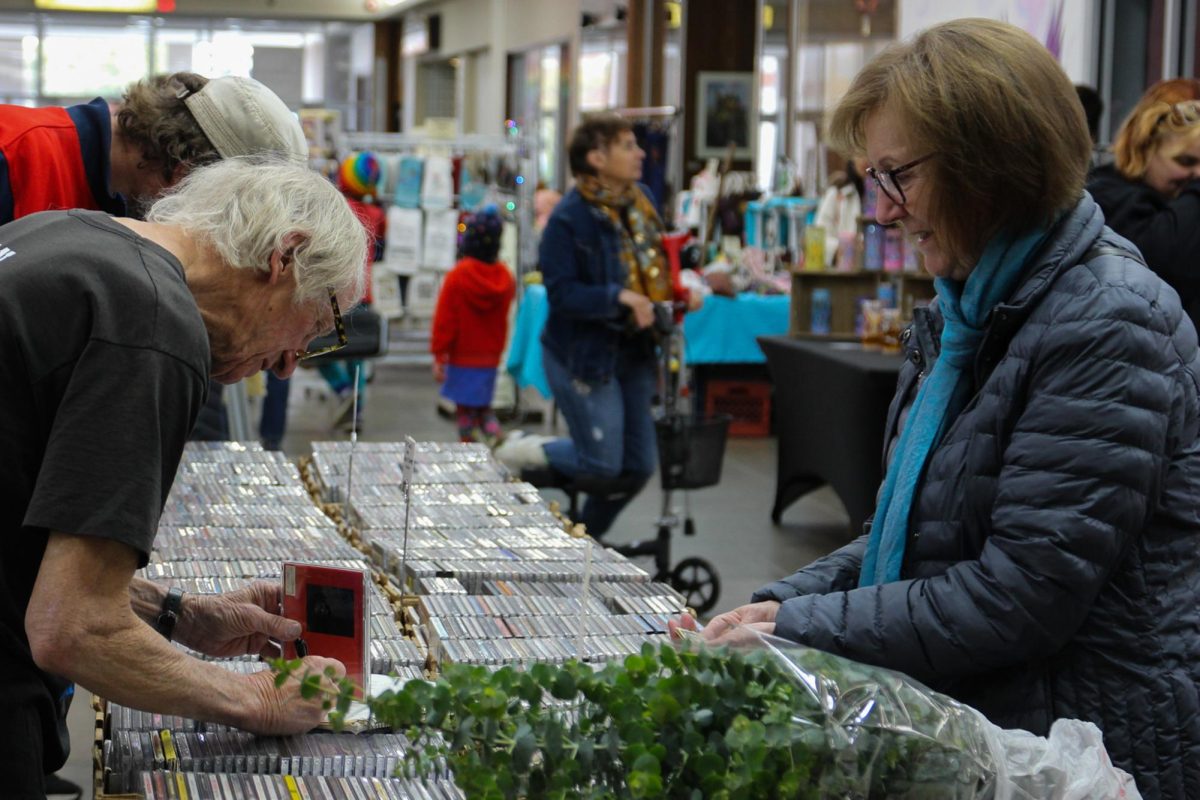
On college campuses, this resurgence is visible. Students have started their own collections of physical media, including vinyl records, DVDs, cassette tapes and CDs.
“Physical media speaks to my identity,” said Zaidan Alshahin, freshman in Business. “It is who I am in the sense that it is what I enjoy the most, and it’s something I carry with me. It’s something that I relish in and am passionate about.”
Get The Daily Illini in your inbox!
Students can acquire physical media in many ways, like hopping around different thrift stores, perusing independent record stores or browsing estate sales.
“Wherever I’m at, I kind of just look for physical media,” Alshahin said. “I feel like with thrifting, you gain access to an exclusive lot of physical media, maybe stuff that’s more rare. Whereas when you go to the store, you have access to more mainstream stuff.”
According to Ryan Cordell, professor in Information Sciences, the recent revival of physical media may be because of students’ interest in understanding the origins of digital media.
“Current students have grown up in a completely digital world,” Cordell said. “I think that people are always really interested in understanding the origins of those things. A lot of the digital interfaces that we work with are built on earlier media, and they have elements in them that sort of point back to those earlier media.”
Cordell says that another reason students are drawn to physical media is that it forces them to slow down and consume it in a more meaningful way.
“A lot of the digital tools that we have have a primary emphasis on efficiency and productivity, and that is not what we want as human beings,” Cordell said. “We also want meaningful experiences. Listening on vinyl is a different listening experience. You listen straight through the album, rather than shuffling.”
That sentiment is shared by Paridhi Ranjan, freshman in LAS and FAA.
“Everything is kind of becoming ‘pay a subscription’ and ‘rent this thing,’ and it kind of loses the real authenticity of owning (media),” Ranjan said. “Reading a hardcover book or listening to music through a CD and seeing it play is more engaging.”
The increasing costs of streaming service subscriptions are also a contributing factor as to why many students feel the need to start collecting more physical media.
According to a 2025 report by Deloitte, subscription prices for streaming video on-demand services are increasing on average by $16 a month. This has led to many consumers either cancelling their subscriptions or opting for ad-supported services as consumers manage rising costs.
“I’m not paying for (a subscription) over and over again to watch (a movie),” Ranjan said. “At some point, paying for a subscription is doing way too much. Capitalism is really pushing its bounds with how much you can rent out.”
The media shown on many streaming services is not permanent. Most of the television series, movies and music displayed on streaming platforms are licensed from television and movie studios or music labels.
Over time, various content can come and go depending on the license deals a service has with a studio or label. This lack of stability causes frustration for students, but permanence is something that physical media can provide.
“When I’m listening to music on Spotify, there’s times when a song is completely cut out of Spotify, like I can’t find it anymore,” Alshahin said. “Having the vinyls to go back to is a very good thing.”
Students incorporate physical media into their daily lives in various ways, whether it’s watching a movie on DVD, reading a hardcover book, creating zines or listening to music on vinyl records. For Alshahin, vinyl records are part of his daily life. He often plays records while doing schoolwork or relaxing, using this form of physical media to experience music in a more intentional way.
“Whether it’s doing schoolwork, maybe just sitting down and actually going through an entire album rather than just skipping through songs,” Alshahin said. “I feel like listening to music can be a very transitory thing.”
However, appreciation for physical media comes with drawbacks too. According to Cordell, both physical and digital media have their advantages and disadvantages. While physical media allows for more opportunities for aesthetic elements and expression, it can be limited in convenience and accessibility.
In contrast, digital media comes with an adaptability that physical media can’t always provide. Because of these practical advantages, students find that digital media can be easier to incorporate into their daily lives.
“I just find the convenience of digital media to be a lot more useful than physical media,” said Ananya Nayak, freshman in Engineering. “While I do enjoy having vinyls (and) having CDs that I listen to while I’m in my dorm, it’s just very rare for me to have the time to do that. So I enjoy the convenience of being able to listen to a Spotify playlist wherever I go.”
While physical media is unlikely to replace streaming, it may continue to grow as a counterbalance to it. As digital services grow more unstable and subscription prices increase, more students may turn to records, CDs and vinyls.