The Asian American Cultural Center hosted a unique informational and tasting event titled “Japanese Diaspora in Brazil” on Wednesday, diving into the combination of two seemingly different but impactful cultures, unified through a connector of society: food. The goal of the presentation was to explore how and why Japanese immigration to Brazil was so extensive, and how that has parlayed into culture and food.
During the presentation, speaker Sophia Kumagai explained that today Brazil is home to the Nikkei, the largest ethnic Japanese community outside of Japan. According to Kumagai, the creation and increase of Nikkei began after Japan reopened its borders to the world, immediately facing overpopulation and rural poverty. Brazil and Japan then formed an immigration treaty in 1907, leading to an influx of Japanese people arriving in Brazil and, with them, their culinary history.
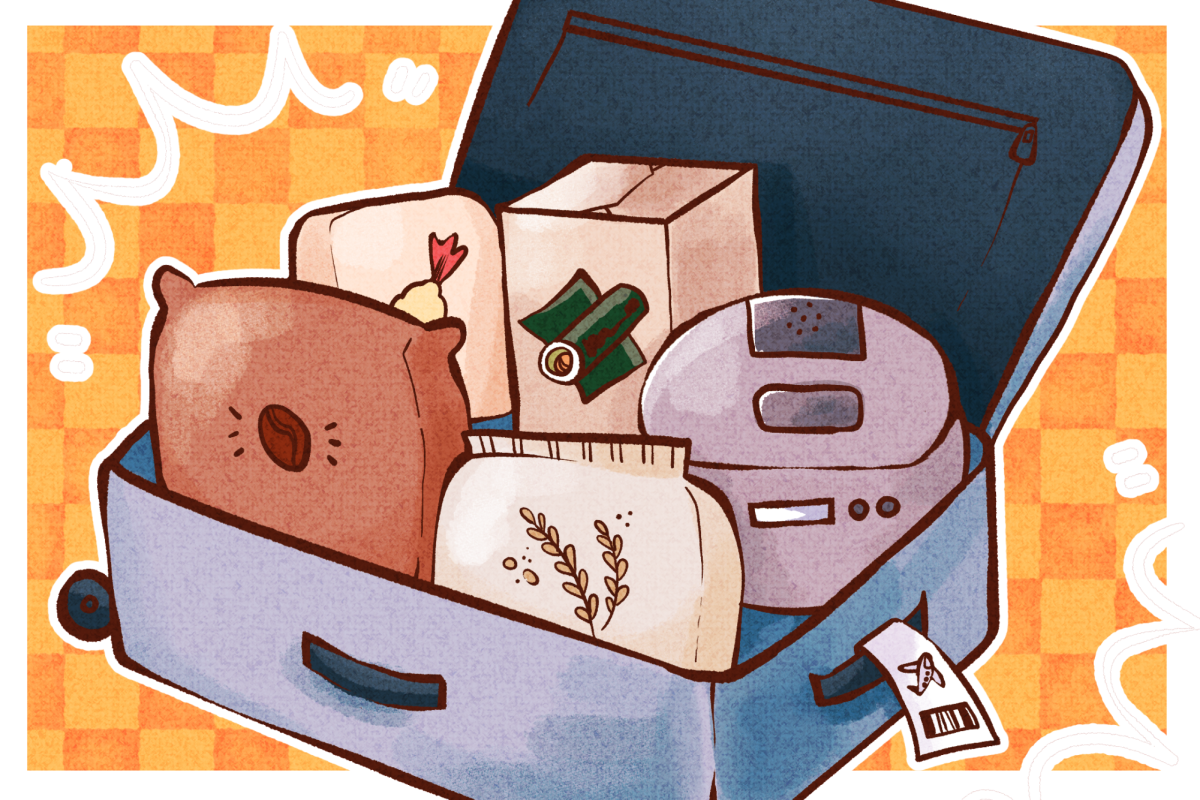
This “fusion food” combines Japanese cooking techniques and staples with Brazilian flavors, like adding mango or guava slices to sushi rolls, or even the popularization of the Temaki, which are hand rolls shaped in cone formations and eaten by hand. It’s the perfect blend for both parties to mesh and honor traditions that preceded this immigration.
Isabela Pontieri, freshman in the Division of Exploratory Studies, has parents of Brazilian heritage, and she was interested in learning more about different groups within the greater Brazilian culture.
“There are a lot of international students on campus, so learning more about different cultures and how they mix together is great,” Pontieri said. “And, yes, the food is fantastic.”
Get The Daily Illini in your inbox!
The room was packed, with conversation shared over miso soup and handmade rolls of sushi. Presenters explored ideas of diaspora and immigration, providing content for conversation over the meals.
Emily James, freshman in LAS, was interested in attending after an announcement was made in her Portuguese class, PORT 150: Writing Brazilians into the U.S, and in her Black music class, HIST104: Black Music.
“I want people who may not have any prior knowledge to learn about the history of the diaspora and how (diaspora) work,” James said. “They’re very unique depending on the situation, and I think the idea of cultural movement is so interesting and something that can’t be generalized.”
The Nikkei identity is complex, with third and fourth-generation citizens feeling more Brazilian because they’ve either never been to Japan or don’t visit often. Despite making up less than 1% of the country’s population, there is a question throughout the community on how to define this internal mix.
However, the impact made on Brazilian culture is irremovable, from anime being one of the most in-demand subgenres of media, to São Paulo having a district, Liberdade, that’s dubbed “Little Japan,” which is where the food was inspired by.
Megan Burke, freshman in Education, started volunteering at the Asian American Cultural Center through her EDUC 201: Student Information class, needing 20 hours of work focused on international education. As part of her volunteer work, she has helped set up cooking stations, tables, seating and served the food.
“We have so many opportunities throughout this campus, and seeing the behind-the-scenes process into everything coming together is really enjoyable,” Burke said.