November brings action and a moment of reflection to the University’s Native American House. As National Native American Heritage Month begins, the house prepares a series of programs that highlight Indigenous history, knowledge and presence on campus — all guided by a theme that grounds the month’s conversations.
The NAH perceives this month’s events through the lens of kinship, with a focus on Indigenous outlooks on STEM.
NAHM holds particular relevance at the University, where Indigenous histories and communities have long been present but not always prominently highlighted.
Beyond simply celebrating culture, the NAH designed programming to challenge the University community to rethink how to support Indigenous students.
The director of the NAH, Charlotte Davidson, says the NAH exists to fill a gap the University has historically overlooked.
Get The Daily Illini in your inbox!
“For Native people, there’s just a historical distrust of Western education systems,” Davidson said. “Given our history with … the United States imposing policy and laws to not only assimilate us, but to kill us, through genocidal practices … what we’re doing is advancing knowledge that has served our ancestors as well.”
This year’s theme has been in the works since last spring.
Davidson began meeting with Ripan Malhi, co-chair of the Center for Indigenous Science, and two Native graduate students: David Eby, studying information sciences, and Alyssa Spencer, studying chemical engineering. Their meetings served to explore how they could intentionally center Indigenous knowledge in STEM spaces.
Together, the group developed the concept of kinship as this year’s guiding framework, a theme that ultimately shaped the month’s schedule of 18 programs and events.
For Davidson, the theme reflects the ways Indigenous nations practice, express and understand kinship. Kinship is different for each Native individual based on their various relationships to people, places and communities.
Morgan Bear, assistant director of the NAH, echoed Davidson’s description of kinship, noting how it becomes visible in everyday interactions on campus.
“I just got a notification that someone from the women in STEM commented on the (NAH) Instagram and said, ‘Can’t wait to collaborate more,’” Bear said. “I think even — just like that — I think that’s exactly what kinship is like to us.”
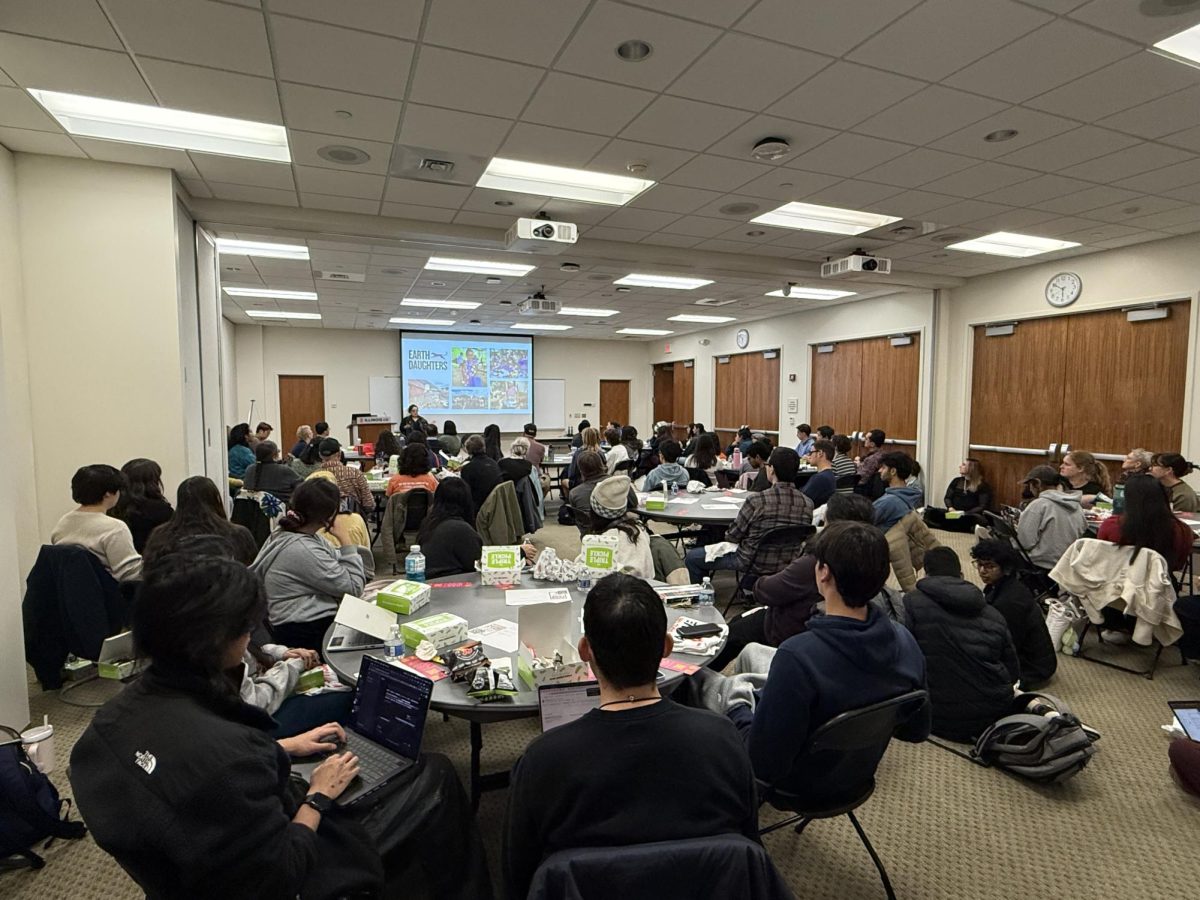
Students experienced this in real time at the SWE x AISES scholar meet-up event, where conversations about Native identity and research were facilitated.
Ciara West, junior in Engineering and a main force behind the event, believes best-practice allyship is achieved through practical matters. West is the director of diversity for SWE.
“Allyship should be a lot more than just your words of affirmation; you should really be putting actions to it,” West said. “I think helping out in any way we can is the best way to demonstrate real allyship to them.”
West made clear that the event with NAH and AISES won’t be a one-off collaboration, emphasizing SWE’s desire to support AISES and other identity-based STEM groups.
West pointed to an upcoming fry bread night as an example of the kind of hands-on help she sees as real allyship. According to West, true allyship is about a balanced exchange between two entities.
“We don’t want it to be extractive, we want to actually be there for them,” West said.
The SWE x AISES event gave SWE members a chance to learn firsthand about Native identity and the challenges faced by Indigenous students on campus.
West reflects upon the conversations facilitated by Davidson and AISES leaders about Native identity and its political implications. She said hearing that Indigenous identity is defined politically rather than culturally or racially was a new concept to her.
As the connection between the organizations grows, this Native American Heritage Month continues to shine light on the relationship between STEM and identity in all forms.