The University offers a range of opportunities for students to study abroad through its faculty-led and partner programs with colleges and universities worldwide. The opportunity is one many consider over their four years at the University; however, the idea of crossing borders can be daunting. So, what benefits does studying abroad have, and why are so many students drawn to it?
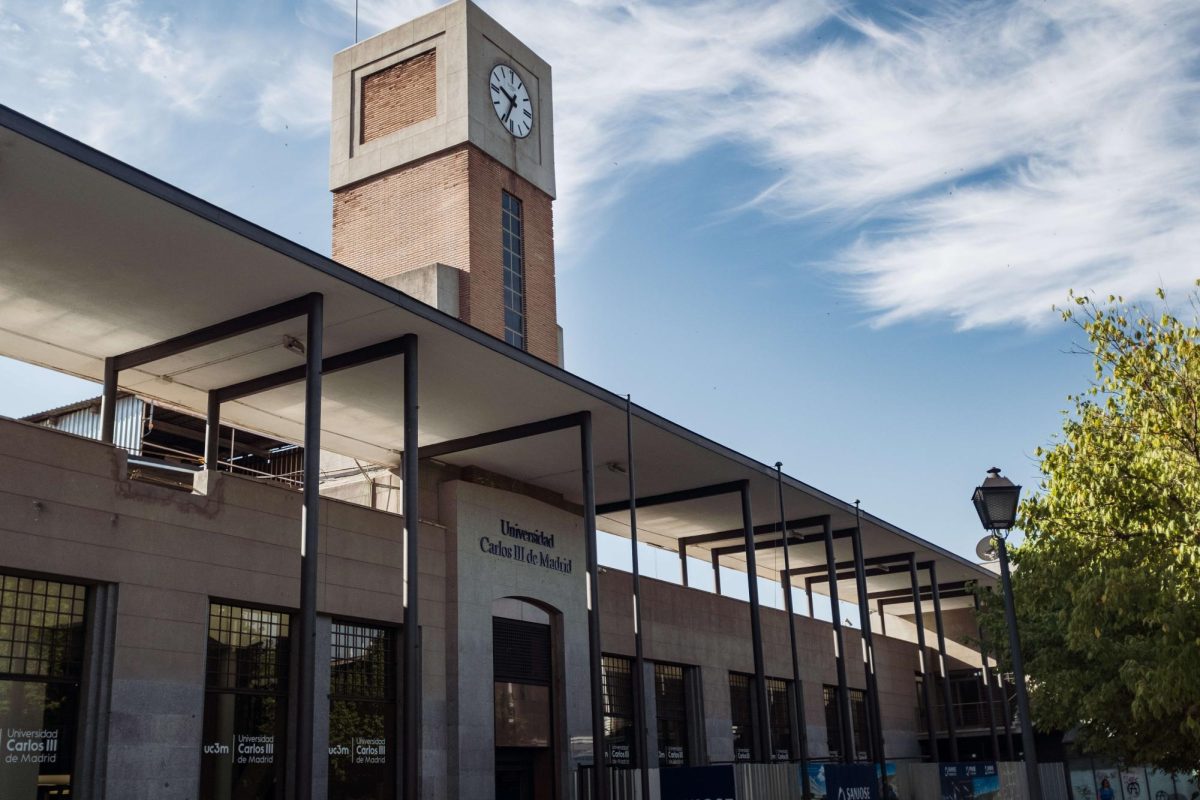
Alexandre Gamboa, senior in Engineering, studied abroad for a semester in an exchange program with the Universidad Carlos III de Madrid last spring, after being encouraged by both friends and family. Due to his Mexican heritage and fluency in Spanish, he felt Spain would be the optimal choice.
Although he was initially nervous being alone in an unfamiliar place, Gamboa said his nervousness quickly subsided once he settled in.
“The independence feels amazing,” Gamboa said. “Just the fact that you’re over there is amazing in itself, and it’s a new city where you become completely immersed.”
Beyond the freedom that traveling brings, Gamboa also experienced an entirely different culture. He said he believes that the slower-paced European way of living allowed him to step back and view the world from a different perspective. He described how, in Spain, the people “work to live,” while Americans “live to work.”
Get The Daily Illini in your inbox!
“Over here is more about being efficient, and over there is more living in the moment, trying to take the day by day more slowly,” Gamboa said.
Natalie Schmidt, senior in LAS, said she felt similarly about her study abroad language-immersion program, French Language Studies in Arles, France, last summer. Although she was only there for four weeks, she learned a lot about European culture through life with her host family.
Schmidt explained that she had to get used to walking everywhere and taking public transportation, since she was used to driving in America. She also had to adapt to eating dinner later at night.
“I really had to live based on their way of life,” Schmidt said. “That was really different, but I thought it was also really cool, because it forced me to live my life very differently. I really enjoyed it, and got very used to it by the end of the month.”
Being encouraged to only speak French as part of the immersion program, Schmidt said she truly felt like an outsider as her thick American accent quickly gave her away. Troubling at first, it turned into a valuable lesson.
“Even when I did try to speak French, it was very bizarre, because I knew that everyone knew that I was not from that country,” Schmidt said. “It gave me a new perspective for those who are coming into America, since I know what it is like firsthand to not know the way the culture is in another country.”
Although these differences were initially challenging, both Schmidt and Gamboa quickly settled into life abroad and said they felt sad when their program ended. Yet, as their experiences highlight, access to such opportunities often depends on financial resources.
For many students, financial burden is a major barrier to studying abroad. Both Gamboa and Schmidt received scholarships through their colleges, which helped them to cover the costs of their respective programs.
“There are so many life-changing opportunities in college, and I think that studying abroad is one of them,” said David Schug, an adviser for the Gilman Scholarship Program at the University.
He said the goal of providing these scholarships is to give more students the chance to have an experience like Schmidt and Gamboa did.
“The purpose of the Gilman Scholarship is to give students from lower-income backgrounds the opportunity to grow culturally and to share their experiences with other people for the betterment of themselves and for society,” Schug said. “It’s an equalizer.”
Schug has worked with many students over the years, preparing them for their programs. He said that consistently, students return to him, seeking to apply for another program. He said that oftentimes, the fears or barriers that students perceive fall away once they are there.
“I’ve had students who’ve never been abroad before, and then they go on a winter break program, and all of a sudden, before they graduate, they go on two or three more study abroad programs after being all nervous about going the first time,” Schug said.
For Gamboa, the idea of studying abroad arose suddenly after a conversation with a friend who convinced him to look into programs. He was initially unsure, but his friends and family pushed him to go.
“My older cousins who finished college, they all said that that was the one thing they regret not doing,” Gamboa said. “So I was like, ‘That sounds like I might have to do this. I should do this.’”
At the end of the program, Gamboa opted to delay his return flight home by an extra month so he could continue exploring the country. Looking back, Gamboa said he was very glad he went and encourages others to take advantage of the opportunity.
For Gamboa, the decision to study abroad was easy, but that isn’t the case for all students. In Schmidt’s case, she said she spent a lot of time researching programs before finally finding one that fit into her schedule and was affordable. She said she would encourage all students to make the same effort if they are truly interested.
“I would tell them to really explore their options before they make up their mind not to do it, because there’s a lot more opportunities than you realize there are,” Schmidt said. “There is usually going to be a program that will fit into your schedule or fit into your goals for the future. You just have to explore.”
Similarly, Schug said that he would encourage all students to consider studying abroad if that’s something that interests them. He emphasized that financial resources, such as the Gilman Scholarship, exist to reduce the financial burden, and students should not be afraid to apply for it.
According to Schug, the Gilman Scholarship accepts roughly 40% of the students from the University who apply, which is significantly higher than the national average. The University has ranked among the top producers of Gilman Scholars for over 20 years.
“They’re going to use that experience personally,” Schug said. “They’re going to bring it back to campus. They’re going to use that in their career, and they’re a good investment for it. University of Illinois students do amazingly in the competition, and we should have even more students apply.”
Beyond the Gilman, students can apply for scholarships like Illinois 4 Illinois directly through the study abroad application portal. The University also offers scholarships through many of its colleges, such as the Global Engagement in LAS or the Grainger Engineering International.
Overall, while studying abroad may seem like a daunting task, students like Gamboa and Schmidt say that it is one of the most transformative experiences a college student can have.
Gamboa, summarizing his experience into one sentence, said, “It’s amazing, taking an opportunity not only to have personal growth, but being open-minded about different parts of the world and being exposed to new ways of thinking, so you can grow not only as a student, but as a person.”