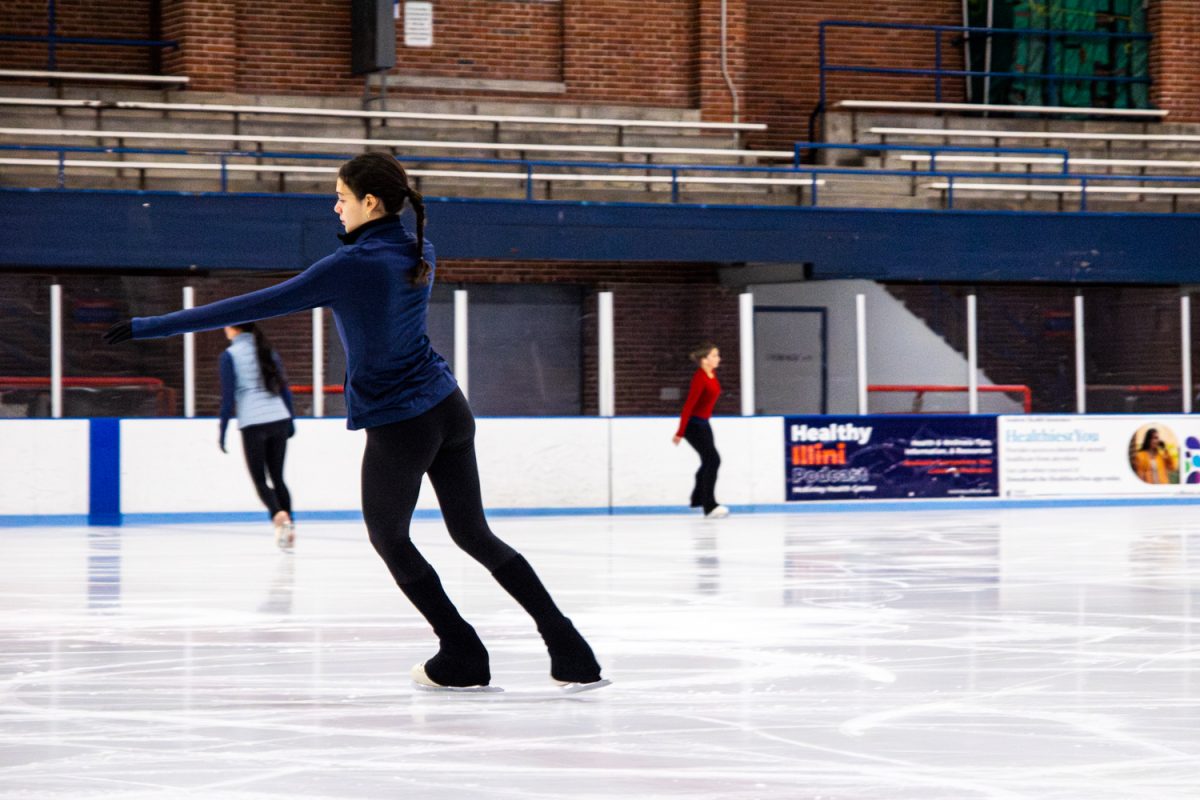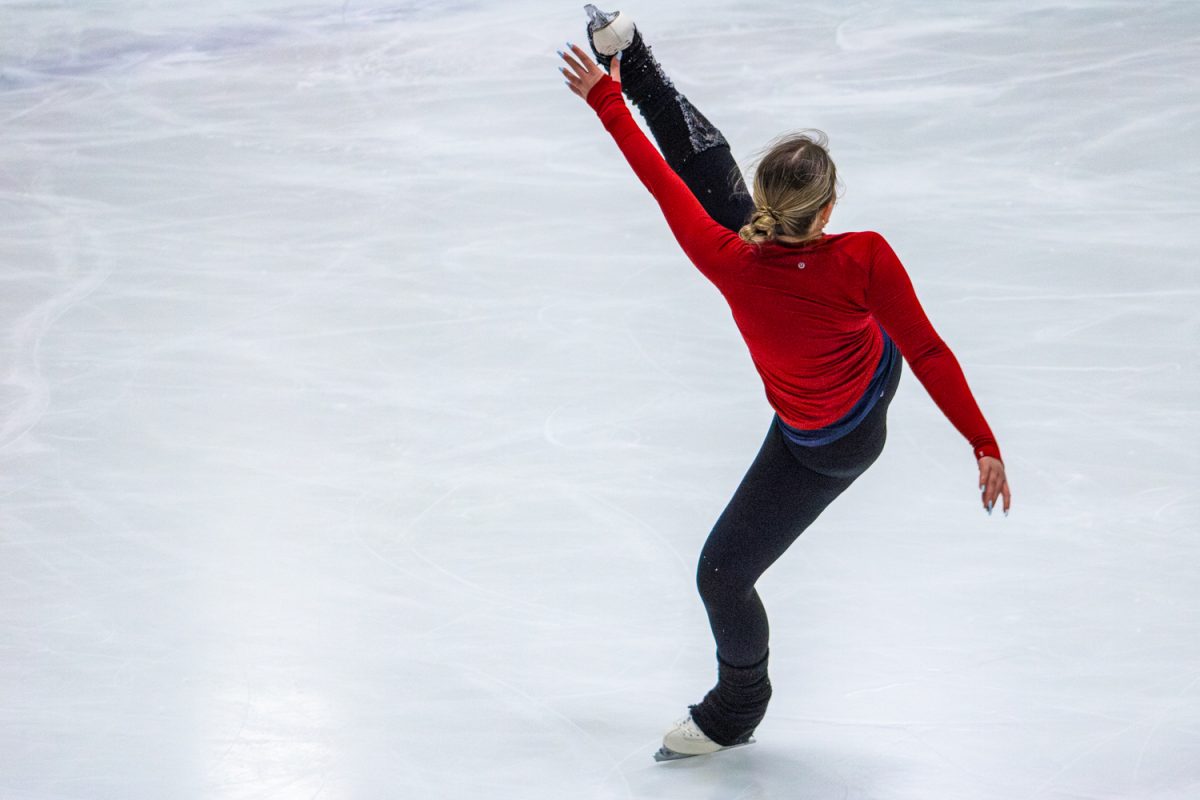
Many times, figure skating consists of solo competitions and individual scores. But through Illinois’ intercollegiate skating program, skaters find a supportive team despite their solo performances.
IllinoiSkating, originally called Illini Edge, was founded in 2001 as a space for University students to participate in competitive figure skating. The program includes two different teams: intercollegiate skating and synchronized skating.
The synchronized skating team consists of a group of 12-16 skaters working together on the ice to put together a program showcasing their speed, complex formations and challenging step sequences. The team practices three times a week, perfecting different elements that bring their routine to life.
In synchronized skating, all the team members are on the ice performing at the same time. For intercollegiate skating, each member competes solo or with a small group in one of the following events: men’s and women’s free program, short program, dance, free dance and team maneuvers.
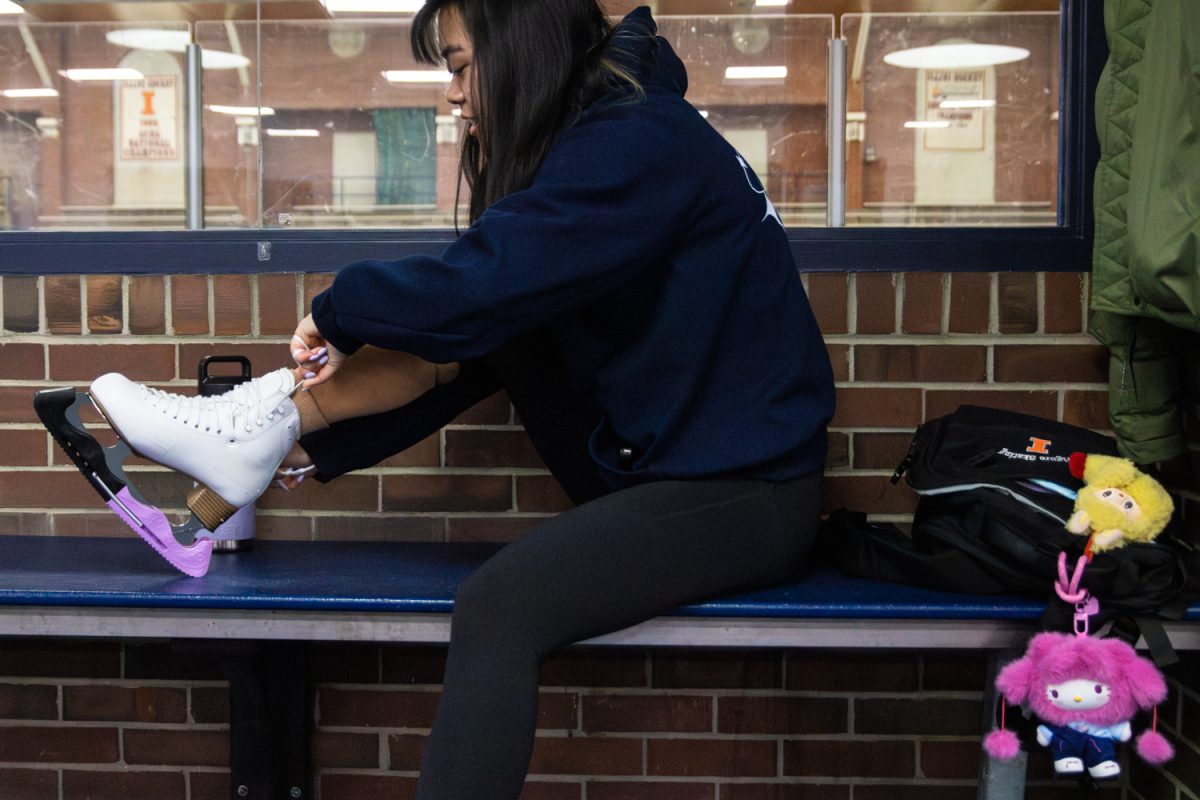
Although the skaters’ scores reflect their individual performance, all solo scores also add up to create the team score. According to Sloan Markin, junior in AHS and president of the intercollegiate skating team, each individual event contributes a certain number of points based on placement.
Get The Daily Illini in your inbox!
“All those points add up to IllinoiSkating’s final score, and that’s ranked against all the other teams that we’re competing against,” Markin said. “Those points definitely unify us as a team. We make signs for each other, we’re always cheering and we have a great bond on and off the ice.”
Markin originally became interested in skating after watching a skater compete at the first-ever USFSA Solo Ice Dance Nationals on TV. After watching the performance, Markin asked her mom to sign her up, and she’s been competing ever since. She even went on to win the same competition nearly 10 years later.
Since skating has been such a big part of Markin’s life, it only felt right that she continued to skate when she moved four and a half hours away from her hometown to attend the University.
“I’ve been skating my entire life, and it just made sense to keep a piece of home with me when I was moving so far away,” Markin said.
While Markin knew she wanted to join a figure skating team in college, not all members of the intercollegiate team came to the University with the same intentions.
Jackie Palmer, junior in AHS and treasurer of the intercollegiate skating team, quit figure skating in her senior year of high school. Palmer took a step back from competitive skating and didn’t plan on joining a team in college until intercollegiate skaters from her hometown persuaded her.
“I knew some people from home that were on the team and saying how much they loved it and how it brought their love back for skating,” Palmer said. “I know a lot of people in the figure skating community experience what I experienced in high school, and had to take a step back. But they had found a community of people that also wanted to keep skating and fall back in love with the sport.”
After joining the team and the executive board, Palmer has learned to put less pressure on herself when it comes to skating. For Palmer, being on the intercollegiate team has reinforced the idea that she can train hard and be a good skater while still having a good time.
While the executive board is putting in work behind the scenes to coordinate events and skaters are dedicating hours each week to learning their routines, the team still focuses on creating a supportive environment.
Part of the reason Paula Sardela, junior in Business and secretary of the intercollegiate skating team, has stuck with the team is because of the positive atmosphere they’ve created.
Sardela has been skating since she was 10 years old and first skated on the synchronized team before she found her place on the intercollegiate team. This community has allowed Sardela to see skating in a new and more enjoyable light.
“Even though we are competing individually and some people are in the same level, so they’re technically competing against each other, we’re very big on still being really supportive,” Sardela said. “Our biggest thing is that you’re having a good time and you’re skating because you want to skate and you like to skate, not because you feel like you have to.”
Though most of the skaters are used to skating solo in a highly competitive atmosphere, they have now found a new way to experience the sport they love, surrounded by others who support them.
Each member will take away their own lessons from their time with IllinoiSkating, from leadership skills to learning to persevere. But at the same time, many of them will leave knowing they have a strong support system of teammates, including Markin.
“I think the most important lesson I’ve gotten from IllinoiSkating is that the right people will stick by your side and that perseverance is key,” Markin said. “Skating is a lot about getting up again when you don’t want to, and, if this team has taught me anything, it’s that I can get up with the right people by my side.”