“I don’t know why you were so generous with me; why anyone at all cares about a prisoner,” a letter reads. It’s one of hundreds that line the booklet greeting visitors to the UC Books to Prisoners center of operations. Upon entering Books to Prisoners’ headquarters and packing center at the Urbana-Champaign Independent Media Center, it is clear that “anyone” is a lot bigger than just one person.
Dozens of volunteers at the center float between the shelves of books with a goal: completing book requests from prisoners across the state of Illinois. The book stock is wide-reaching and contains novels from Charles Dickens to Colleen Hoover, as well as dictionaries, self-help books and GED study guides.
For Books to Prisoners coordinator Rachel Rasmussen, providing this access helps humanize incarcerated individuals across the state.
“I think the idea that reading and learning are human rights, in my opinion,” Rasmussen said. “Access to information is a human right, and prisons should not punish people by dehumanizing through restriction.”
Upon receiving a letter of request from an incarcerated individual, the team on shift browses the 10,000-plus collection to find books that best meet the needs of the requester. From there, the books are inspected and cleaned to ensure Illinois Department of Corrections postage compliance.
Get The Daily Illini in your inbox!
Finally, members of the team top off the books with a personalized letter of their own and package them to be sent to one of 25 prisons across the state. These books are then kept by the prisoner and never returned to Books to Prisoners.
The Books to Prisoners project has distributed more than 190,000 books since its inception in 2004, according to Rasmussen’s data. This milestone reflects its core belief in the transformative power of literature. The organization recognizes that access to reading supports personal growth, education and self-development for incarcerated individuals.
A recent study found that prisons that provide educational resources, such as books, decrease the rate of re-imprisonment by 43% for an individual. Rasmussen noted the importance of education in these facilities.
“It seems like the best way to deal with harm — when harm has happened — is to treat people like human beings if we want them to act like human beings,” Rasmussen said. “Education is part of that because if we want people to reflect and change, then we have to give them access to information and learning.”
The mission and magnitude of Books to Prisoners could not be accomplished at scale without the help of donations and volunteers. The Champaign-Urbana community is the biggest driver of donations, volunteers and support for the statewide project. There is even a designated registered student organization at the University that helps with outreach and volunteer efforts.
For volunteer Meena Joudeh, sophomore in LAS, the decision to work on the project was a no-brainer.
“I chose to volunteer with Books to Prisoners because I’ve found a relationship between low access to education and criminal charges,” Joudeh said. “I wish others understood that nobody chooses to commit a crime just because.”
Joudeh recommends volunteering to anyone, noting it was a very eye-opening and transformative experience.
Currently, Books to Prisoners is collaborating with an undergraduate consultant team in BUS 301: Business in Action at the Gies College of Business. The hope is that the consultants are able to help streamline business processes and expand outreach in the community, per Rasmussen’s guidance.
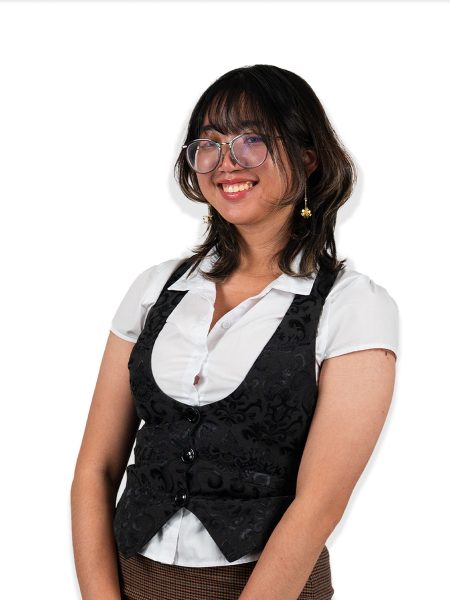
One consultant on the project, Ain Polara, junior in Business, has been inspired by the experience and unique mission.
“Books to Prisoners is such a great organization and has helped me understand the complexities of incarceration,” Polara said. “I hope that with our help we can expand their operations to cover even more places across the state.”
One of the major fundraisers for Books to Prisoners is its biannual book sale held at the Independent Media Center. These books were previously donated but did not pass correctional facilities’ guidelines due to tears, weight or ink splotches. Many of these books are sold for $1, and the proceeds go directly back to the organization.
“Without the donations of books — and without the community being willing to come out to the book sale and support it — we couldn’t do this,” Rasmussen said. “We serve the whole state of Illinois, and yet this little community does most of the work and the funding.”
The biannual book sale will be held April 11, at the Independent Media Center in Urbana from 9 a.m. to 5 p.m.