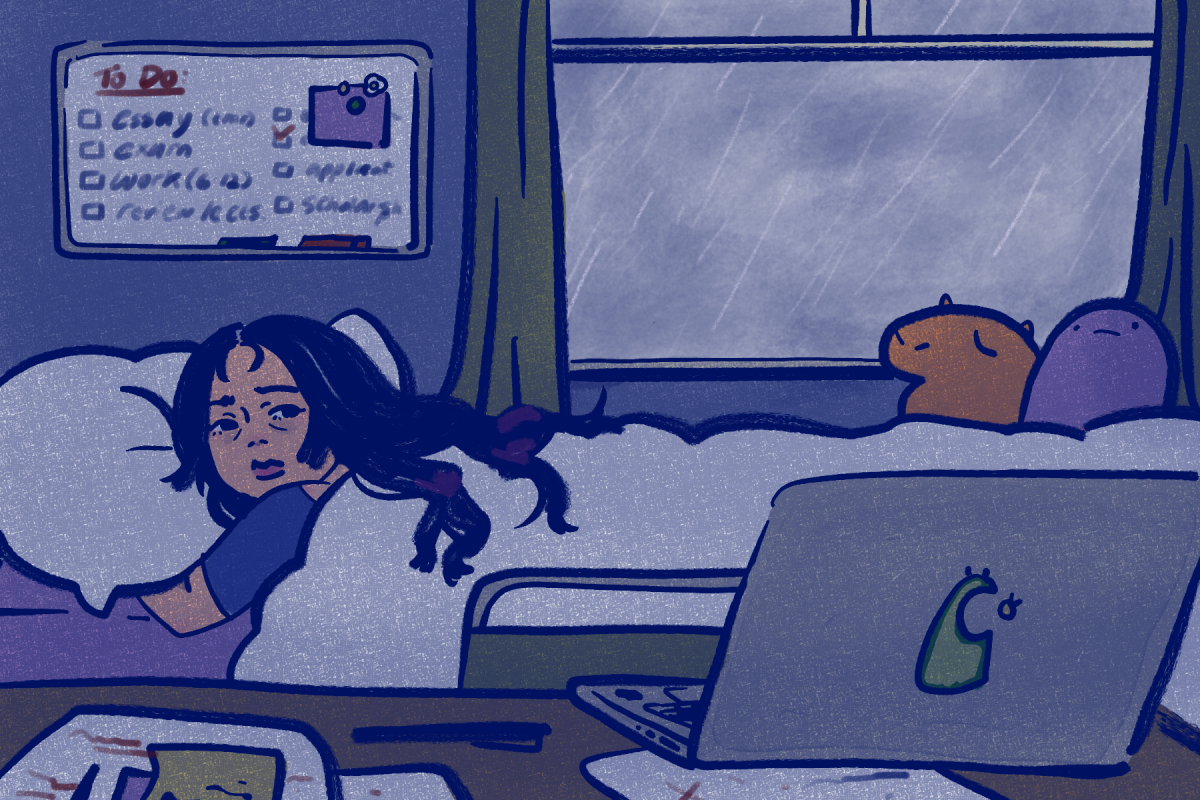
On a cold night and a rainy day, the negative effects of dreary weather go beyond the forecast.
For some, the weather is a minor inconvenience. For others, it affects energy, mood and productivity on campus. These are harder to ignore and can take a toll on academic performance.
Seasonal affective disorder, also known as SAD, is a mental condition that occurs during seasons where daylight is limited. According to Mayo Clinic, reduced sunlight can disrupt the body, leading to a drop in serotonin production and energy. The seasonal changes also alter melatonin levels and affect sleep patterns.
Paola Diaz, senior in LAS, noted her productivity declined when she couldn’t travel outside. She said it is hard to reach her usual study spots when the walk is unpleasant, like in rain or wind.
“I find myself leaving the house less, and I don’t find myself as productive inside,” Diaz said.
Get The Daily Illini in your inbox!
Beyond motivation, Diaz said physical conditions also play a role in her academic performance. During colder months, she explained that poorly maintained sidewalks make it harder to travel to study spots, directly impacting her coursework.
Jason Mei, freshman in Business, is originally from the East Coast, where it’s typically much warmer. He said adjusting to the Illinois weather was a challenge for him since he is used to enjoying outdoor activities.
“The cold weather is nice sometimes, but it’s very unmotivating for students walking to class and getting up in the morning, especially when it’s windy,” Mei said.
Outside of study habits, bad weather affects how students perform inside the classroom.
Matea Mustafaj, professor in LAS, said she sees a noticeable difference in attendance and participation on gloomy days.
“I think that if you wake up and it is a gloomy day outside, you’re probably more likely to not want to go to class,” Mustafaj said.
While students may still complete their assignments, Mustafaj said engagement decreases and that students are more prone to zoning out.
Mustafaj said the drop in engagement sometimes causes students to retain less information, making it a challenge to be engaged in course materials. She said she makes an effort to adjust her teaching style depending on this change. She incorporates more interactive content to keep students engaged and learning despite the lack of focus.
Mustafaj also said some of her students use high-energy music while walking to class, helping to modulate their energy levels and give them a boost that is often needed for focus. She suggests this coping skill to students who face these seasonal challenges.
Andrea Fanta, extension specialist in mental health with the Integrated Health Disparities program in ACES, explored seasonal affective disorder in her Health Insights Illinois blog.
Fanta wrote about the strategies to help overcome these shifting feelings in seasons, such as light therapy, natural light exposure, regular exercise, quality time with friends or family and seeking professional help. She said these coping strategies can help students understand their mental health better.
As the semester continues with warmer temperatures in the near future, both students and professors can reflect on how environmental challenges shape academic performance.
For now, students continue to navigate the unpredictable Midwest weather on campus.