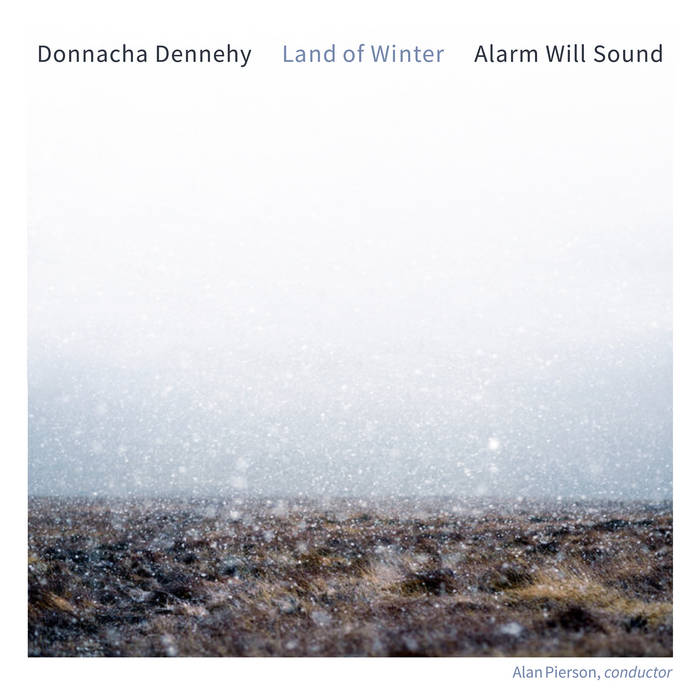
University alum and professor of music at Princeton, Donnacha Dennehy won his first Grammy in “Best Chamber Music/Small Ensemble Performance” for his composition “Land Of Winter.” The piece was also nominated for Best Contemporary Classical Composition.
In an interview with The Daily Illini, Dennehy said he spent the morning of the nominations composing and avoided following them until his wife revealed the news.
“My wife was jumping up and down outside the window, and I thought, ‘Oh no! Is everything OK?’” Dennehy said. “She said we got nominated for the Grammys, and that felt surreal.”
Dennehy said the nomination itself held special meaning, even before the award ceremony, because it affirmed that audiences continue to engage with his work even after years of composing.
Born and raised in Ireland, Dennehy said his cultural background and relationship to landscape helped him compose “Land of Winter,” which was released Nov. 15, 2024.
Get The Daily Illini in your inbox!
The piece unfolds across 12 movements, each representing a month of the year, beginning in December and ending in November.
Dennehy said he drew inspiration from the Roman name for Ireland, Hibernia, which means “land of winter,” and from the country’s dramatic shifts in daylight throughout the year.
He then translated those changes into sound, expanding and contracting light through the music to mirror Ireland’s extreme seasons.
Dennehy said the work also explores how the changing seasons repeat while human life does not. The contrast between repeating seasons and the short span of human life, he said, is what gives “Land of Winter” its emotional depth.
“I think about time in another way … this kind of linear time, which to me is kind of terrifying, which is sort of like death,” Dennehy said.
The ensemble Alarm Will Sound, which has collaborated closely with Dennehy over many years, performed the work at the Grammys.
Dennehy has worked with the ensemble and its artistic director, Alan Pierson, for nearly two decades, building a close creative partnership over multiple major projects. He said the musicians understand his compositional voice, often shaping the music through experimentation during their rehearsals.
Dennehy completed both his master’s degree and doctorate at the University, which he described as foundational to his development as a composer.
“I think it was maybe one of the best decisions I ever made, to go to the U of I,” Dennehy said. “It was a wonderful kind of opening up for me, coming from Dublin, to all these conflicting views about what you do as a composer.”
He returned to campus Nov. 1 of last year for a concert featuring his music and a world premiere performance.
Joshua Graham, professor in FAA and percussion program coordinator, commissioned a piece from Dennehy that premiered at the event.
Students in Graham’s program had the rare opportunity to perform Dennehy’s works directly for him as well.
Graham was able to commission the piece titled “Moire” through a Library of Congress grant. He said grant applications often depend not only on the project itself but also on the composer’s reputation. Dennehy’s established career helped strengthen the proposal and made the project more competitive for grant support.
“I just always had kind of a dream of a piece from him … and so that was really a dream come true when we premiered it in the fall,” Graham said. “I wanted to see if he would be interested in writing a piece that was connected to the troubles in Northern Ireland … and he did.”
As a professor, Graham said Dennehy models the kind of career path he hopes students can imagine for themselves.
“I think Donnacha’s a great inspiration in that way because of the kind of multi-faceted career that he’s built that allowed him to get an accolade like this,” Graham said.
Ultimately, this collaboration defines the standard for the School of Music. It is a place where a Grammy-winning composer can return to his former university not just to be celebrated, but to inspire students to build their own legacies.