You might think that the University’s engineering talent remains confined to its cornfields until students graduate. But members of Engineers Without Borders are pushing the boundaries of how far innovation can take them, both metaphorically and geographically.
EWB’s chapter at the University dates back to 2003, just one year after Bernard Amadei founded the national organization. Since then, the chapter has completed seven unique projects spanning Asia, Africa and Central America.
The group is currently tackling three new projects centered in Malawi, Rwanda and Woodford County, Illinois. On-site visits and assessments are crucial components of the projects’ success.
Viraj Kapur, sitting president of EWB and junior in Engineering, described how the scale of the organization’s projects seemed baffling when he first joined.
“It just seemed preposterous, honestly, that a bunch of 20-year-olds are making bridges or water distribution systems in other countries,” Kapur said. “It sometimes still isn’t impressed on me, just how crazy that is. But that’s definitely why I stuck around.”
Get The Daily Illini in your inbox!
Projects receive the majority of their funding from EWB’s fundraising activities, which range from thrift sales to an annual 5K. The group aims to fundraise $100,000 to cover contracting and material costs, and has raised $64,000 so far.
While sponsors like CDM Smith help cover some expenses, Kapur emphasized the importance of grassroots fundraising, since EWB chapters are responsible for financing their independent projects.
“It’s a lot of small things that, on their own, might not be the difference between funding a project successfully or not, but it all builds towards the tipping point of helping us succeed,” Kapur said.
The Malawi Structures Project is the group’s most expensive ongoing project, with a fundraising goal of $70,000.
Members of the Malawi team are working to build a bridge for the 25,000 natives of Chilaweni to cross the Mphati River.
According to Juliette Deley, co-lead of the Malawi project and junior in Engineering, during monsoon season, flooding from the Mphati river cuts the community off from essential facilities and resources, such as the World Health Organization clinic on the other side.
Deley is keen on pursuing infrastructure in developing countries after graduating, an aspiration inspired by her global upbringing. She was born in London and raised in the U.S. and Bahrain.
“I found EWB, and I was like, ‘Oh my gosh, this was meant for me,’” Deley said.
After traveling to Malawi in 2024, she said that her experience going door-to-door and interacting with families in the community was a highlight of her EWB experience.
“We really got fully immersed in the community,” Deley said.
According to Deley, the team slept on sleeping mats in a local schoolhouse. They ate meals with the community every day, helped them cook and played with the local children.
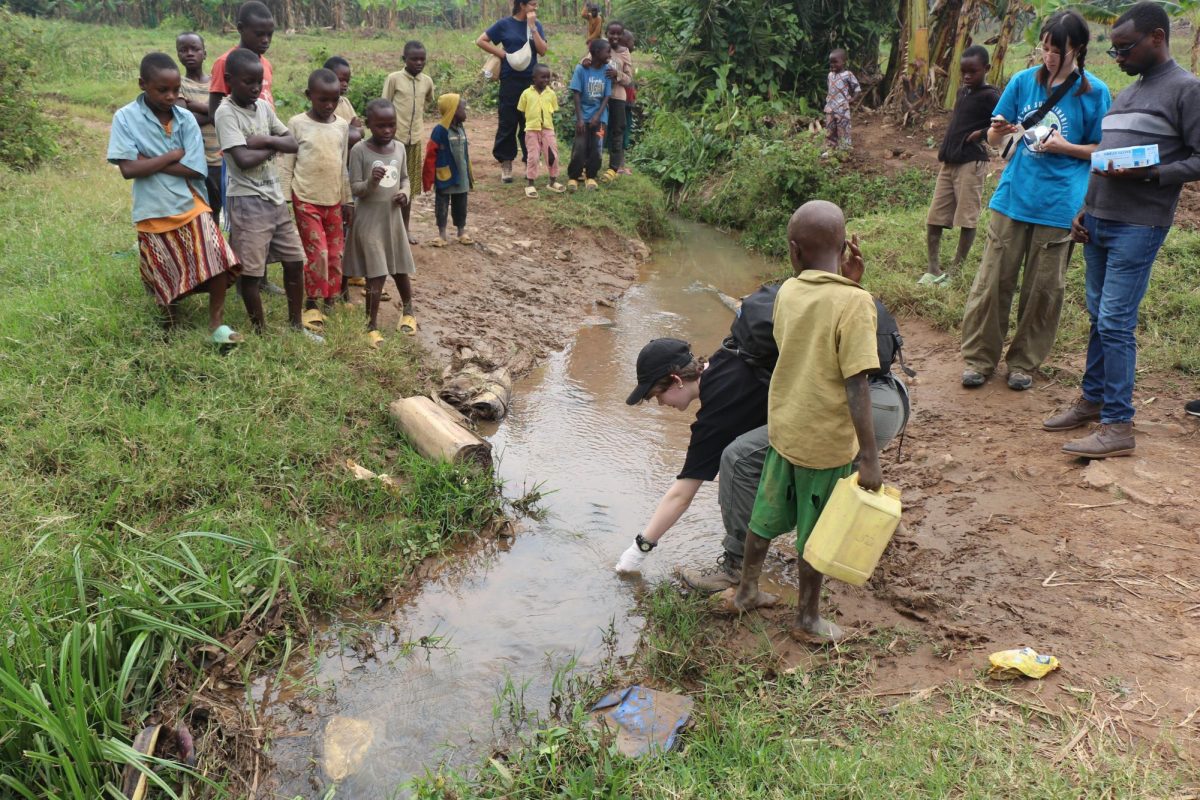
Samarth Samal, co-project lead for Rwanda and junior in LAS and Engineering, similarly said that visiting Rwanda this summer for his field assessment was memorable.
“As someone who’s of Indian descent, going to Rwanda actually just felt like I was visiting my family,” Samal said. “The landscape and how everything looked — it felt familiar.”
The Rwanda project focuses on designing a water distribution system for a community of 3,000 people, according to Samal. He and the rest of his team are designing a tank, a pipeline and tap stands to make fresh spring water accessible.
“We want to leave that lasting (impression) that there are young people out in the world who still want to do good and want to help those in need, even if you’re thousands of miles apart,” Samal said.
EWB is hosting its first-ever gala on Nov. 14 from 7-9 p.m. Tickets to see the Field Museum, the White Sox and the Cardinals will all be available at the event’s silent auction.
The event’s theme, “Building Bridges,” represents the organization’s mission, not only in its structures project in Malawi, but between communities worldwide.