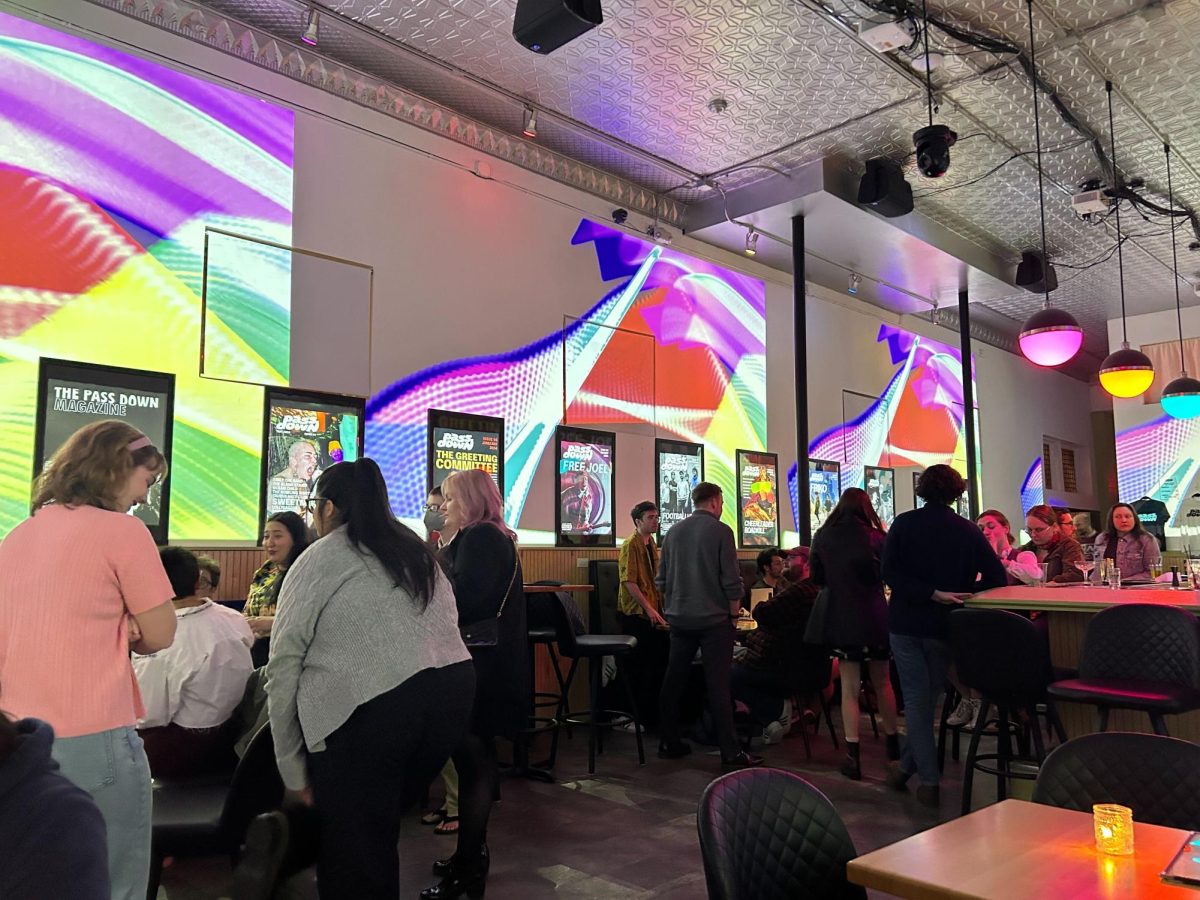
People gathered for the kick-off of the 2010 C-U Big Read month at the Alice Campbell Alumni Memorial Center Thursday night. The Big Read is a cross-nation organization that works to make the role of literature in people’s lives more profound and to unite people of diverse cultures through chosen novels.
This month, the organization sought to introduce the novel Sun, Stone, and Shadows, a literary piece composed of short stories by Mexican writers, to the students and faculty. The “Life in a Border Town” exhibit, featuring pictures taken by Mexican children, will also be open to the public throughout the month to enhance the community’s understanding of other cultures.
The Big Read is a program of the National Endowment for the Arts that started in 2006.
“The Big Read answers a big need”, said Emily Love, an outreach librarian for multicultural service. “In Champaign-Urbana, this is now our third year with The Big Read.”
Love said after a 2004 report by the federal agency indicated a rapid decline in literary reading among all groups, concerns were raised about the persistence of the American literary culture. On its Web site, the Big Read said it “aims to address this crisis squarely and effectively” and offers a unique opportunity that “provides citizens with the opportunity to read and discuss a single book within their communities.”
Get The Daily Illini in your inbox!
“The institutions that host The Big Reads are usually libraries,” Love said. “So, as one of the prominent university libraries in the United State, I think it’s an ideal collaboration.”
The opening of the exhibit was the kick off’s center feature. Given three weeks, 5th graders of the Felipe Carillo Puerto primary school were provided with 100 disposable cameras to capture moments of their lives in the border city of Reynosa McAllen, Texas. The organization provided the children with training materials for basic photography. The children returned with over 2,000 photographs, of which 50 are on display at the exhibit. The pictures on display show which child is the chosen finalist after two rounds of selections.
David Freeman and Jonathan Searfoss, the project founders, were both present at the opening.
“We decided that our unique position allowed us to give a unique perspective,” Searfoss said.
Searfoss and Freeman both lived on the American side of the border town.
“It’s an intimate type of way to understand others that are different but the same,” Freeman said. “It’s such a communal borderland with so many concerns that crossed over.”
The exhibition is on display on the second floor of the Alice Campbell Alumni Center and ends May 5.