City reacts to TV scandal
Apr 21, 2008
Last updated on May 13, 2016 at 10:05 a.m.
In the Monday, April 21 edition of The Daily Illini, the article “City reacts to TV scandal,” quoted Ester Patt as a Champaign resident who “confirmed it is within the Council’s authority to censor speech.”
Patt’s first name is Esther, she is an Urbana resident and did not confirm the Council’s authority to censor speech. Patt instead said the Council does not have the power to do so.
The Daily Illini regrets these errors.
The following is the story as it appeared in print that day.
Get The Daily Illini in your inbox!
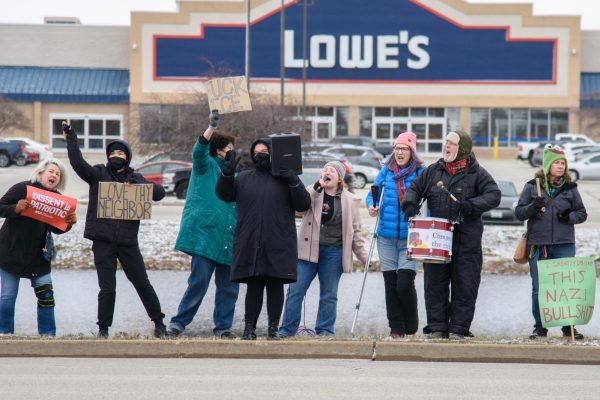
The Urbana City Council listened to pleas for action from Urbana residents April 14 after hearing and watching what the residents called ‘an anti-Semitic and hate-filled speech’ seen on Urbana Public Television Channel 6.
“The response to hate speech, is more speech,” said Urbana resident Paul Mueth at last Monday’s Urbana City Council meeting.
What began as a proposal to adopt revised Urbana Public Access Television access policies by the Council turned into a session of public input, consisting of both praises for the new public arts program and harsh criticism toward the accessibility of local television programming.
The programming consisted of many accusations and defamatory language against the Jewish community. Claims that the Jewish community wants to take over the world, should fornicate with children and is responsible for the French and Russian Revolution are just a few examples that were heard on the program.
“I’m very torn,” Charlie Smyth, Ward 1, said Sunday. “We have very beneficial and useful programming on that channel that the city values. But this kind of speech is very unacceptable and doesn’t deserve any kind of attention.”
In September 2007, public concern over public access programming prompted the UPTV Commission to review the station’s policies and procedures. Adding to the concern, specifically toward the sections pertaining to nonlocally produced programming, is that the controversial speech originated from an Oregon broadcast program.
In the following months, the commission began updating its policies and language to attempt to address the circumstances on which speech is protected under the First Amendment. Ester Patt of Champaign confirmed that it is within the Council’s authority to censor speech.
“Censoring this kind of speech will not keep these types of people from talking with sources like the Internet still in full operation,” she said. “It is by our U.S. Constitution that we have freedom of speech, and it’s not your job to debate our freedoms.”
Urbana resident Mitchell Harris said the channel should be limited to Urbana topics, such as local government and political issues.
“Keep it simple,” he said at the April 14 Council meeting. “We should have educational programming that is meant for the people. If we can’t do that, then Urbana should not be in the TV business.”
One of the many changes that were in the new proposal dealt with content issues and stated that the correct response to hate speech was more speech instead of enforcing silence.
“An attempt to counter this kind of speech gives the speech the dignity that it absolutely does not deserve, and history has shown us that hate kills,” Champaign resident Paul Weichsel said at the meeting. “We must give local people a local channel to only talk about local issues because this kind of speech does not reflect our community at all.”
But members of the Council say it is not that simple. There are legal circumstances involved with the censorship of certain public programming. Part of the city’s new revisions about UPTV programming was an added policy that read, “The city of Urbana does not condone or endorse speech that promotes fear, hatred, prejudice, or discrimination toward any group based on religion, ethnicity, race, gender, or sexual orientation.”
Another revision was that any person with the desire to broadcast programming on UPTV must provide proof of residency. The combination of these two revisions, among many others, could give the Urbana City Council grounds to cancel the program with the speech in question.
The Council will meet April 28 to give an official ruling on UPTV programming.
“At what point do we say enough is enough?” an Urbana resident said. “This program is funded with taxpayer dollars. This doesn’t just insult Jewish people; this should insult us all as people with hearts and human beings.”