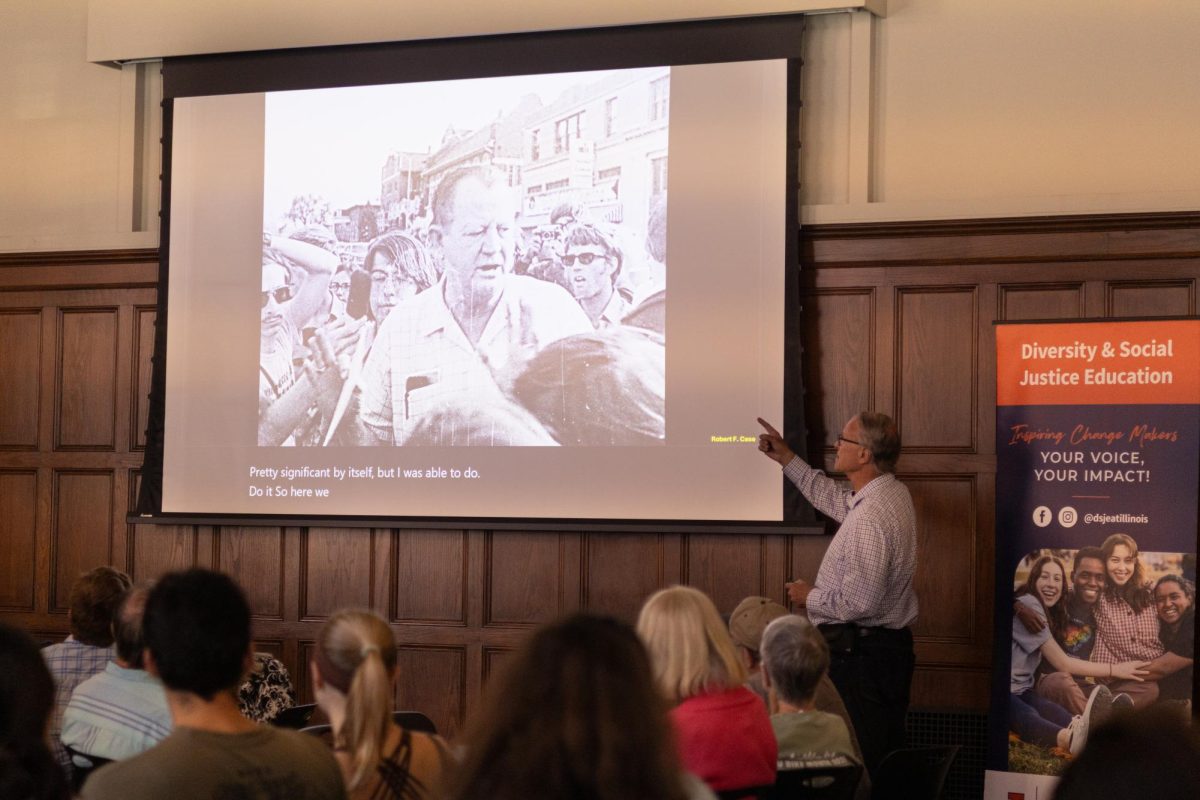
Robert Case, a 1971 University alum, photographer and activist, gave a presentation Friday recounting his experience documenting widespread protests on campus against the U.S. expansion of the Vietnam War into Cambodia in May 1970.
Case gave the talk at the University YMCA’s weekly Friday Forum and Conversation Café, titled “From Vietnam to The Quad: Student Activism at UI in Early 1970.”
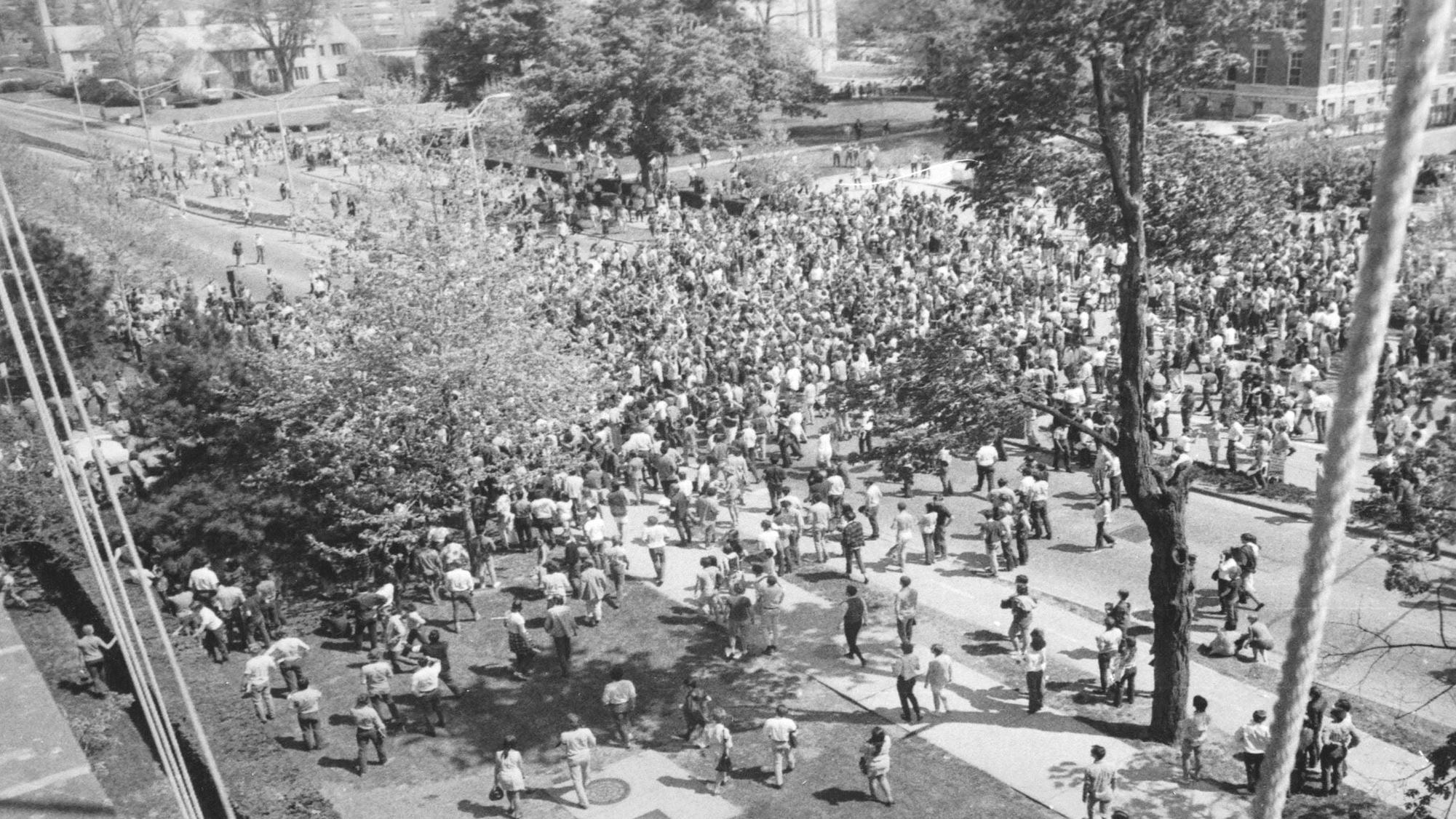
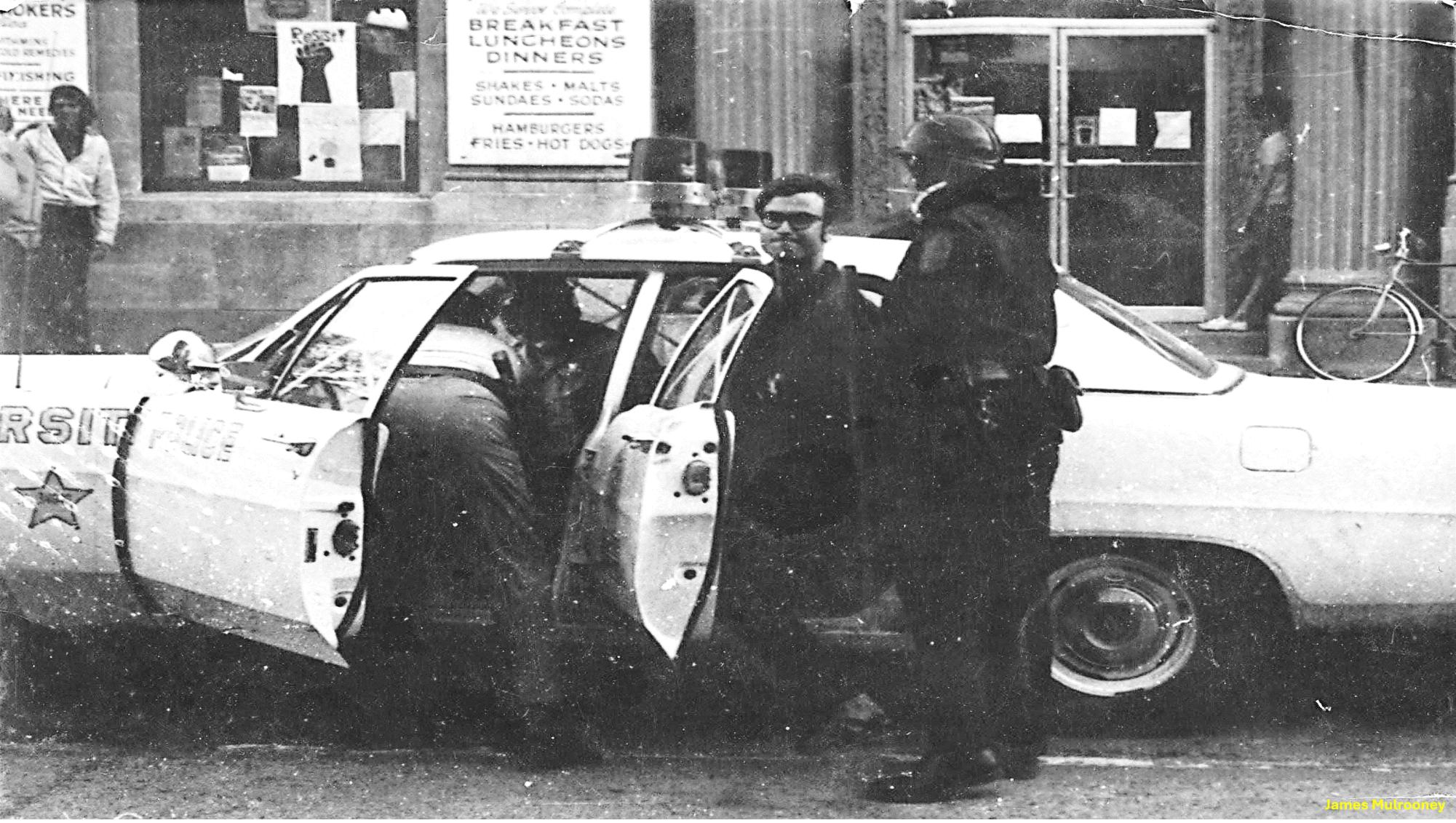
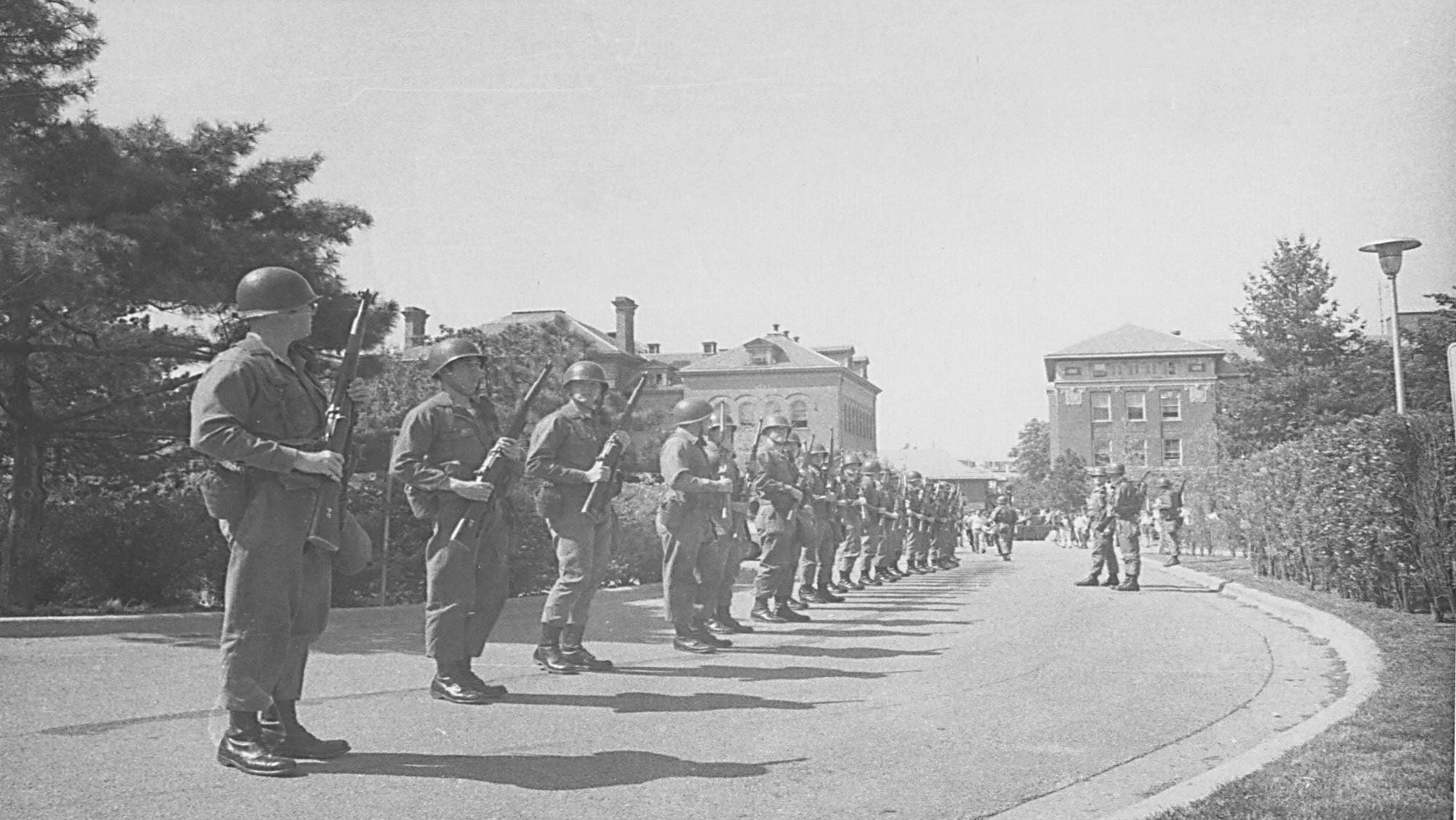
Some of the dozens of photos Case displayed showed students filling the Main Quad, local police agencies arresting protesters — including students and professors — and the National Guard deploying to campus. Case said he was one of 157 people arrested during the protests.
“It’s really not about me,” Case said in his presentation. “It’s about freedom of speech (and) what we can do today to keep that going. We don’t want to lose that freedom that is ensconced in our constitution here in the United States, and we’re not going to let that go.”
Case drew parallels between the Nixon administration and the Trump administration. He said protesters were resisting what they saw coming out of Washington D.C., then rhetorically asked the audience whether or not it sounded familiar.
Get The Daily Illini in your inbox!
“I’m not going to go there too much, but we also had an authoritarian government back then doing things from the Oval Office that we didn’t agree (with),” Case said.
Vietnam War expansion, campus protests
On April 28, 1970, after half a decade of U.S. military action in Vietnam, Nixon authorized the military to expand the war into neighboring Cambodia in cooperation with South Vietnamese troops. They aimed to fight against communist troop sanctuaries in the country.
The decision sparked a number of resignations among National Security Council members and aides to then-National Security Advisor Henry Kissinger. It also led to a wave of anti-war demonstrations at colleges and universities across the country — including one at Kent State University on May 4, 1970, when Ohio National Guard members shot and killed four student protesters.
On May 6, 1970, in response to Nixon’s order and the guard’s killing of protesters at Kent State, students, faculty and community members in Champaign-Urbana “poured out into the streets,” Case said. Those protesting the events went on to strike from classes and work.
“It was everywhere on campus, everywhere you look,” Case said.
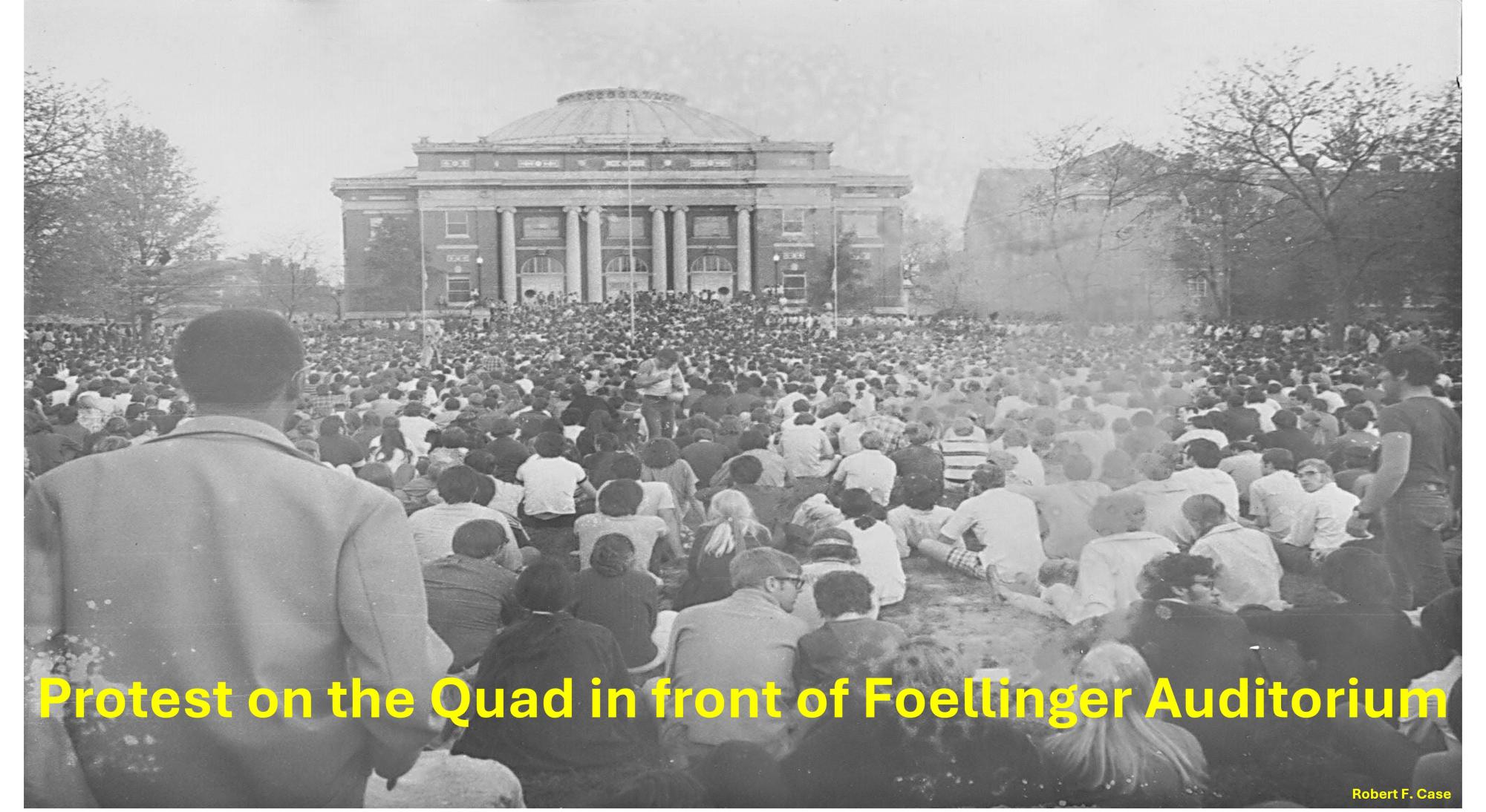
At the time, Case was working as a staff photographer for The Daily Illini, The News-Gazette and Walrus, an extinct underground newspaper, he told the audience.
As Case continued to show photos he took of the protests, he reflected on his youth and the attitude he said young people espoused at the time.
“Somebody’s got to stand up to this,” Case said. “I was probably 19 or 20 at that point. Nothing bothered me — I was out there with the camera, and I was going to take these pictures, and I’m not going to let anybody phase me.”
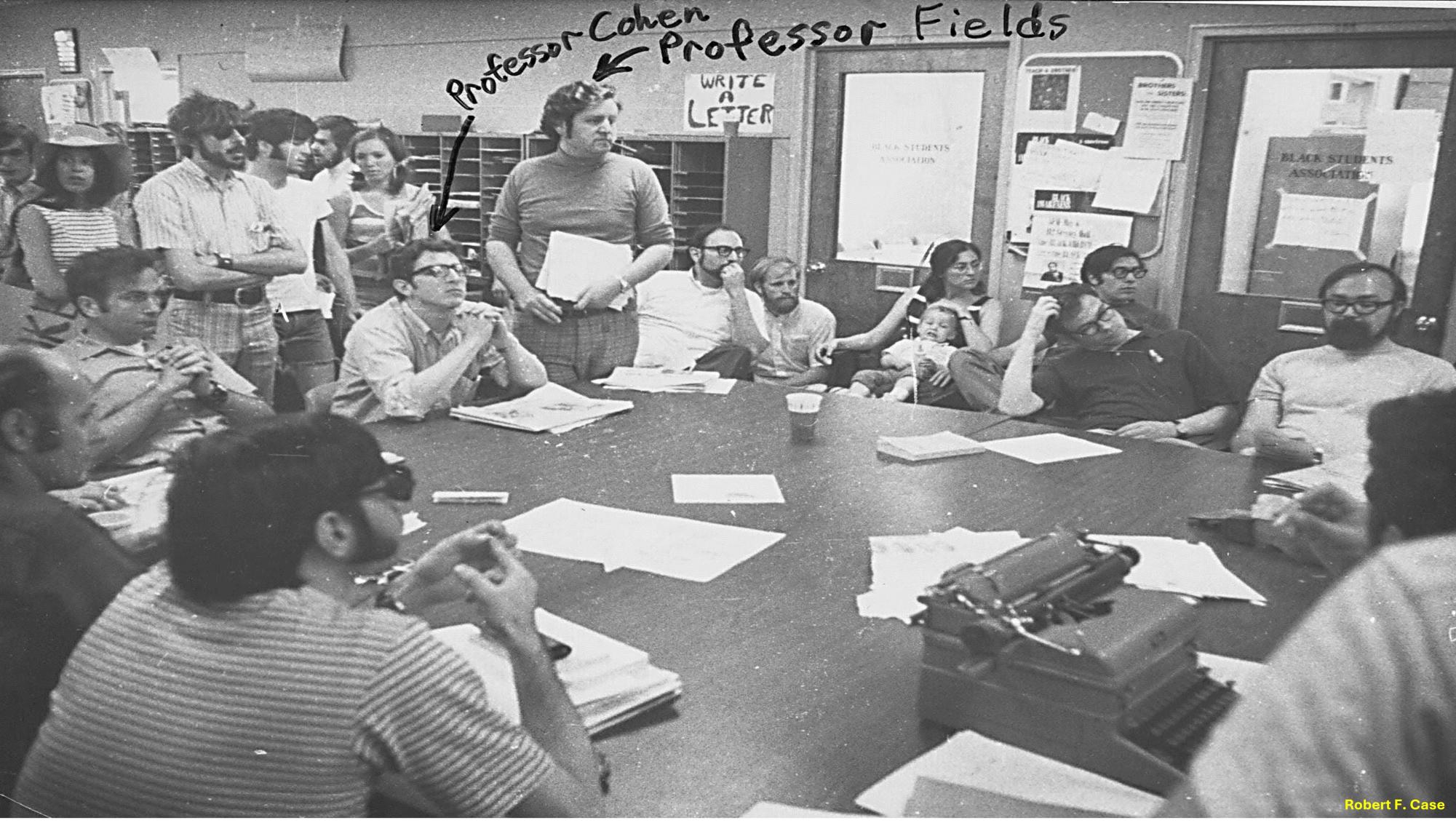
He mentioned multiple University professors, including Stephen Cohen and Belden Fields, and a visiting professor from Yale University, Michael Parenti, who, alongside students, protested against the war and the University’s response.
Parenti later wrote in his 1996 book, “Dirty Truths,” that he was beaten by police and arrested during the protests and convicted on felony charges, including aggravated battery.
“(Parenti) told us what to do, but then he was out on the front lines with us,” Case said. “He wasn’t scared to do that … He was probably the most vocal and the most demonstrative during all of this tumult … He got beaten up for it, too, by the cops.”
Soon after the unrest began, Cohen, Fields and Parenti, along with 12 other political science faculty members, authored a letter criticizing the Vietnam War, the Kent State deaths and the Champaign Police Department’s April 1970 killing of Edgar Hoults, a Black man in Champaign. The authors called the Nixon administration a “criminal regime.”
The University of Illinois Board of Trustees called on the letter’s authors and signees to retract their statement, saying it was a violation of their professorial guidelines. Cohen and another signee, George Yu, wrote individual letters to the Board of Trustees in response. The other 13 signees wrote a collective response accusing the school of repressing their academic freedom.
In July 1970, the Board of Trustees unanimously voted to censure the 13 faculty members who wrote the collective response for “unprofessional conduct.” Timothy Swain, a trustee at the time, said the original letter contained anarchist language.
“Cohen and Fields were always there, helping us strategize and get our act together, and make sure that we were doing everything legally,” Case said.
Case continued clicking through images and showed a photo of protesters near Gies Memorial Stadium running away from police forces and National Guard troops. He compared the scene to Hamas’ attack on Israel on Oct. 7, 2023.
“If this picture looks very eerily familiar, think about October 7, two years ago, in Israel,” Case said. He did not expand on the comparison.
In multiple instances during his talk, Case criticized violence and property damage during protests.
“I was there on Green Street when the activist leaders who were breaking the law started breaking windows,” Case said. “I wanted to record that to show that that’s too far … But that’s what they did, and that’s when a lot of things came down on the heads of Illini students.”
Case showed a photo of and recalled a moment when a cop brandished his weapon. The cop suggested that if Case moved any further, the officer would aim at him. Case responded: “So be it.”
After he finished showing photos of the protest, Case transitioned to the lessons he took away from the period.
“Never let your guard down, ever,” Case said. “Support constitutionally guaranteed free speech. You’ve got to do it. It’s the only way. We’ve got to face what’s going on currently, and we’ve got to push back.”
By April 1973, three years after the expansion of the war, the last U.S. troops left Vietnam.
Audience questions
After the talk, Case opened up the floor to questions. One audience member asked Case if he was more afraid then or if he’s more afraid now.
Case responded that he was more afraid then, in 1970. He added that he and his wife had been to several recent demonstrations against the Trump administration in St. Louis.
“We’re going to continue to put our voices out there,” Case said. “We’re not afraid.”
Another audience member, who was wearing a shirt in support of Palestine, asked Case about Israel’s current military action in Gaza. The audience member referred to Israel’s actions as genocide and asked Case about whether he thinks international solidarity is essential.
The International Association of Genocide Scholars, the world’s largest genocide scholar organization, said in August that Israel is committing genocide in Gaza. An independent United Nations inquiry said in September that Israel has committed genocide in Gaza.
Case did not directly address the conflict; however, he said he was in support of Palestine.
“I agree with you, what you’re doing there,” Case said as he pointed to the audience member’s shirt. “Sharon (Case’s wife) and I have been protesting a lot of things. We’ve got a huge Palestinian community at Southern Illinois University in Carbondale, and they’ve been out in the streets almost every weekend, so we know that.”
The DI asked Case what impact he thinks student activism plays in U.S. government policy, pointing to several demonstrations around campus and C-U about a number of political issues.
He said it impacts policy “very little,” saying the president is an “authoritarian” who will “roll right over you” and “use every means possible.” He pointed to President Donald Trump’s order for Immigration and Customs Enforcement to carry out a mass deportation campaign.
But Case said people should fight back regardless.
“Even though that may not be very effective to push back, you’ve got to do it,” Case said. “It will eventually have an effect. It may not be immediate, but combined, everybody pushing back in their own way, with their own groups or individually, it will have a positive effect. I believe it, and that’s why I say I’m not afraid. We’re going to move forward.”