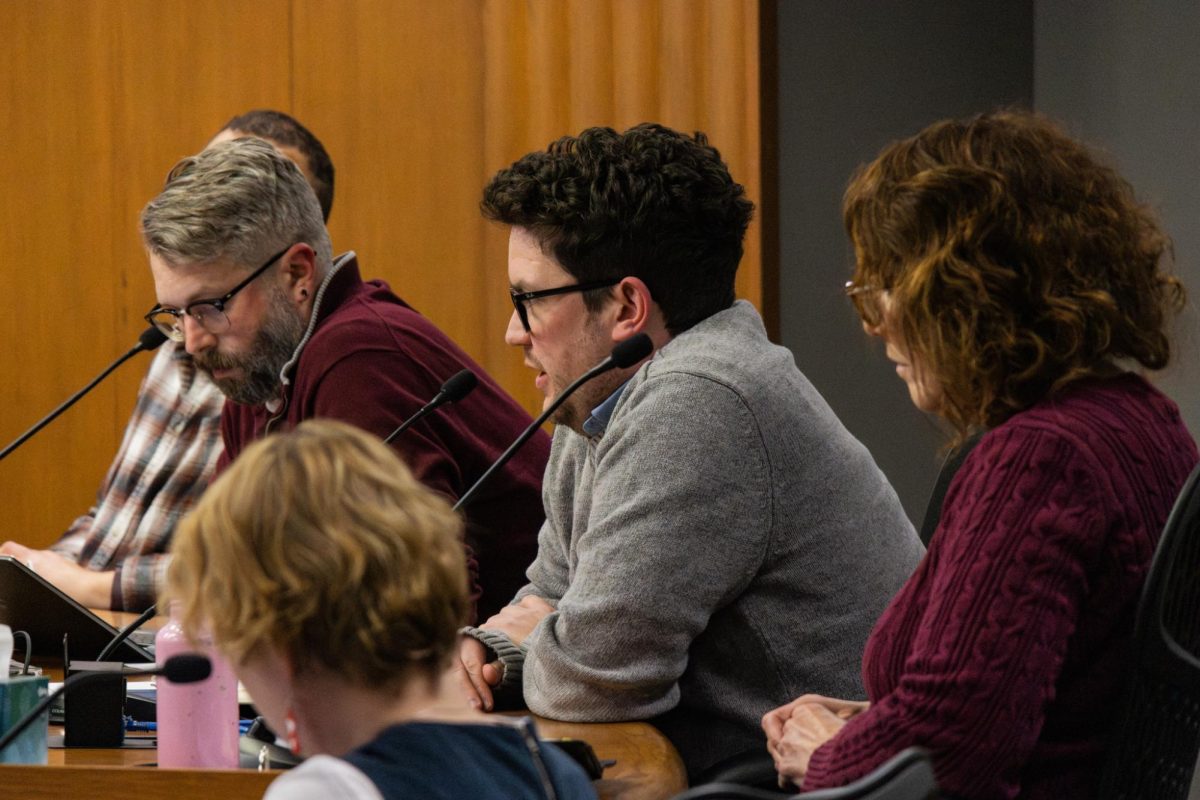
After nearly three hours of uninterrupted public criticism from over three dozen community members late Tuesday night, the Champaign City Council unanimously rejected an ordinance which would prohibit camping on city property.
The ordinance, Council Bill No. 2025-196, would have banned public camping on city-owned property and public right-of-way. It also would have given those in violation a seven-day notice to clear their campsites.
City workers, according to the bill, would have been allowed to impound unattended personal belongings from campsites if not cleared within seven days. The bill further allowed the city to dispose of personal belongings if they were not retrieved within 30 days.
The proposal included a fine structure for individuals the city could prove were not experiencing homelessness. Those penalties increased from $75 to $750 depending on the number of violations within a 180-day period.
The bill argued that it would benefit the public health, safety and welfare of Champaign residents. It cited research that shows homeless individuals suffer higher mortality rates and chronic disease loads than non-homeless populations and that they overuse emergency services, leading to higher costs for treatment for all persons.
Get The Daily Illini in your inbox!
Research also shows that having no form of shelter can exacerbate existing health conditions, according to the bill. The proposed ordinance would provide another “tool in the toolbox to attempt to address the complex issues related to homelessness,” the bill stated.
The proposed ordinance cited the U.S. Supreme Court’s 2024 ruling in City of Grant’s Pass v. Johnson. The Supreme Court ruled in that case that public camping ordinances do not constitute cruel and unusual punishment of homeless people.
The City Council, according to the bill, has determined it is “appropriate, necessary, and in the best interests of the City and its residents to implement a public camping ban to address the myriad public concerns that public camping creates.”
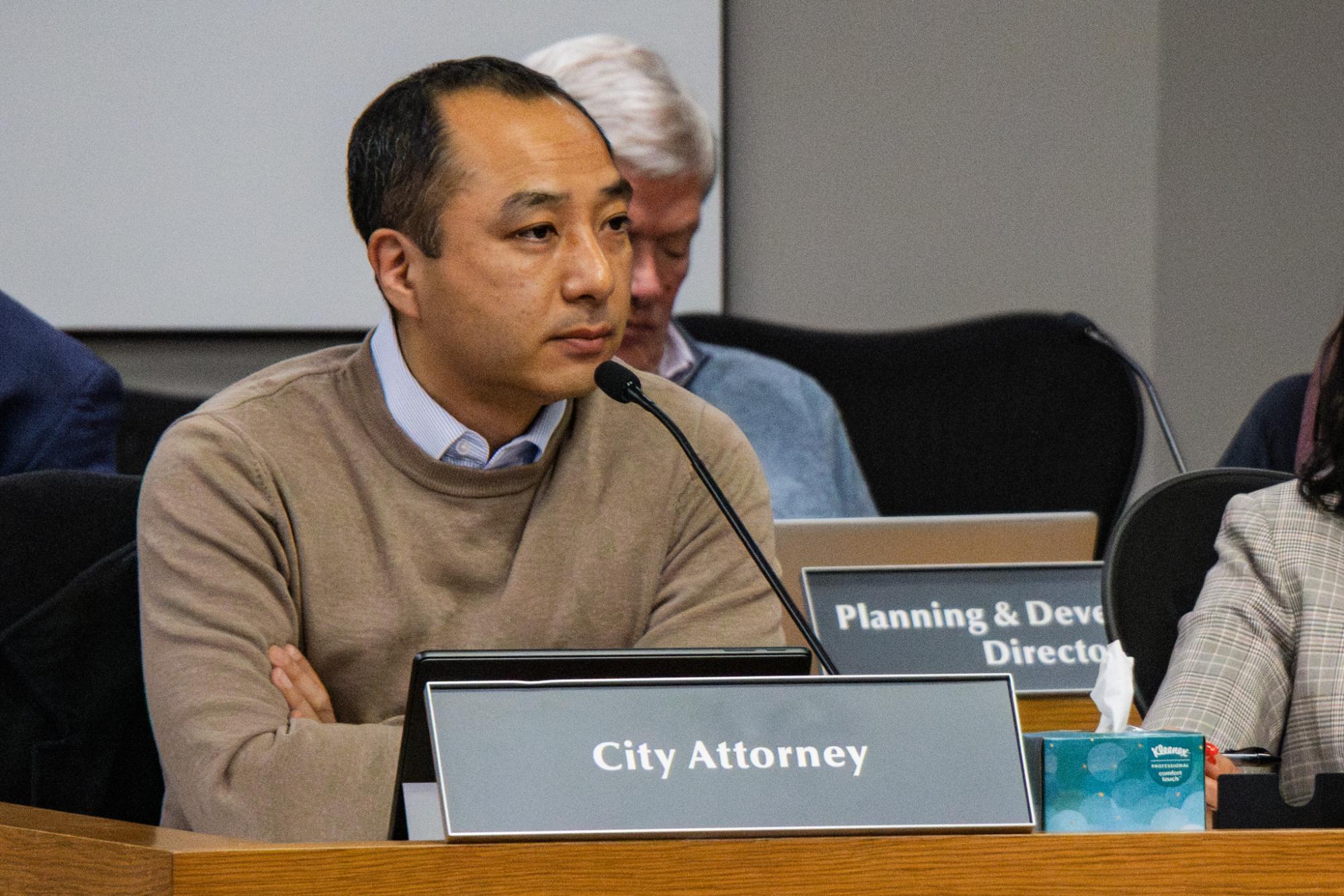
Champaign City Attorney Thomas Yu told the council that the proposal presumed individuals at a campsite were experiencing homelessness and would therefore not face fines unless the city could prove otherwise.
“If we have evidence to ascertain that they’re not homeless, then they may be subject to those fines and penalties, but, in the first instance, we are presuming they are homeless,” Yu said.
Council member Davion Williams asked how the city would know if someone is not homeless. Yu said the city would “have to produce some research on that,” but reiterated that the bill’s intent is to presume everyone subject to the ordinance is homeless.
Throughout the discussion, Yu repeatedly deferred to Nancy Rabel, deputy city manager, and acknowledged that several major operational details, including storage logistics, cleanup procedures and departmental responsibility, had not yet been determined.
Council member Kathy Shannon asked Yu about how people could access, identify and retrieve their belongings from the city should it be confiscated.
“The team will be meeting regularly to work out the operational details,” Yu said in response to Shannon, before deferring to Rabel.
Rabel said the current intention is to use a Public Works Department facility. She said items will be logged with identifying materials the city may have obtained at the campsite. People would be required to identify their belongings to retrieve them.
The city would still need to coordinate departments and build a shared documentation system to track interactions with unhoused residents, according to Rabel.
Shannon further asked which member of the team would first engage with someone believed to be violating the proposed ordinance. Yu said that’s another issue they are “wrestling with.” He said a staff member from the Equity and Engagement Department would likely interact first.
Yu also denied the claim that the bill was criminalizing homelessness. He said the intent is to provide homeless people the services they need. Multiple people in the crowd vocally stated their belief that Yu was wrong.
Public comment began around 45 minutes into the meeting and continued without a break for nearly three hours. All 40 speakers opposed passing the ordinance, with some urging the council to vote it down and others calling for it to be deferred and rewritten. Many raised concerns about enforcement, access to services and the potential removal of personal belongings.
Several of the speakers were vehemently opposed to the bill, calling it “draconian,” “fascistic,” “diabolical” and “anti-homeless.”
Danielle Chynoweth, supervisor of Cunningham Township — which provides housing and financial assistance to low-income community members — said she was heartbroken. She said she only learned of the proposal Tuesday morning in the News-Gazette.
Chynoweth, who also chairs the Champaign County Continuum of Service Providers to the Homeless — a government-funded initiative aiming to wipe out homelessness — said the ordinance referenced their services but never once consulted anyone from the continuum or member organizations, despite Chynoweth meeting with city staff several times in recent weeks.
“This is based on a deep misunderstanding of homelessness,” Chynoweth said. “You are misinformed because you’re not connected to the CSPH in a way that is meaningful. … Why would you be putting forward such a draconian and regressive ordinance?”
Julie Pryde, public health administrator at the Champaign-Urbana Public Health District, took particular issue with the ordinance’s reference to public health. The bill referred to the American Public Health Association in the second paragraph, stating the organization has called homelessness a public health issue.
She said the APHA would explicitly oppose the ordinance.
“(The AHPA has) an unambiguous stance on this issue that could have been found on Google,” Pryde, who serves on the CSPH, said. “In this policy, they state that forcible displacement of encampments is a cosmetic fix and does little to effectively connect unhoused people to services and housing.”
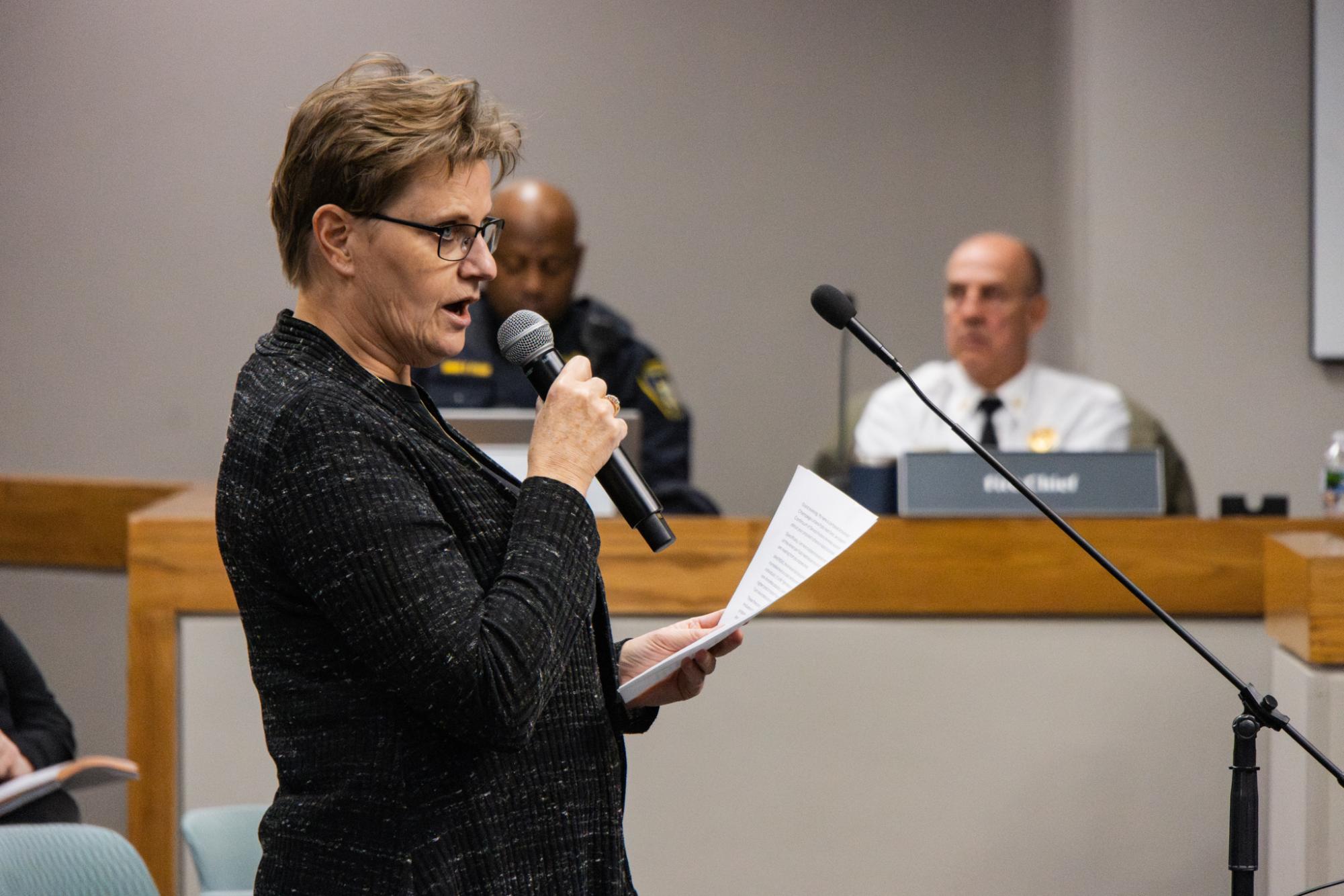
The president of the ACLU’s Champaign County chapter, Jane McClintock, read a statement from ACLU of Illinois, which strongly opposed the ordinance. McClintock, along with several other speakers, said she was made aware of the ordinance Monday through the News-Gazette.
“Criminalizing the existence of Champaign community members without shelter, which the council bill does notwithstanding, does nothing to address those public health concerns,” McClintock said. “Instead, it exacerbates those public health risks by further jeopardizing the stability and community standing of your most vulnerable neighbors.”
Ben LeRoy, professor in Law and FAA, said he used to work in expungement and sealing cases as a lawyer. He said he helped people who were negatively affected by criminal records, including ordinance violations.
“If you adopt a framework allowing these records of ordinance violations to be heaped on vulnerable people for simply trying to exist, you’re going to make it even harder for them to secure housing,” LeRoy said. “They’re going to place another barrier in front of their economic mobility, and you’re going to assault their dignity.”
LeRoy acknowledged he doesn’t know an effective solution for homelessness, but said he knows this is “not it.”
The blistering response went on for two hours more. Craig Walker, a Champaign resident, accused the council of acting in bad faith. Walker pointed out that multiple council members during public comment went to the council office and were passing notes amongst themselves.
“(You) try to sneak it by,” Walker said of the ordinance. “I saw the walks to the back. Do you wanna share what you all were writing on that note that was going back and forth over here? Dirty politics.”
Reynaldo Camas, junior in LAS, questioned who asked for the ordinance. He said the community didn’t ask for this ordinance, and he said those who work with the homeless in the area did not ask for this.
“We’re talking about people who are already the most vulnerable in our community, who have nowhere to go and who lack the resources,” Camas said. “If you have empathy you should be voting no for this ordinance, because this ordinance does nothing to actually address the homelessness issue in this community.”
A social worker in Champaign, Jazmine Hernandez, was the last community member to speak.
“I don’t know if I’m bursting anybody’s bubble, but taking people’s belongings and taking their tents off of the streets isn’t going to stop tents from popping up,” Hernandez said.
Hernandez said those who work with the homeless in the area will make sure those residents are taken care of and that they have some kind of barrier from the elements.
“It’s not even snow outside,” Hernandez said. “It’s ice. You’re sleeping on a platform of ice. How is it that the eyesore a tent creates is more of an issue than somebody sleeping outside on a slab of ice? We are better than this.”
After public comment ended, the council signaled broad opposition to the ordinance.
Several members — including Williams, Michael Foellmer, Shauna Clayborn, Matthew Gladney and Bob Pollett — said they would vote against the measure outright, whether or not it was deferred.
Others pointed to problems with the process. Mayor Deborah Frank Feinen acknowledged that community partners had not been consulted before the ordinance was drafted, and that this was a mistake.
“I understand the feeling that we have broken your community trust, and I want to acknowledge the mistake in not reaching out to our partners,” Feinen said. “That was something we should have done better and we know better and it just didn’t happen.
“The reality is we aren’t some nefarious political masterminds up here,” Feinen said. “We are people trying to balance the needs of our community, which include a homeless population, but also includes the need for a vibrant and thriving downtown, because without that, we don’t have any funds to pay for anything.”
Shannon said the proposal couldn’t be separated from the housing and homelessness priorities the council identified during its October goal-setting session. Council member Vanna Pianfetti apologized to residents who spoke, saying she had not asked enough questions when the item first appeared on the agenda.
A few members addressed the criticism raised during public comment. Council member Will Kyles said he appreciated the perspectives shared and rejected suggestions that the council had tried to “sneak” the ordinance through. Kyles briefly moved to defer the item before withdrawing the motion.
Multiple audience members asked which council member or members proposed the ordinance. None took responsibility for putting it forward.
With no remaining support, the council voted unanimously to reject the ordinance.