





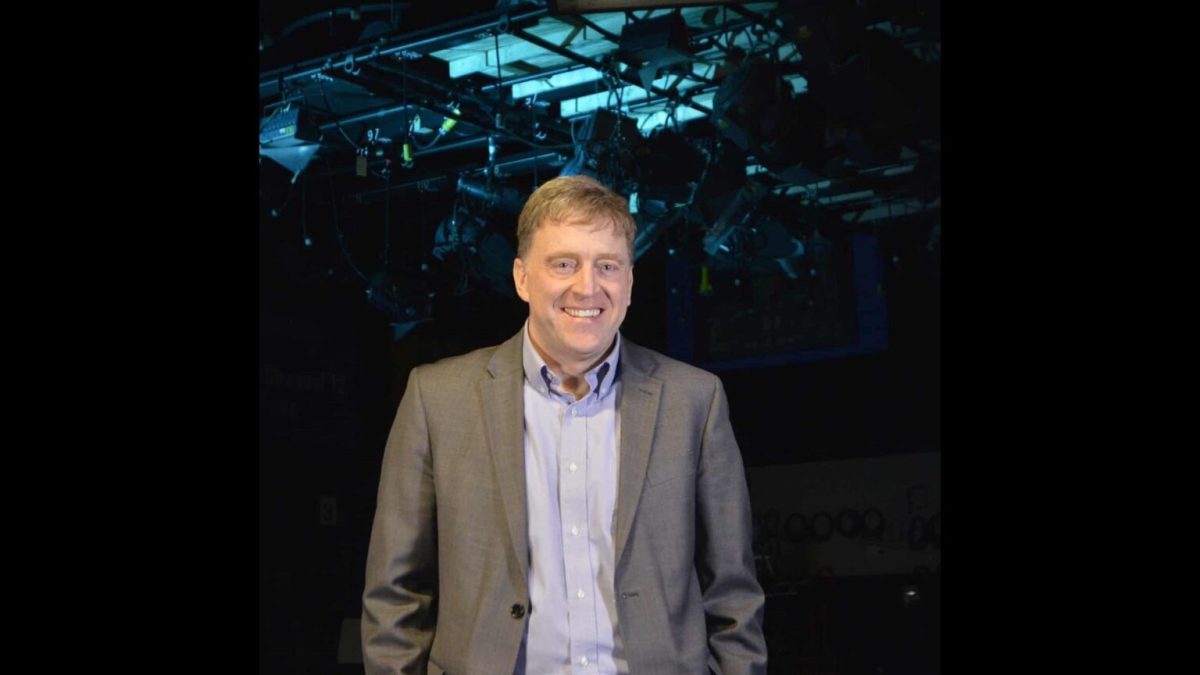
Moss Bresnahan will no longer serve as executive director of Illinois Public Media, according to an email sent to students in the College of Media on Nov. 11.
The recent move is an effort by Tracy Sulkin, the dean of the College of Media, to restructure IPM, which manages several NPR and PBS broadcast programs through the college. Lillie Duncanson and John Steinbacher became the new co-executive directors of IPM on Nov. 16. Meanwhile, Bresnahan moved to his brand new position as an adviser to the dean of media on Nov. 17.
Bresnahan was the executive director of IPM for 11 years and brought to life several programs for the station during that time. Some of those programs include the Illinois Student Newsroom, Illinois Soul, The 21st Show, State of Change and Prairie Fire.
In an email statement to The Daily Illini, Bresnahan expressed his gratitude for his time working at IPM over the years. He’s looking forward to inspiring more people to go into public media with his new role.
“After 30 years at various PBS and NPR stations, and given the changes in the media world, it’s an exciting time to do some study and research on the future of public media,” Bresnahan wrote. “I hope I can get more students here interested in the next generation of public media, and I’ll continue to do whatever I can to support (IPM’s) programming and staff.”
Get The Daily Illini in your inbox!
The announcement comes after the U.S. House and Senate approved $9 billion cuts to public broadcasting in July, ending $1.1 billion in funding to the Corporation of Public Broadcasting for two years. The conduit allocated federal funds to NPR, PBS and more than 1,500 local stations for 60 years until announcing its shutdown in August.
IPM lost $1.5 million due to the cuts in federal funding, and announced it had laid off two staff members in September as a result. Despite the federal cuts and layoffs, Bresnahan wrote that IPM is in great financial shape and is now over $500,000 ahead of its fundraising goal this year.
Even with IPM stable financially, Reginald Hardwick, the director of news & public affairs for the Illinois Newsroom, wrote in an email to The DI that IPM employees and donors have approached him personally with their concerns regarding the future of IPM.
Hardwick wrote that the employees found out about Bresnahan’s removal from the College of Media’s email, which caused them to have more stress, given IPM’s tough year. He stated that donors want answers regarding the future of IPM from the University’s leadership.
“These are people who invest their money and opinions about our radio, television, and digital services,” Hardwick wrote. “They want answers from the university leadership, not station leadership. They’re extremely worried about whether WILL radio and television will continue with local news and programming long term.”
Hardwick wrote further that he acknowledges the stress donors and employees feel.
“The worst thing a manager can do at a time like this is tell someone their concerns aren’t valid,” Hardwick wrote.
Carolina Garibay, who studied journalism at the University and graduated in 2022, was a student reporter for IPM during her senior year. Despite only working there for a short time, she covered various stories, including protests, education, topics in women’s health and COVID-19’s impact on dual language learning at an elementary school in Champaign.
Garibay recounted that her experience at IPM significantly shaped her journalism skills by giving her hands-on experience working in a newsroom. She now works at WBBM Newsradio and is the youngest reporter there after gaining experience at IPM.
“I tell everybody that there’s no chance I would have this job if I didn’t do the student newsroom because it’s really rare to come out of college having the experience and volume of stories that aired on radio,” Garibay said. “A lot of universities don’t have that, and there’s not a lot of programs like the student newsroom that exist throughout the country.”
When Garibay found out about the federal funding cuts IPM has dealt with recently, she expressed frustration about more rural areas experiencing news deserts. She reported on this increase recently, leading to more misinformation, less civic engagement and corruption in those areas.
Garibay stressed the importance of funding public media newsrooms so people can be informed about what’s happening in their local communities. While she doesn’t know what that knowledge means for the future of IPM, she hopes the organization is able to continue its work and inspire more students into journalism.
“Anytime outlets have slim resources, that makes it harder for everyone to do their jobs,” Garibay said. “Journalism becomes increasingly important in local communities like Champaign and rural communities where these local newspapers are dying. It’s more important than ever, and I hope they’re able to continue doing awesome work because it made a huge difference in my life.”
![A single corn (Zea mays) stoma captured at 50x magnification with a two-photon laser scanning confocal microscope while the leaf was manipulated inside a gas exchange system with high light and tightly controlled [CO2] and humidity conditions in the Institute for Genomic Biology Core Facilities in 2025.](https://dailyillini.com/wp-content/uploads/2026/03/TOC-icon.jpg)