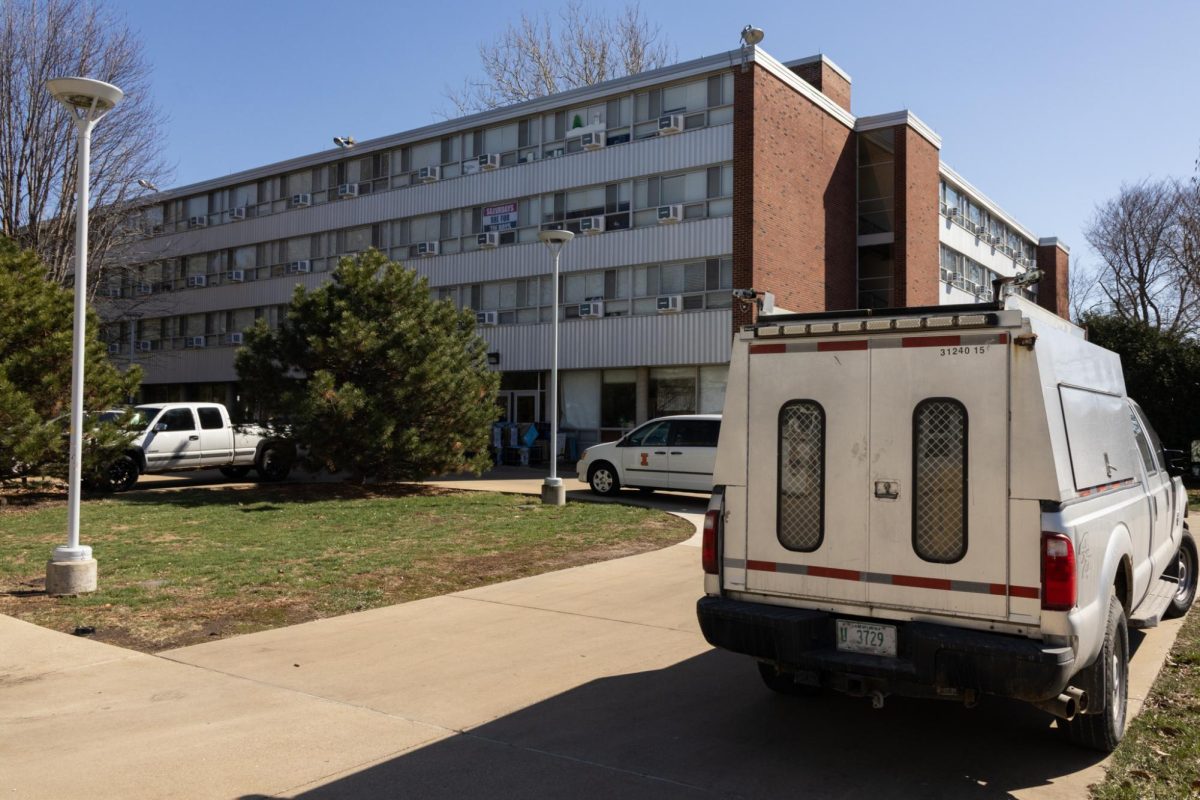
During spring break, a water main break in Snyder Hall’s basement caused a fast-moving flood, leading University Housing to close the residence hall for the rest of the semester. More than 450 residents, many of them freshmen, relocated to alternative housing placements upon their return to campus.
Alma Sealine, executive director of University Housing, told The Daily Illini about the timeline of the flooding.
“(Water) ran so quickly that it flooded the mechanical area within six inches of the ceiling, and it took out our systems,” Sealine said. “Elevator, electricity, water heater, water pump, data tower and card access system … all of those systems have to now be replaced because they have been damaged beyond repair.”
After realizing it would not be able to open the building for the rest of the semester, University Housing notified Snyder Hall residents of the situation in an email sent March 18.
In a later email, the University asked for volunteers to help residents move to their new room assignments. Sealine estimated that at least 150 volunteers came to help over the course of the three moving days.
Get The Daily Illini in your inbox!
“We did have a large number of individuals who just showed up and said, ‘We’re in the area. We heard about it — put us to work,’” Sealine said.
Sealine and her team had to find alternative housing arrangements for 450 students in a crowded housing system. She said vacancies in dorms left by students who transferred, graduated or studied abroad after the fall semester provided around half of the necessary room placements.
To provide the other half, University Housing reestablished temporary housing, converting lounge spaces into rooms that hold up to six people. The University had previously done this in August, when the housing inventory was overfilled.
Weeks after their move, students are settling into their new arrangements.
Charlie Sramek, freshman in LAS, was a previous Snyder Hall resident forced to relocate to Illinois Street Residence Halls.
Like some students, Sramek said the transition has been difficult, particularly due to the physical space.
“Our dorm is squished,” Sramek said. “All the lounge furniture is still in there, and they won’t let us move it. So we are just kind of cramped at all times.”
Beyond the cramped conditions, Sramek said the relocation has made it challenging to maintain his usual schedule. Adjusting to a new living environment, commuting from a different location and reestablishing daily routines have all added stress during an already busy point in the semester.
Sramek also said communication about the relocation process added to the uncertainty.
“(University Housing) was sending the emails out on a rolling basis,” Sramek said. “That was just really crazy to me because you didn’t know what was going to happen. People had already gotten their emails, and you were just waiting. So I was really overwhelmed and kind of angry at first.”
Hannah Alber, sophomore in LAS, moved from Snyder to a private room in Daniels Hall adjacent to her roommate, but initially didn’t know what to expect returning to Snyder after the flood.
“It was pretty crazy, especially because we didn’t really know … they didn’t give us any information,” Alber said. “We didn’t know if any of the stuff in our room was destroyed … if there was damage in any of our rooms. So we didn’t know what to expect when we came in.”
Alber said the volunteers made the move-out process easier for her, as she didn’t carry a single box out of Snyder.
While Alber is grateful for her housing placement in the end, she said she knows the experience hasn’t been the same for everyone.
“If you weren’t a sophomore, junior or senior, you got moved to really bad housing,” Alber said. “I’m very lucky, and we’re (Alber and her roommate) not that upset about where we got moved. The only thing we lost was the stuff in our refrigerator, which we never got reimbursed for.”
Sealine said University Housing plans to reopen Snyder Hall in August before students move in.