Last updated on Dec. 26, 2025 at 10:19 p.m.
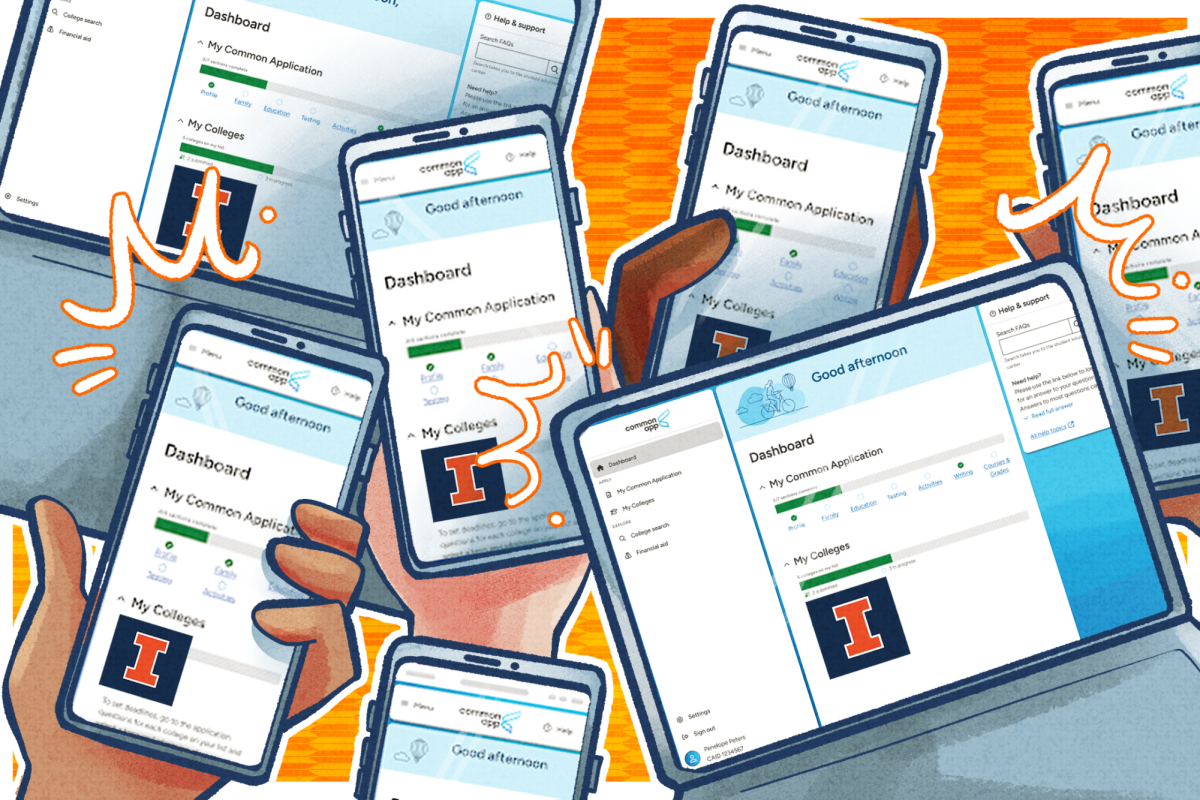
Beginning in the 2026-27 academic year, select Illinois high school students will be able to earn credit from the University through a new dual-credit pilot program.
The Illinois Dual Credit Learning Accelerator will bring four University courses into participating high school classrooms across the state at no cost to students. The initiative is led by the Office of Online Learning and the Office of Undergraduate Admissions and is funded through a grant from the American Talent Initiative.
Among the courses offered is ASTR 150: Killer Skies: Astro Disasters, a general education course that examines extreme astronomical events. The other courses included in the pilot are MACS 100: Introduction to Popular TV and Movies, SPED 117: The Culture of Disability and CS/STAT 107: Data Science Discovery.
Provost John Coleman, in an article by the Illinois News Bureau on Dec. 16, said that the program reflects a broader effort to expand access to college level coursework for Illinois students.
Get The Daily Illini in your inbox!
“The dual-credit initiative reflects our university’s commitment to expanding access and opportunity for students and families across Illinois,” Coleman said. “Through the Learning Accelerator’s model, we’re bringing university courses into high school classrooms and preparing students for college.”
While the Urbana-Champaign campus has not previously offered a large-scale dual-credit program, the College of Agricultural, Consumer and Environmental Sciences piloted a similar effort earlier this fall. ACES 102: Introduction to Sustainable Food Systems launched in two Illinois high schools during the fall 2025 semester.
The ACES course provided a foundation for the broader Learning Accelerator initiative, according to Lisa Anderson, director of the OOL. She told the News Bureau her experience working with dual-credit programs at other institutions shaped the structure of the program.
“How do we get our courses into high school classrooms where students don’t otherwise have access to these opportunities?” Anderson said. “And it was important to me to make these opportunities free for students.”
One of the primary challenges in developing the program was meeting Illinois credentialing requirements, which require dual-credit instructors to hold advanced degrees in the subject area. To address this, the University partnered with the Illinois Virtual Schools and Academy to provide credentialed instructors when districts do not already have one available.
IVSA Executive Director Melissa Lundgaard said districts have shown strong interest in the initiative.
“Families are excited because the credit their student will earn could transfer to many four-year colleges,” Lundgaard said. “Districts are also excited because of the cost — there is none for students.”
Participating students will have limited access to University resources, including the library system, and they may visit campus to receive a student ID or set one up virtually.
Rantoul Township High School, about 15 miles north of Champaign, is among the districts expected to participate in the program next academic year. University officials said the pilot is designed to scale, allowing additional courses and academic units to join in the future.
“This initiative brings our land-grant promise to life in a new way,” said Germán Bollero, dean of the College of ACES. “We’re taking the resources of a world-class university and putting them in the hands of young people across the state. It’s a tremendous example of access, innovation, and public impact working together.”