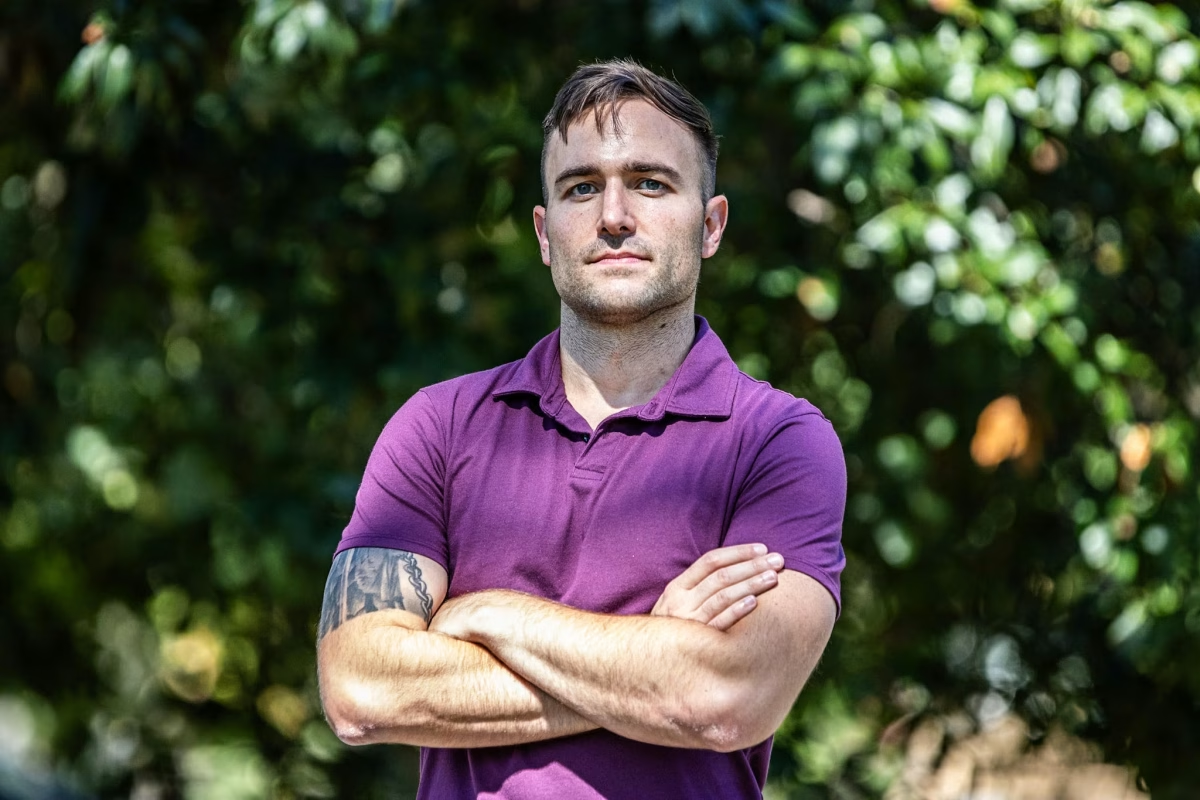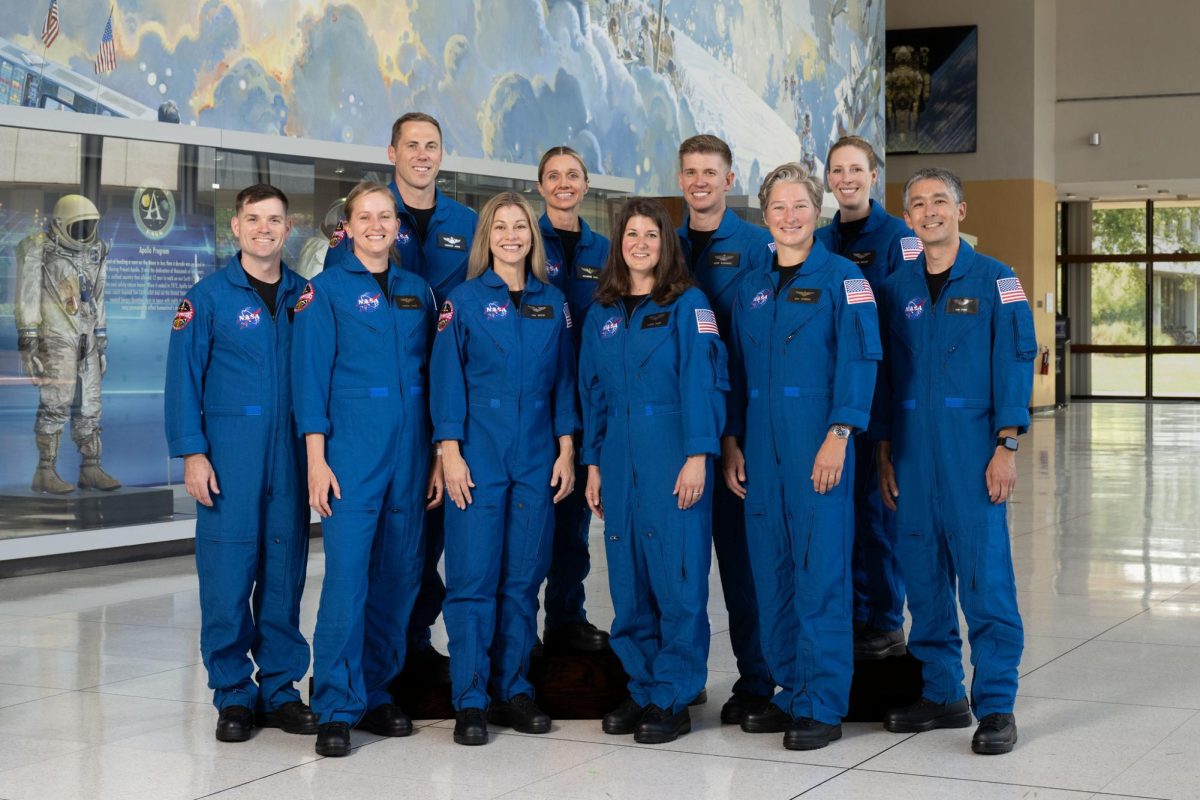
In 2012, Cameron Jones earned his bachelor’s degree in aerospace engineering from the University. Monday, NASA announced that he was one of 10 chosen applicants joining its newest astronaut candidate class.
Since his early childhood in the small town of Savanna, Illinois, Jones dreamed of being an astronaut.
“(As) long as I can remember, that’s been my career goal, outside of maybe playing for the Bulls, which wasn’t very likely for me,” Jones said in an interview with The Daily Illini.
For many children, going to space is simply a pipe dream. However, with supportive family, peers and mentors, Jones turned his childhood dream into reality.
“I never got told, ‘Hey, this is a silly dream, you’re never going to make it,’ which is really lucky for me,” Jones said. “I had super supportive parents and teachers, and maybe in the back of some people’s minds they were like, ‘That’s probably not going to happen,’ but they never brought it up.”
Get The Daily Illini in your inbox!
Jones is the second astronaut to come from Savanna. Dale A. Gardner graduated from high school in Savanna and later went on to serve as a mission specialist for NASA after graduating from the University in 1970.
Knowing that he and Gardner came from the same rural town and graduated from the same schools gave Jones reason to believe his dream was possible
Jones also understood the importance of building a strong foundation in math and science if he wanted to pursue a career in aerospace engineering. He explored several engineering programs for his undergraduate studies, but growing up in Illinois made choosing the University an easy decision.
The astronaut candidate earned both his bachelor’s and master’s degrees from the University before going on to graduate from the U.S. Air Force Test Pilot School and the U.S. Air Force Weapons School. According to Jones, attending the University set him on the trajectory of accomplishing his goals.
“The incredible instructors and educators that we have in Champaign definitely set me up for success,” Jones said. “I would say it played a huge part in getting me to where I am right now … (I) leveraged a lot of the background that I got from Illinois and then used it for my day-to-day work as a test pilot and onto getting selected here.”
Jones was serving as a major in the Air Force when he learned about his addition to NASA’s 2025 class. According to NASA, Jones is an experienced test pilot with an accumulation of over 1,600 flight hours in more than 30 different aircrafts, including 150 combat hours.
He got the call about his selection just three days after moving from California to Washington, D.C., for a military assignment.
“There was me, my wife and my one-year-old daughter sitting in the kitchen on the floor when they called,” Jones said. “It was amazing. My one-year-old must have seen the smile on my face because she let out a perfectly timed, gleeful scream … Then we got to just kind of sit there in each other’s presence and enjoy the moment and soak it in.”
Though NASA keeps specific details of the selection process confidential to ensure fairness for future applications, Jones said that candidates are evaluated through a comprehensive, holistic review of their qualifications and character.
This year’s class includes candidates with a variety of different backgrounds, including test pilots, engineers, scientists and doctors.
“It was really exciting … to see those 10 new folks,” said Orion deputy program manager Debbie Korth in an interview with The DI. “Will one of these … guys or gals be one of the first people on Mars? That’s the ultimate goal … They’re a fascinating group of folks, and I look forward to seeing what they’ll bring to the table.”
Before becoming eligible for assignments, the class will complete two years of training. According to Jones, training includes heavy mental and physical demands, including foreign language training, survival training and water survival training.
After they complete training, NASA assigns the class to different jobs based on its needs. To Jason, it doesn’t matter where he ends up — being part of NASA in itself is an honor.
“Wherever they put me, I’ll be happy,” Jones said. “I’m super humbled by those that have gone before us and done this.”
This is NASA’s 24th astronaut class, the first one being the Mercury Seven in 1959. According to NASA, the 10 candidates chosen this year will join the pool of 360 Americans chosen since its first class.
“I think what’s the most exciting part about the astronaut selection that we’ve witnessed … is that it shows, it demonstrates, the interest in space exploration,” said associate program manager of NASA’s Space Launch System Program Sharon Cobb in an interview with The DI. “These are some of the best and brightest that this country has to offer, and so having them be associated with our program and exciting and encouraging the next generation of explorers is just critically important for the future of our nation and our ability to have a long-standing exploration program.”
As NASA prepares to launch Artemis II no later than April 2026 and works on building a low Earth orbit economy, Jones says it’s an “awesome time to be part of space discovery and spaceflight.”
As for becoming an astronaut, it was always possible for Jones, from being a kid in the little town of Savanna to attending undergrad at the University.
“I’ve enjoyed every step of the way getting here, from college to flying in the air force,” Jones said. “I knew if I didn’t make this dream, I’d be happy wherever I ended up, continuing to follow what I was passionate about.”