Last updated on Oct. 19, 2025 at 08:37 p.m.
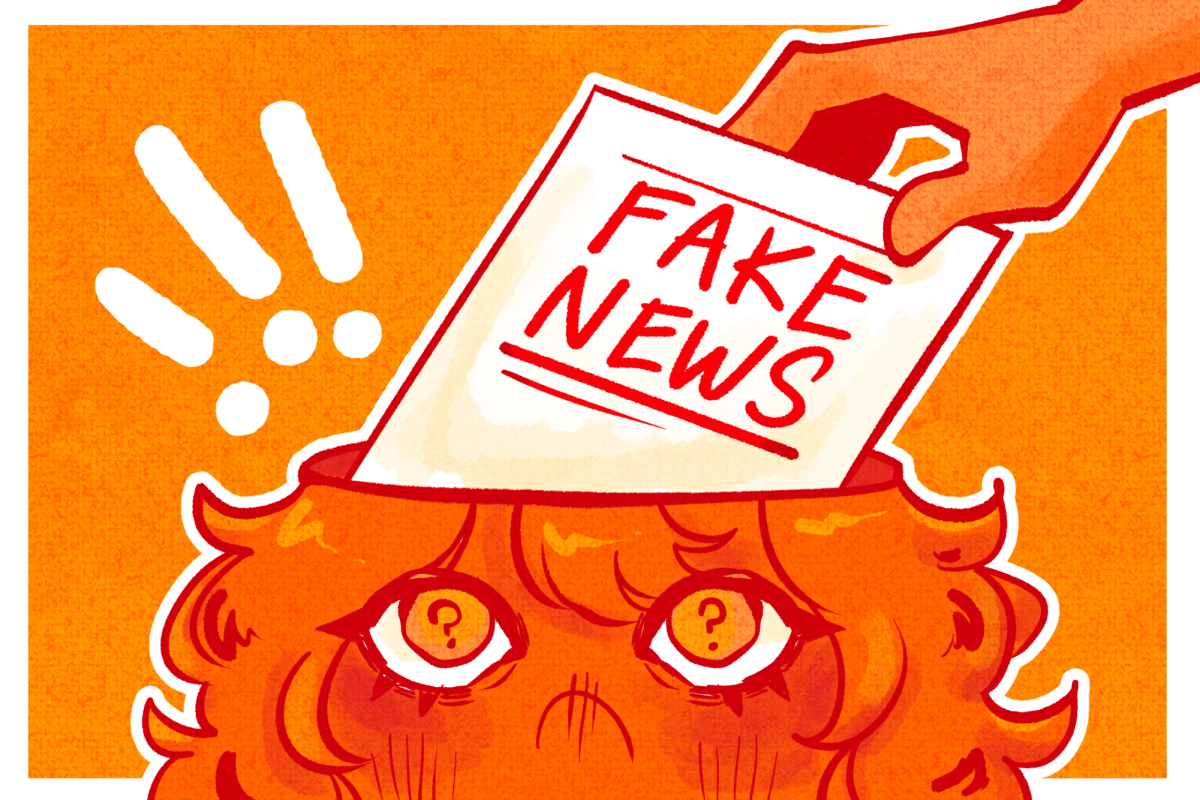
A University professor recently found that political misinformation and disinformation “plays a key role” in some U.S. couples’ breakups.
Emily Van Duyn, professor in LAS and the study’s lead author, published her findings on Aug. 30 in the journal New Media and Society.
Over the past four years, Van Duyn interviewed 28 participants from all sides of the political aisle who ended their relationships due to political differences.
Initially, Van Duyn studied couples who worked out despite their differing political opinions. She later shifted the study’s focus after interviewing people with differing political views, causing them to break up with their partners.
Get The Daily Illini in your inbox!
“That’s when I started to hear the extremes of this, where it wasn’t just information that was difficult for couples to navigate,” Van Duyn said. “They couldn’t even agree on what was a fact, let alone how to interpret that fact. It became clear to me that’s a threat to the relationship if you don’t have a shared sense of reality.”
The timeline of the couples breaking up due to political differences wasn’t linear. Some couples broke up after a few dates, while others divorced after over 20 years of marriage. Van Duyn cites recent political polarization as a main factor in the breakups.
“If you’re somebody who’s married and agree you’re in one (political) party, but the party pulls more right or left and you decide not to but your partner does, they’ve changed ideologically,” Van Duyn said. “Even if they haven’t changed their party, those changes can change beliefs, and the parties becoming more extreme over time have made this tricky to navigate.”
As misinformation became widespread on social media, the COVID-19 pandemic was a key moment when couples’ political differences were the most impactful.
During this time, Van Duyn said politics became a common discussion topic for couples because they were home more often.
“It was a very intense moment where relationships were really put to the test,” Van Duyn said. “You couldn’t escape it, as everyone was home with one another. For a lot of couples, it exposed weaknesses in their awareness of what the other person thought and became something they couldn’t avoid.”
It wasn’t just political parties and misinformation fueling relationship struggles during the pandemic. Conspiracy groups like the far-right group QAnon played a major influence in shifting the couples’ cohesiveness, according to Van Duyn’s study.
Van Duyn referenced interviewing a former pastor pseudonymously named James, whose now ex-wife spent so many hours online engaging with QAnon that the pair divorced.
“To be a part of that community meant she had to be online with them,” Van Duyn said. “This tells us that even if we don’t know how long some of these partners were spending on these sites, it was enough to where their significant other felt like they didn’t have a relationship with them anymore.”
At times, the person who consumed QAnon content in a relationship would encourage their partners to join the group. Van Duyn attributes this to couples seeking a shared reality with each other.
Van Duyn said this behavior heightened those couples’ differences and made the threat of not having a shared reality “very, very real” for them.
Facebook, which is owned by Meta, and YouTube, owned by Google, are major social media platforms used by Van Duyn’s participants’ partners.
This comes at a time when social media is a major news source in the U.S. Meta, the largest social media company, ended its ties to third-party fact-checking organizations earlier this year.
While Van Duyn’s study ended before Meta’s announcement, she stated that social media platforms not moderating misinformation can cause more couples to break up – especially since the U.S. doesn’t have laws to combat misinformation.
“It makes people more susceptible to these types of things happening in their relationship because it allows the content to stay up,” Van Duyn said. “But when they stop moderating, that allows false information to stay online and hurt their relationship by interrupting that reality.”
The findings in Van Duyn’s research amplify a recent pattern where people in the U.S. are cutting off their family members due to political differences. This has changed in the last 20 years — a 2007 Pew Research study showed participants thought political agreement was the least important to a successful marriage.
When asked about the recent changes, Van Duyn said it shows how much politics has integrated into people’s worldview. She argued that extremism within the current political system is to blame.
“I think our system has really failed us,” Van Duyn said. “We shouldn’t have our morals tied to one party and should have some understanding that we can all agree on. The extremity of politics today has made it really hard to continue relationships when you can’t see somebody as a good person because of how they voted.”
To read more about Van Duyn’s research, visit her website.


![A single corn (Zea mays) stoma captured at 50x magnification with a two-photon laser scanning confocal microscope while the leaf was manipulated inside a gas exchange system with high light and tightly controlled [CO2] and humidity conditions in the Institute for Genomic Biology Core Facilities in 2025.](https://dailyillini.com/wp-content/uploads/2026/03/TOC-icon.jpg)