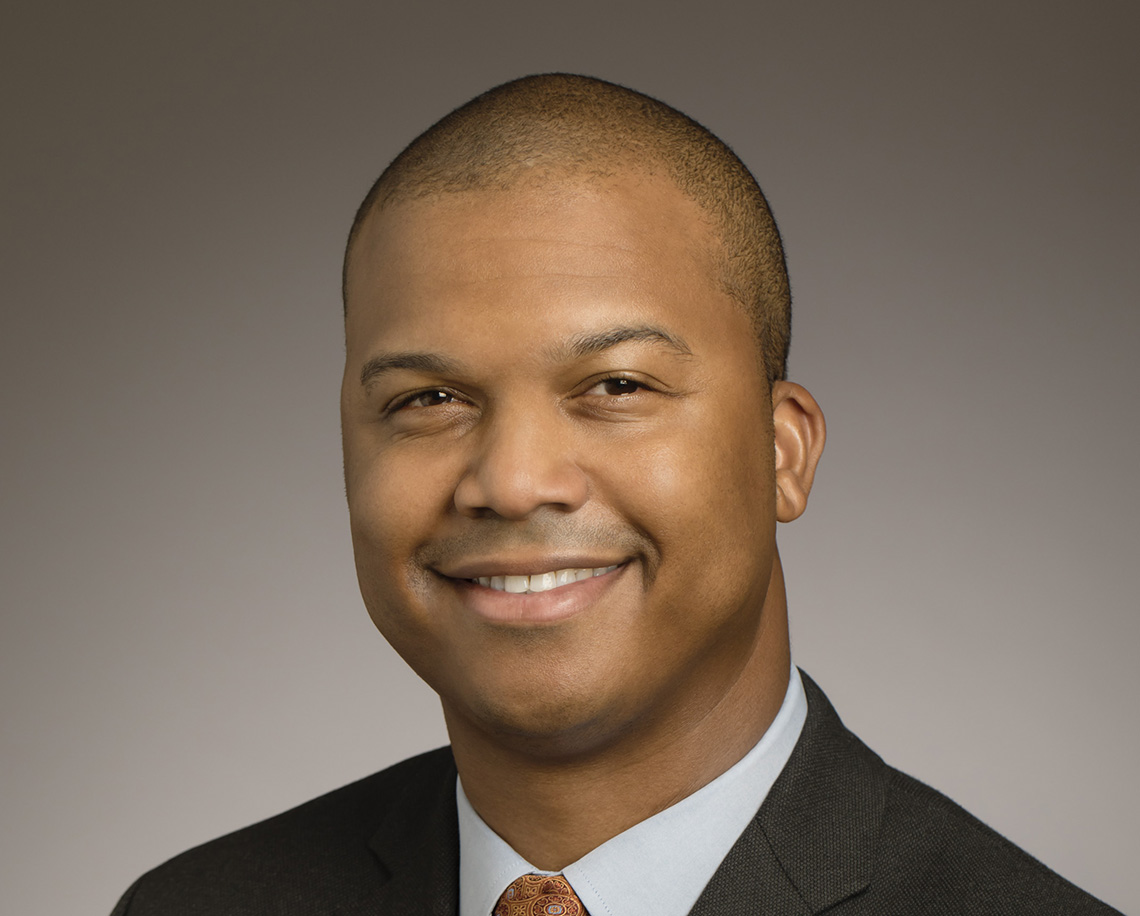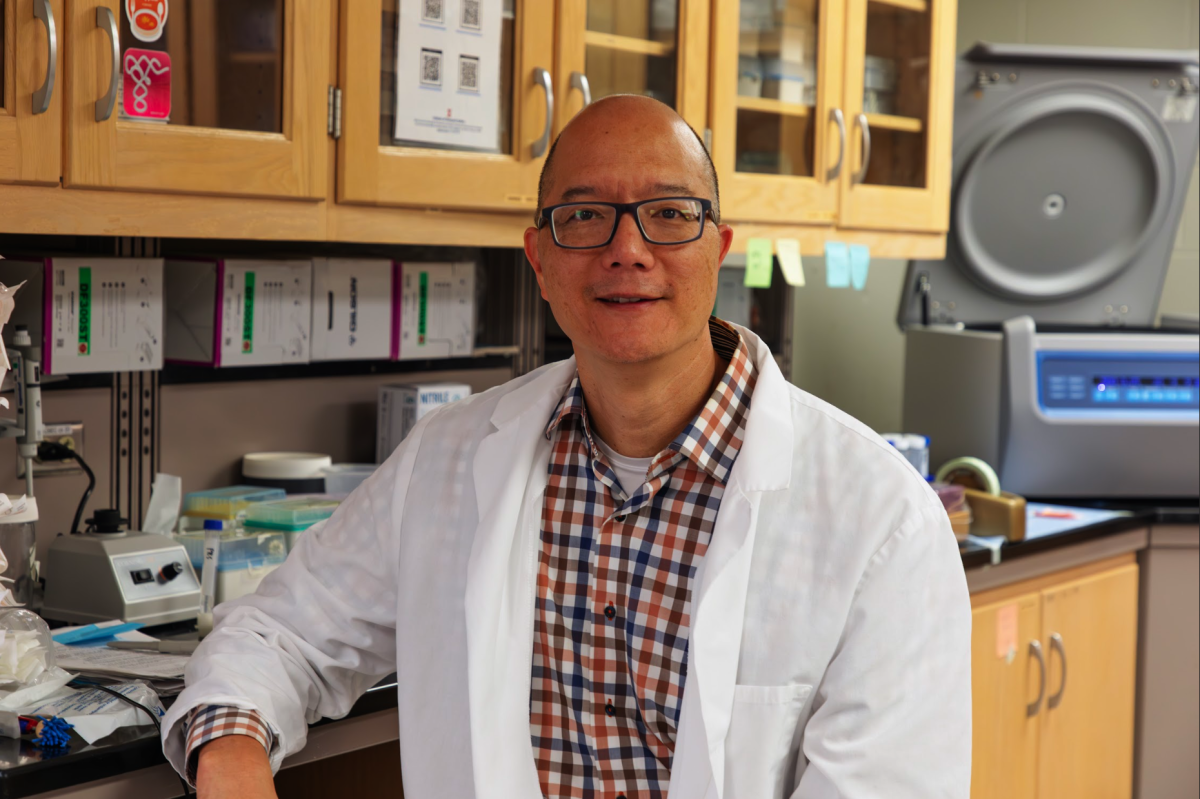
The American Kennel Club Canine Health Foundation named University professor Dr. Timothy Fan as one of eight semifinalists for the inaugural year of the Canine Health Discovery of the Year Award. Fan was nominated by his peers for this award, which was announced Oct. 14.
Fan was named a semifinalist for his work on intratumoral cytokine therapy. Cytokines are small proteins that regulate the immune system, and doctors can use them to help treat cancer patients.
Fan currently serves as a Khan Family chair and professor of veterinary clinical medicine and associate director for development and translation for the Cancer Center at Illinois. He holds both a Ph.D in tumor immunology and a veterinary medical degree, and he’s affiliated with several departments across the University.
From a young age, Fan knew that he wanted to study veterinary medicine, as he had always had a special bond with animals, particularly dogs, he told The Daily Illini. Now, he is able to transform his love for dogs into fuel to make novel discoveries in the veterinary field.
Fan’s work
Get The Daily Illini in your inbox!
In an interview with The DI, Fan reflected on his work and what his research means for the future of curing cancer in both dogs and humans. Fan explained that his therapy involves injecting cytokines into tumors.
“Cytokines are proteins that are released by your immune cells, and their principal function is to increase your immune cell activity,” Fan said. “Usually, they are released when you come in contact with an infectious organism, like bacteria or a virus.”
Fan explains that past cancer treatments involving cytokine usage often led to having too many cytokine cells in the bloodstream. Abundance of cytokines in the bloodstream — known as cytokine storm — can lead to unfavorable side effects, and in extreme cases, death.
However, a group of engineers at Massachusetts Institute of Technology discovered a solution to this problem. Among them was Dane Wittrup, who taught at the University in 1989 before moving to MIT. The MIT group engineered cytokines so that when injected into the tumor, the cytokine would stay local and minimally go into the bloodstream.
“You don’t have the side effect profile, but you still have the benefit of actually getting a good immune response to the tumor locally,” Fan said.
After developing the technology and successfully testing it on mice, Wittrup reached out to Fan in hopes of expanding its use. Fan and Wittrup began their work by testing the technology in dogs with naturally occurring cancers. The duo concluded the therapy was safe and effective.
Fan said the studies on dogs were completed and published in March, and a separate group conducted human studies showing safety and efficacy, the data for which was published in September.
“It’s a nice parallel story to show that the same technology used in dogs was ultimately very successful in a phase one clinical trial of people,” Fan said.
Praises of his work
Many of Fan’s colleagues shared praises for him and his work. The DI spoke with Dr. Stephanie Montgomery, the CEO for the AKC Canine Health Foundation, about Fan’s work.
“The University of Illinois should be really proud that he’s a faculty member,” Montgomery said.
Montgomery said Fan is “a leader in the field of veterinary oncology” and “a huge asset to the profession of veterinary medicine.”
Dr. Anne Barger, head of the department of Veterinary Clinical Medicine, said that Fan has had an “incredible career,” noting that Fan brings lots of recognition to the department.
Barger said that Fan being named a semifinalist helps bring visibility to the University’s veterinary research.
“The impact that he’s having on not only patients, but people as well, is incredible,” Barger said. “It’s really awesome.”
Fan compared being chosen as a semifinalist to being in the NCAA tournament Elite Eight.
“Certainly it would be great to get to the Final Four and then the finals, but you know, there’s a lot of competition there,” Fan said.“I’m just really honored to be recognized within that final semifinals.”
The future of his work
The work isn’t done yet, Fan said, and he will continue to work on this technology. He shared that currently, there is only about a 20% response rate, which translates to success in only one in five dogs. He wishes to increase the response rate between 50% and 70%.
Fan shared the next step to achieve this is to combine his intratumoral cytokine behavior with other immunostimulatory therapies and then combine that with radiation. He adds he is also interested in combining his work with a strategy called checkpoint blockade.
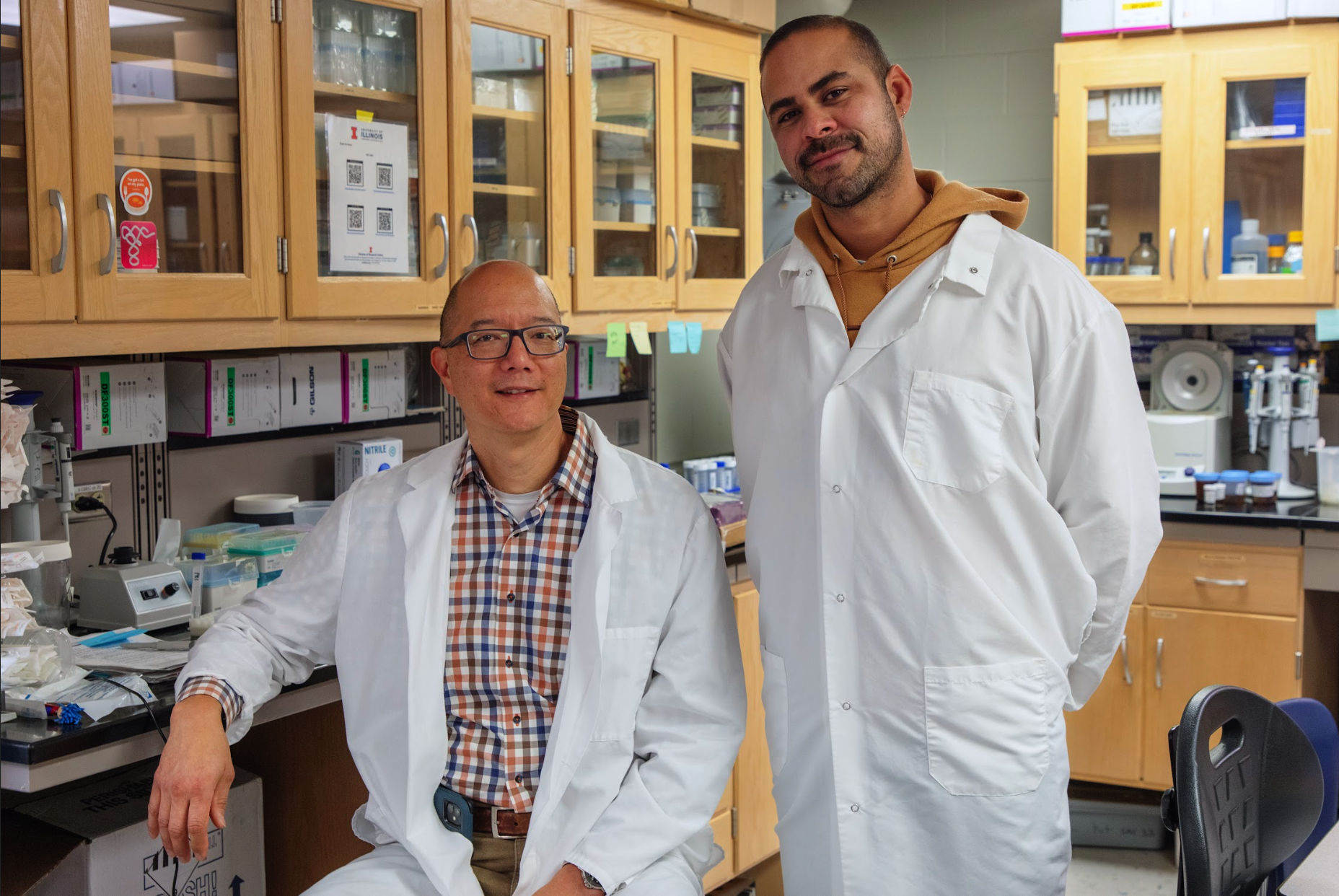
During the interview, Fan enthusiastically talked about the team of graduate students he works with. Fan shared that graduate student studying veterinary medicine Matheus Moreno Passos Barbosa has “been the lead PhD student that has really advanced a lot of this discovery.”
He expressed gratitude towards his team of PhD students and said the group is interested in combining the therapies with some oral therapies that will improve the immune system’s recognition of tumors.
Fan shared that his initial report is the foundation, and there are many more opportunities to build on it and to make the treatment more effective.
He added that the dog trials are a great guide to conduct future human clinical trials.
Montogomery said she is excited to see Fan continue to develop this work, which she said is a major advancement in cancer treatment.
“(The treatment) is really leading the way forward for new hope for people who have dogs with cancer,” Montgomery said.
AKC Canine Health Foundation will announce the finalists for the Canine Health Discovery of the Year Award within the month.