Chancellor Charles Lee Isbell Jr. recommended Dale Wright on July 18, 2025, to become the University’s interim vice chancellor for advancement and senior vice president of the University of Illinois Foundation to the University of Illinois Board of Trustees.
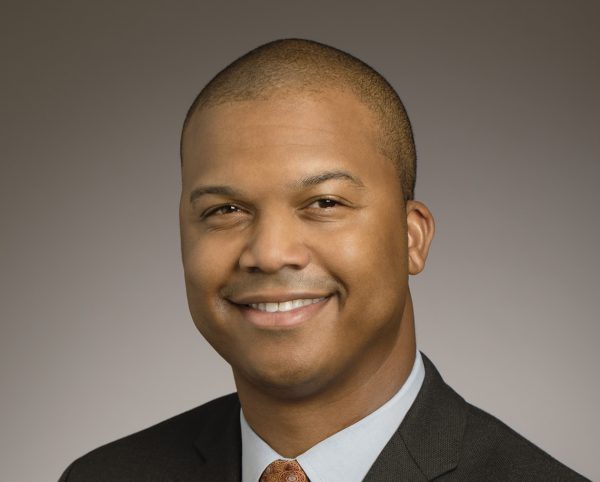
The Board of Trustees approved Wright’s appointment on Sept. 18, 2025, and the University’s News Bureau reported in February that Wright had been selected for a permanent position beginning Feb. 16, pending approval from the Board of Trustees.
Wright previously served as the interim vice chancellor, associate vice chancellor and associate dean of advancement for The Grainger College of Engineering. He oversaw fundraising efforts for the With Illinois Campaign and reached the college’s $550 million campaign goal two years early.
The funds supported research, renovated buildings like the Sidney Lu Mechanical Engineering Building and funded the Grainger Matching Challenge, an initiative that matched up to $25 million in donations to the Engineering Visionary Scholarship Initiative and ran from 2017-2019.
The Daily Illini talked to Wright about his responsibilities in these roles and what his current position regularly entails.
Get The Daily Illini in your inbox!
Wright’s positions explained
Wright’s responsibilities as vice chancellor of advancement include increasing the University’s fundraising, alumni relations and donors.
Meanwhile, Wright’s role as senior vice president of the UI Foundation is to help the University understand the resources the foundation can provide with fundraising.
Wright is a part of the UI Foundation’s executive operations team, working alongside the two vice chancellors for advancement at the University of Illinois Springfield and University of Illinois Chicago campuses.
Wright says they talk weekly about ideas, what each institution needs and compare upcoming projects. If those ideas align, they work together on bringing those ideas to life while trying to save each institution money and talk to the foundation for assistance.
“We’re always talking about what our needs are, and whether they’re so similar that we can achieve some sort of economy of scale versus each one of us saying, ‘Oh, I need this vendor to help me do this,’” Wright said. “But if all of us need a similar thing, then that might allow us to save money and to be more efficient.”
The vice chancellors for advancement are now working on how to help their universities accomplish their individual goals. They oversee advancement staff members and help them set goals for the institution to accomplish.
Their focus is also on updating policies that will help them do their jobs effectively, planning the upcoming capital campaign and bringing in more potential donors by following the chancellor’s Strategic Plan.
“That’s a really focused effort to say, ‘Here are the types of things we want to focus on raising money and awareness around to raise money over some next period of time,’” Wright said. “There’s lots of decisions that need to be made around giving and tax endowment levels we have to make sure are in place as we have conversations and have donors give money.”
Day-to-day responsibilities
The biggest responsibility Wright has is working with donors to determine their thoughts on the University by explaining what the University is working on and its mission.
This responsibility includes talking to potential donors about how much involvement they want to have in collaboration with the colleges’ advancement teams in the Office of Corporate Relations.
The majority of the time, donors are interested in hiring more students, engaging in speaking events and expanding their professional realm. In those cases, Wright refers them to The Career Center or individuals in the Office of Corporate Relations who work directly with the University’s colleges.
However, there are times Wright talks to donors and sees opportunities for them to get more involved with the University. This includes donors participating in research or Illinois Advancement, which works with donors to provide funding for campus initiatives, solving an issue at the companies at which they work.
“That’s really the exciting and fun part about this (job) is exploring and feeling really good anytime we can really deepen an individual or an organization’s relationship with the institution,” Wright said.
Wright also oversees initiatives the chief advancement officers and associate deans have at their respective colleges. The initiatives they work on can include raising money for scholarships and outreach by looking back at past messaging to make the initiative more successful.
Wright says he co-chairs an Advancement Leadership Council with the provost three times a year. Several University officials attend, including the chancellor, representatives from the UI Foundation and the chief advancement officers from each college.
The council has discussions about what goals are working for them, applying ideas to philanthropy projects and also talks to donors about what matters to them.
Wright says that every donor is unique, and he’s grateful the University has several donors from several generations.
“The nice thing about having a big number (of donors) is talking to many generations of them,” Wright said. “Sometimes, those generations may be motivated to get involved in different ways. We’re always exploring what would make a graduate from the last 20 years provide support, and how similar or different would that be if they graduated over 40 years ago.”