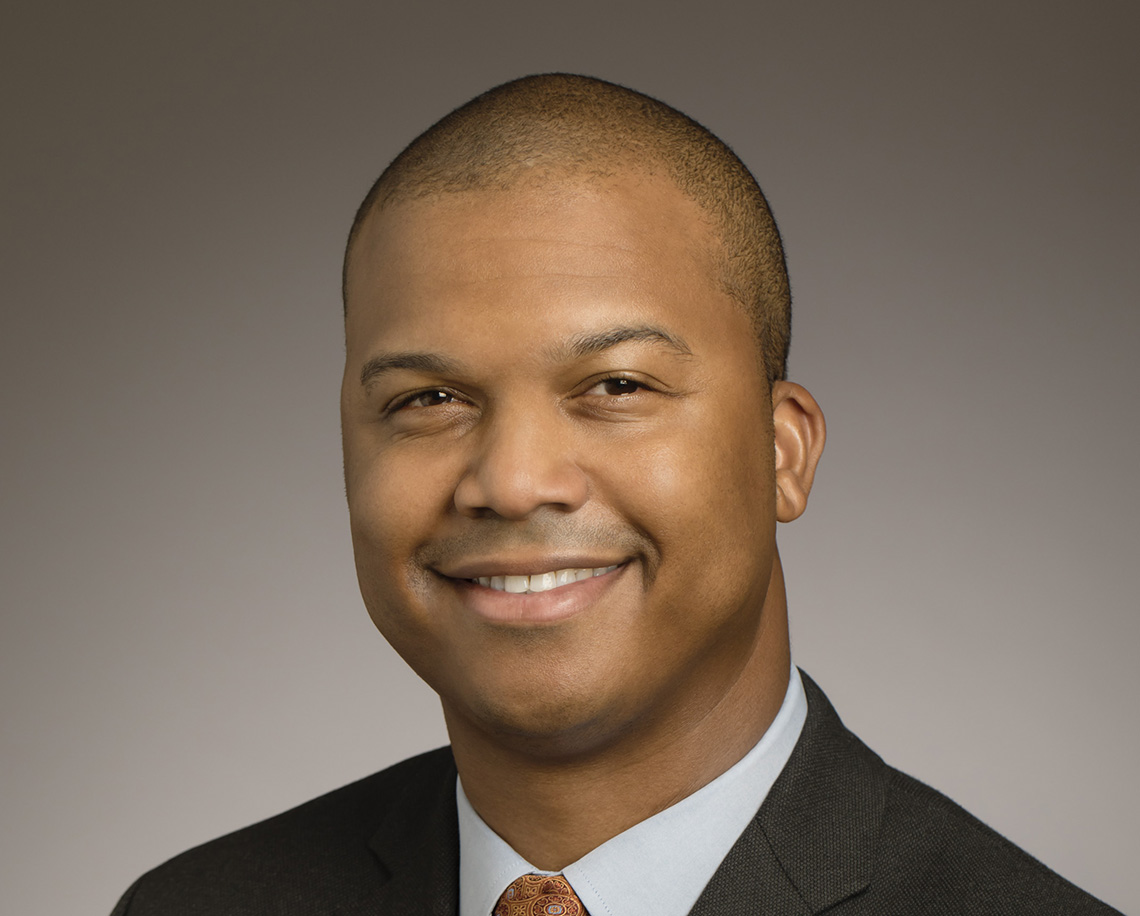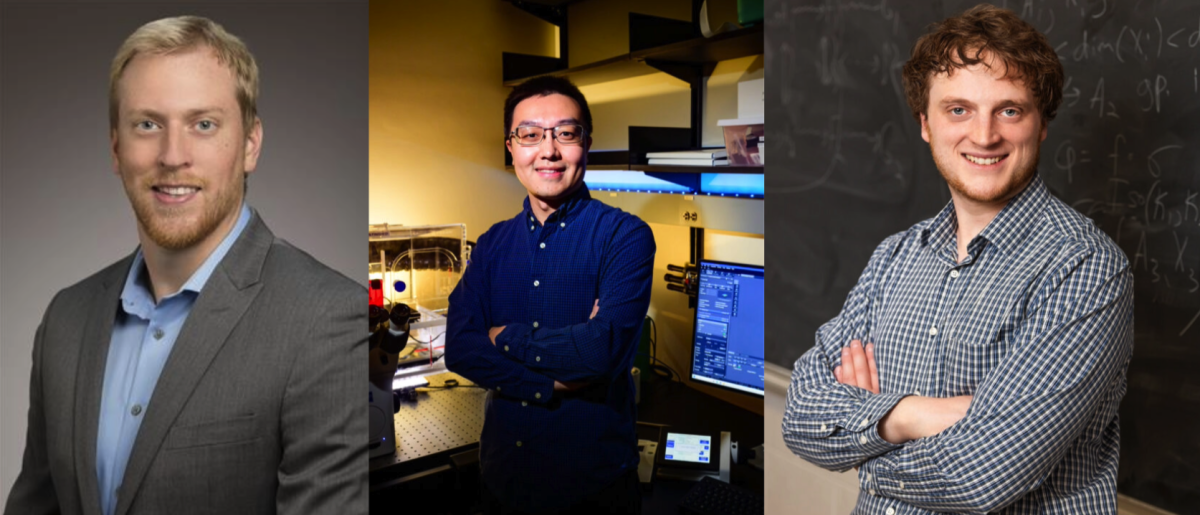
Three faculty at the University received the Sloan Foundation Fellowship in February for their excellence in research. The Sloan Fellowship is awarded annually, with a total of 126 early-career researchers receiving the fellowship in 2026.
The fellowship is part of the Alfred P. Sloan Foundation and is a two-year, $75,000 fellowship given to early-career researchers who excel and revolutionize in their field. After candidates are nominated, the foundation selects award winners for creativity, innovation and research achievements.
The Daily Illini spoke with the three Sloan fellows: Jacob Covey, professor in Engineering, as well as Benjamin Castle and Wei Qin, professors in LAS.
Covey earns fellowship for quantum research
Covey earned his Sloan fellowship in physics, and he told The DI that he seeks to answer questions about quantum physics, quantitative connections and quantitative information through the study of atoms.
Get The Daily Illini in your inbox!
As the principal investigator for the Covey Lab at the University, Covey leads students in studying quantum science based on individually controlled neutral atoms.
Covey explains that his lab uses optical tweezers, tightly focused laser beams, to control these neutral atoms. The atom is attracted to the highest intensity spot of the laser, so his lab group focuses on a spot as small as they can to get one atom at the highest intensity.
This technique is used to create a large number of tweezers called an array of tweezers, several micrometers apart from each other. In each tweezer is an atom, creating a perfect array of atoms that are optically defined and trapped.
“These atoms are used to encode quantum information or to sense something about the environment, and this gives us a very highly controlled platform for building quantum computers or for using programmable quantum systems for sensing,” Covey said.
After sophomore year of his undergraduate studies at the University of Wisconsin–Madison, Covey realized he wanted to pursue this area of physics. He shared that during college, he was always interested in optics and using lasers to control matter. Covey then attended the University of Colorado Boulder, where he received his master’s and doctorate in physics.
“To me, it’s kind of fascinating that you can use light to cool atoms to microkelvin, nanokelvin temperature, and you can use our incredible control of classical optics as a means to build quantum technology,” Covey said.
In addition to his research, Covey also teaches undergraduate courses on quantum computing and quantum information.“It’s a highly prestigious award, consistently offered to leaders in the field, and people who really sort of have a transformative impact in their area,” Covey said. “So I’m honored to be considered, as such a scientist, and I hope I live up to what is expected of Sloan Fellows.”
Castle awarded fellowship to study mathematical theory
Earning the fellowship in mathematics, Castle studies and teaches a branch of mathematical theory called model theory. He holds a doctorate in mathematics from the University of California, Berkeley, and was a postdoctoral researcher at the University of Maryland.
“I knew for a long time that I wanted to do math,” Castle said. “I’ve wanted to do math since I was 5. Then, when I was in early college, I started to like parts of math that were more abstract and logic-based rather than doing a whole bunch of addition and multiplication and calculus. I liked the pure logic.”
Model theory is a semantic branch of mathematical logic, studying mathematics through the lens of logic. Mathematical logic breaks down complex concepts into true-or-false statements and can be utilized in areas of computer science and deductive reasoning.
Castle explained that using mathematical logic has helped scholars notice connections and patterns between various abstract properties.
“You (start) noticing connections that other people might not notice, because they (are) completely abstract properties having to do with logical manipulation,” Castle said. “They’re kind of trying to draw a map of the universe somehow.”
Castle currently teaches a course, MATH 432: Set Theory and Topology, in addition to his research. He told The DI that he hopes to use the money from the Sloan Fellowship to recruit graduate students to help him with his research.
When reflecting on being awarded the fellowship, Castle shared that it was a big surprise.
“It’s kind of crazy,” Castle said. “I know a few people in logic, and logic has approximately one or less Sloan fellows a year, and I’ve known the people who’ve gotten it in recent years and they’re really good, so it’s a bit crazy to be grouped in the same category. But I mean, there’s a certain amount of this that has not fully hit.”
Qin received a fellowship to study environmental microbiology
Qin joined the University’s Department of Microbiology in 2025, after teaching at the University of Oklahoma for four years. He holds a bachelor’s degree in environmental science from Beijing Normal University and has a doctorate in environmental microbiology from the University of Washington.
Qin received the Sloan Fellowship in the field of earth system sciences and studies nitrogen-cycle microorganisms, as well as biological oceanography and more.
“I think nitrogen in this state is easy to understand,” Qin said. “When you fertilize the soil, you put a lot of nitrogen, because for most of the natural environment, nitrogen is a limiting factor. That’s why we need to put in more nitrogen to get more crops; it’s the same thing in the ocean.”
Bioavailable nitrogen species are the limiting factors that constrain the primary nitrogen production in the ocean. Qin studies this group of microorganisms and how they control the transformation of available natural species in both marine and terrestrial environments.
Qin moved his research lab, the Qin Lab, from Oklahoma to the University when he joined the faculty in 2025. His lab works in areas of physiology, ecology, molecular biology and biogeochemistry of nitrifying microorganisms,
Qin said that receiving the Sloan Fellowship is not just an honor for himself, but for the whole department.
“It’s a high honor in my field, especially for early-career scientists,” Qin said.
Qin stated that he has an exciting summer ahead of him, as he will embark on a research vessel, Sikuliaq, along with 20 other scientists from various universities. Qin, along with University of Southern California global change biology professor David Hutchins, will serve as co-chief scientists, sailing from Seattle to the Gulf of Alaska, then to Honolulu.