Student representatives say the University has contravened shared governance through a lack of compromise after the University dissolved and replaced the former Campus Student Election Commission without consulting the Illinois Student Council or the University Senate.
The Illinois Student Council, made up of elected and/or appointed students responsible for representing the student body, previously wrote its own election code.
The University Senate, the Student Organization Resource Fee Board and Student Trustees did the same, and CSEC was responsible for enforcing each election code for their elections during the election process.
Moving forward, the newly named Student Election Board will be responsible for writing a single election code for all the elections and enforcing it.
However, since SEB is yet to formally exist, the University created this academic year’s student election code without consulting student representatives, according to ISC members. The University, they said, allowed little opportunity for feedback and changes on the student election code once it was published.
Get The Daily Illini in your inbox!
Student representatives believe the University no longer allowing elected bodies to write their own election codes — and establishing that decision without consulting the elected bodies — deprives them of their autonomy.
To maintain the autonomy they believe is being taken away, ISC and the Senate are considering running their own separate elections, though no decision has been made, and that is a developing situation.
Multiple student representatives, such as Ethan Lopez, junior in LAS and a senator representing the College of Liberal Arts & Sciences, expressed at the yearly faculty Senate meeting on Monday how administrators gave student representatives the option to run their own elections, with at first seemingly no consequences. But then the University threatened to stop recognizing ISC, Lopez said.
“We were told in person that we could either submit to these new rules or run our own elections, but we were then informed directly that, should we take the latter option, our ISC would no longer be recognized by the University,” Lopez said.
At the Senate meeting, Kevin Wu, sophomore in Engineering and a student representative for The Grainger College of Engineering, similarly said the University stated it would withhold resources and recognition should the ISC run its own election.
“When we proposed running our own elections, we were told that ‘We the University, are not trying to convince Illinois Student Council one way or the other,’ followed by a statement that should we conduct our (own) elections, we will lose our resources, recognition and seats on the Senate provided for in the bylaws,” Wu said.
The speaker of ISC, Hunter Farnham, senior in LAS and Engineering, shared his point of view on the changes at the Senate meeting.
“CSEC was suddenly dissolved and in its place we have the SEB,” Farnham said. “Nobody from the Senate nor from (ISC) was reached out to at all the entire summer that this was being drafted.”
At the Senate meeting, UI System President Timothy Killeen and University Chancellor Charles Lee Isbell, Jr., were present to answer any questions from the floor.
Isbell, responding to Farnham’s statement at the Senate meeting, also expressed he had recently learned about the situation and wants to work toward a solution.
“This has worked its way up to me in the last few days,” Isbell said. “I’m beginning to wrap my head around it and to understand what’s going on. I do know that there’s quite a bit of effort on our side to work with you and work with the students to make certain that the right thing happens and that the right thing continues to happen in the future.”
SEB published this academic year’s student election code with what ISC representatives describe as little to no input from student representatives.
Gabi DalSanto, junior in ACES and the student body president, shared at the Senate meeting how the University was willing to implement small grammatical changes to the student election code but nothing more.
“While many of the changes were accepted at first, they were mainly grammatical, while substantive changes were pushed to next year’s election cycle, or not acknowledged at all,” DalSanto said.
At the same Senate meeting, Jonah Brue, senior in LAS and student representative for LAS, expressed the same sentiment of the lack of opportunity for input from student representatives.
“We (student representatives) were given no mechanism in which to express our input or to air our grievances regarding the SEB until after the election, rendering us unable to have influence over our elections, drastically reducing our own autonomy,” Brue said.
Isbell and Killeen responded to student representatives’ frustrations by admitting they are still getting caught up to speed regarding the situation. Both emphasized wanting to reach a solution where everyone is happy.
“I’m trying to catch up with all of the events and decisions and so forth,” Killeen said. “I just want to congratulate our student body for speaking so eloquently and passionately about something they care about. This is actually shared governance in real time, and I just let you know that I will work with (the) chancellor to figure out a good outcome …”
At a Senate meeting on Nov. 2, Farnham shared his belief that SEB publishing an election for ISC encroaches on ISC’s self-determination.
“It seeks to impose its own rules upon the Senate regarding the elections,” Farnham said. “It seeks to impose those rules upon ISC, whereas previously the Senate set its own election rules, ISC did the same.”
Vice Chancellor for Student Affairs Danita M. Brown Young said at an ISC meeting on Nov. 6 that she thinks ISC is not losing any autonomy, believing that the University is listening to ISC’s complaints regarding the changes.
“I don’t think you’re losing any autonomy over the process, because your voice was heard and reflected in some of the changes that we have stated, even here tonight,” Brown Young said. “So I don’t think any autonomy over the election has been lost.”
What prompted the changes remains unclear.
The most notable changes consist of the aforementioned name change of the body from CSEC to SEB and the newly added responsibility of writing the singular student election code for all elected bodies starting next academic year.
Additionally, there was a modification of the parameters around referendum questions on the ballot as well as an increase in the campaign limit to $1,000 from the previous $250.
Lastly, there was a slight structural shift of the body. Previously, CSEC consisted of two students from each elected body — ISC, Student Org Resource Fee Program and the Senate. It also included one student trustee, one faculty adviser and allowed for five to 10 at-large members — students who are not part of one of the elected bodies. Now, the body will only allow two at-large members on the board.
In the past months, University officials have provided limited and, at times, seemingly contradictory information regarding what led to the changes.
At an ISC meeting on Oct. 9, Kimberly Alexander Brown, acting assistant vice chancellor of student success, inclusion and belonging, said that she has chosen to be “woefully ignorant” regarding the situation, but she understood that an issue arose during the last election that “required legal counsel to get involved.”
Following that, The Daily Illini reached out to Student Affairs for clarification around the situation. The University’s chief communications officer for Student Affairs, Chantelle Thompson, wrote in an email that an annual review of the body (CSEC/SEB) including legal counsel as part of the review process is standard practice.
At Monday’s senate meeting, Wu referenced the seemingly contradictory information, namely when Brown said that an issue in last year’s election caused legal counsel to be involved in the decision.
“We were told these changes are unimportant and nothing more than a name change, while simultaneously being important enough to necessitate legal counsel,” Wu said.
Wu alluded to the changes being in response to a referendum that called for the University to divest from companies that “actively normalize, engage in, or fund recognized human rights violations of marginalized groups worldwide,” that passed last spring with 3,185 votes, a majority of 73.1%.
“The following summer (after the referendum passed), the Campus Student Election Commission was dissolved and replaced with the Student Election Board, and the student election code was completely rewritten,” Wu said.
Wu continued by noting a change in the rules around referendum questions. Wu highlighted a new parameter that states questions should be germane to the student experience and now does not allow for the same or substantially similar questions to be on the ballot in consecutive years.
“These restrictions appear reasonable at first glance but are clearly engineered to target future divestment referendums,” Wu said.
Wu expanded, saying that the focal point is not the University’s divestment or lack thereof, instead believing that the situation has to do more with students’ voices on campus.
“I want to be clear that this isn’t about divestment,” Wu said. “This is about the future of the student voice on campus. Regardless of what (your) or the University’s position of divestment may be … (it) can’t just constitute an unacceptable attack on shared governance. … Why are students continuously being misled about the changes in the election code? And what is the role of students in shared governance if shared governance is indeed alive and well at this University?”
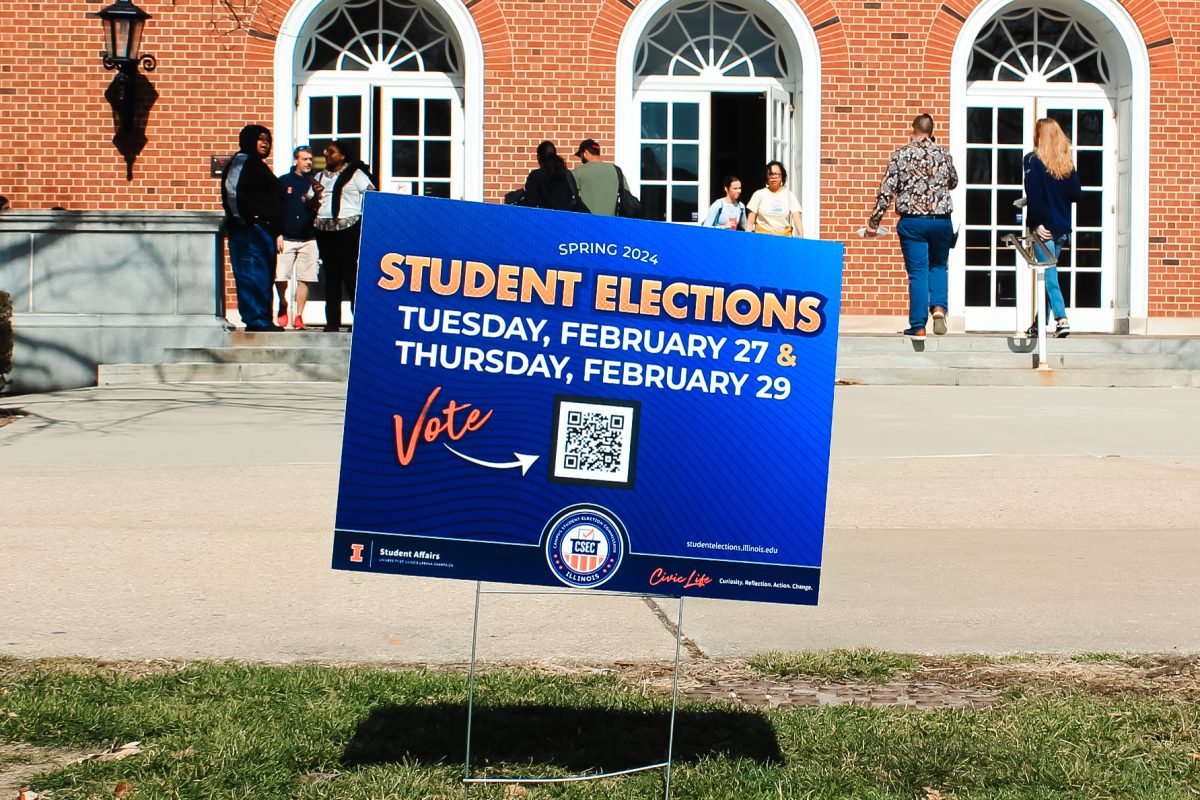
As this is a developing story, it is not yet clear if ISC or the Senate will hold their own elections and when those would take place. SEB elections, according to its website, will take place Feb. 17-19 with results posted on Feb. 27.
The University did not respond to multiple requests for comment.