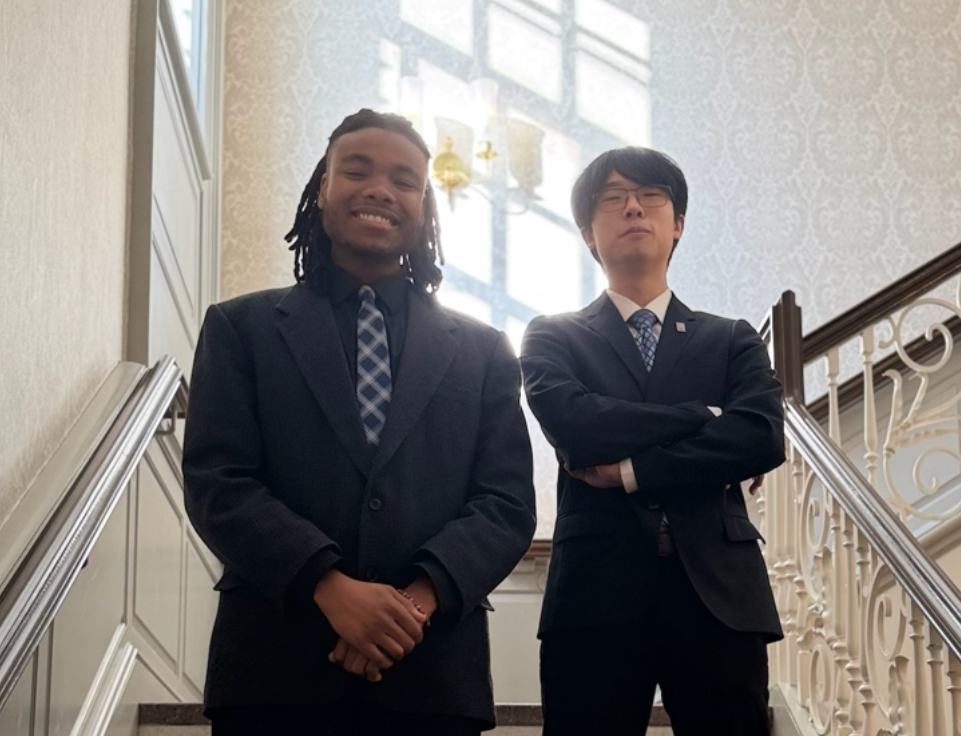
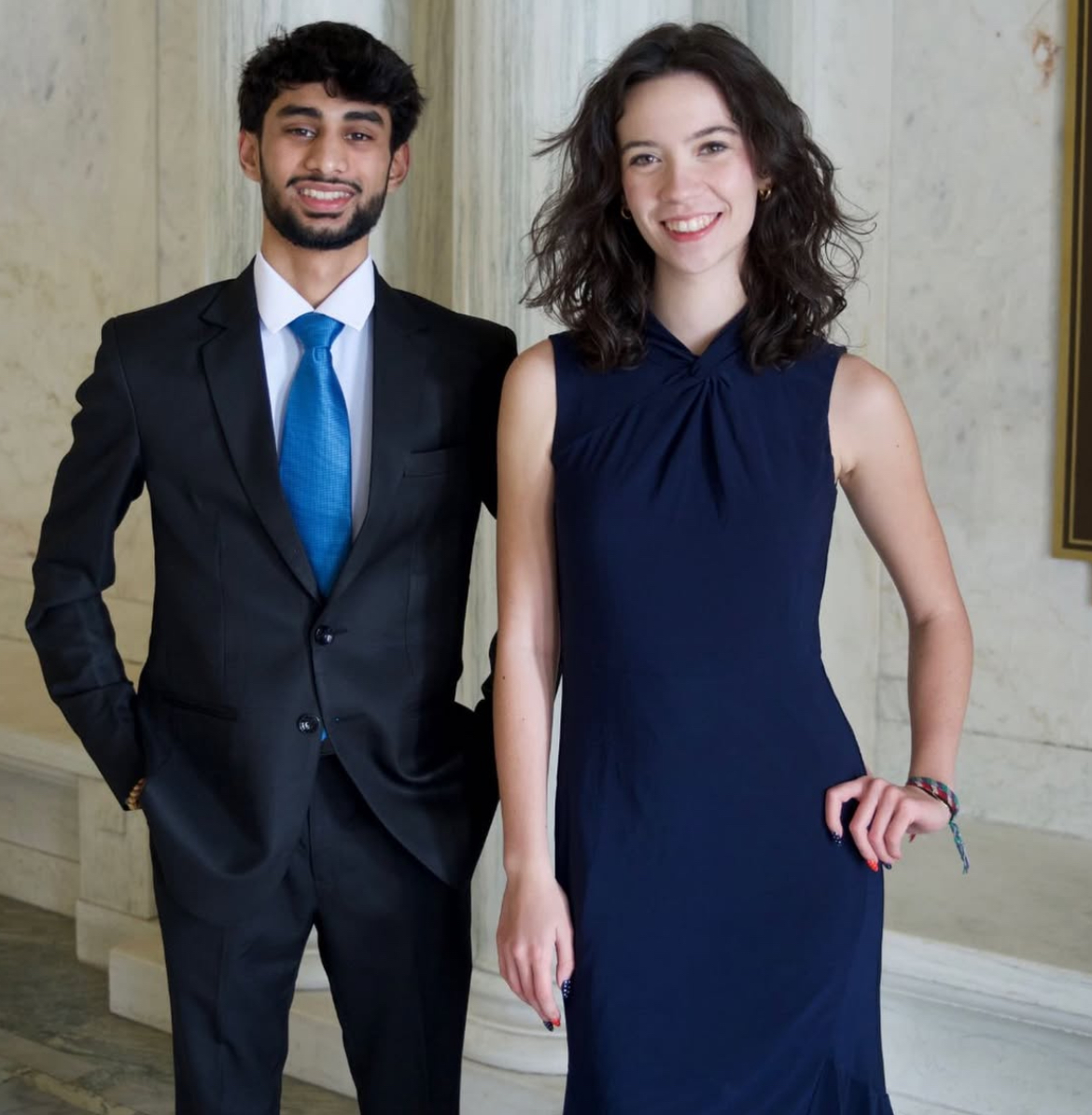
The Illinois Student Council election begins Tuesday at noon, and students will be tasked with voting for the next leaders in the University’s student government. One of these positions up for grabs is student trustee, or the student voice on the University of Illinois Board of Trustees.
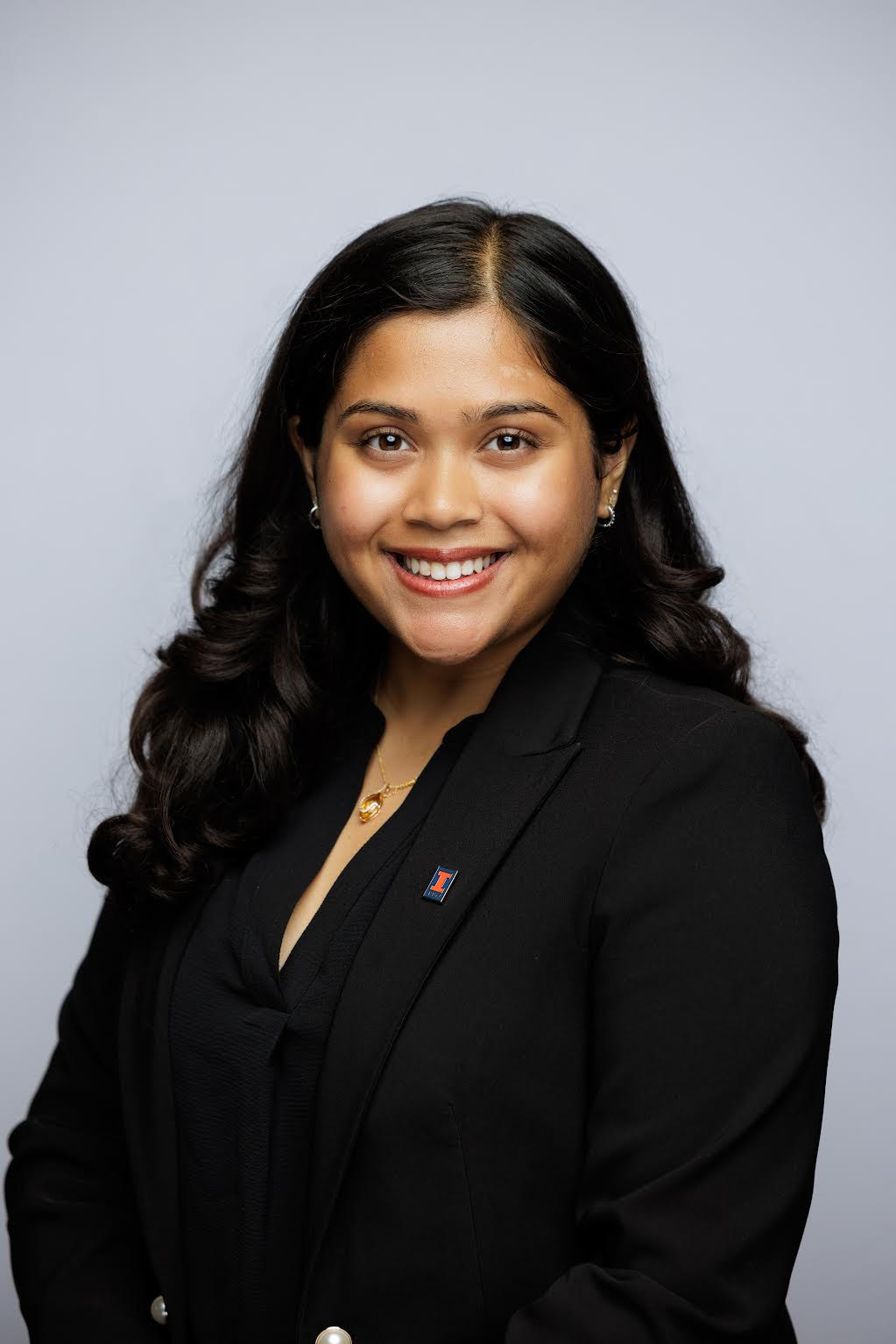
Ariana Mizan, senior in Business, has served as student trustee since 2024. She will be replaced by one of this year’s candidates – Gabi Stewart, Grayson Hodson or Patrick Holt.
In an exit interview on Wednesday, the DI spoke with Mizan about the responsibilities of the University’s student trustee, highlights from her two terms and her hopes for her successor.
This interview has been edited for length and clarity.
The DI: Can you start off with explaining what the role of student trustee is?
Get The Daily Illini in your inbox!
Mizan: The student trustee is elected by the student body on their respective campus to bring the student voice to the Board of Trustees. The Board of Trustees is composed of 13 members, three of which are student representatives from each of our three campuses, Chicago, Springfield and Urbana-Champaign and make up the University of Illinois System.
Every year, there is one trustee that gets the vote. And, on the website, when you look up information on how that’s decided, it says that the governor appoints the student trustee with the vote. But, for as long as anyone can remember, the vote has really just rotated between the three schools in a consistent pattern. The governor still does sign off and approve that vote.
I did get a letter from Governor Pritzker at the beginning of my term this year, or in 2025, saying, “You’re going to have a binding vote for your term.” Urbana-Champaign has the vote this year, and next year, I believe Chicago will have the vote. And this is really important, because there is going to be a presidential search. That’s no secret, because President Killeen did announce that he will be finishing his term. So we’re going to be looking for a new president. And so (the Board of Trustees) will be overseeing that search process.
The Board also just makes large-scale governance decisions if we don’t focus a lot on the operations. The chancellor is really doing more of the operational things. We vote on things like cost, tuition, fees and financial decisions and the Board is composed of different committees. There’s Academic and Student Affairs, there is the healthcare committee and then there is governance and personnel. And then there is a financial committee as well. So there’s sort of these four main committees, and the Board convenes on a bi-monthly basis …
The DI: What drew you to run for this position? You’ve held it for about two years now.
Mizan: I am someone who grew up in Champaign. From my freshman dorm window, I could see the hospital that I was born at and the place I went to high school. I went to University High School, and that means I basically started on campus when I was 12. I’ve been someone who’s been directly impacted by the decisions of the Board. I have been impacted educationally for 10 years, almost, which is longer than even some (graduate) students, candidates and other people who come here. I’ve been able to see this campus, like the actual physical campus space, just change over time.
I have a deep love for the Champaign-Urbana community, and the University of Illinois has been the center of my world since before I can remember. I came to the University not really understanding the importance of shared governance or how decisions were made. So freshman year, I volunteered on the UIUC Senate committee for public engagement. I got exposure through that. I decided I wanted to switch committees because I felt more passionate about student life, and things that impact student life – like harm reduction programs, different policies and food insecurity.
I got to talk more about the things I’m passionate about, so I decided to switch in my second semester freshman year. I’m actually still on the Committee for Student Life, and I started understanding how shared governance works and how many factors go into that. Through that, I got exposure and more connections, and people started inviting me to serve on different committees.
My freshman year, I also joined the Student Affairs Council, and I got to meet Justice Deborah Walker. I do want to give her a shout-out because she sat next to me in a Committee on Student Affairs council session in Chicago, and, at the end of the meeting, she said, “Ariana, have you ever considered running for student government?” And I was like, “No, I would never consider that.” And she was like, “Well, I don’t think you should run for student government. I think you should run for student trustee. Do you know what that is?” I was like, “I have no idea what that is.”
It was really close to the elections when this happened. So I went home, I looked it up, I found the current student trustee on LinkedIn. I sent her a message and asked, “Hey, can I hear more about the role?” And I think within like, a week, on a whim, I decided I’m going to put myself on the ballot, I filled out the form and bam. Election season slapped me across the face because there were a lot of surprises, and I had no idea how to run an election. I didn’t know what I was getting myself into, but not in a bad way. I’ve said before. I’ll say it again – being a student trustee has been the highlight of my student experience.
The DI: Has there been a specific item that you’ve pushed for, or something that you’ve championed as student trustee that you’re proud of?
Mizan: I think students should understand that any progress is progress in being able to even just be heard and (have) your ideas campaigned across campus. That’s a big deal. So I would say some of these things are still works in progress. They are going to be a work in progress, and just because it didn’t happen in my term doesn’t mean it can’t be completed in another term. A lot of what being the trustee is is laying the groundwork for the next trustee to take that idea even further, to go even further. You have to look at this entire governance process as iterative.
I was really proud of being able to push a new version of what the Dining Dollar app could look like, with the ability to transfer Dining Dollars. I’m minoring in technology management, so I have a lot of friends in engineering. So I had my friends help me design this. Then, I had a team that was dedicated to food insecurity last year, and we went on this huge campaign trail. We met with at least seven entities on campus, including dining services and the Dean of Students. We met with a bunch of different people, and we got to basically pitch out our idea. I’m an innovation student, so this was something really fun for me, is finding a way to bring innovation into the role of the student trustee.
I’m also really proud of the data collection that we did, especially on expressive policies. I designed a survey, and we got hundreds of students to fill that out. That also informed conversations with administration.
I’m really, really, really proud of the launch of the student leadership symposium. Something like that has never really been done on campus … We have (representation from) Greek life. We have athletic organizations. We have pre-med, pre-law, business, cultural and religious. We have every type of organization you could think of. We even have an organization for pets. It’s just every single type of organization you could think of. We invite their leaders.
Last year, I went to (Acting Associate Vice Chancellor for Student Success, Inclusion, and Belonging) Domonic Cobb, and I said, “Hey, I have this idea, but I don’t have any money. What can you do to help me?” I think I asked enough times that eventually he’s like, “Okay, we’re going to give you this budget, and you can run with it.” So we were able to host this dinner gala-style event. We had a former president of Girl Scouts America come and talk about service leadership. We had a great panel of community leaders, and we’re doing the same thing this year. We were even able to increase our budget by $1,000, and I’m very proud of us, because we’ve actually created an event that is annual, that will continue to happen even when I’m gone. I’m very proud of my team for launching that with me.
The DI: Do you think any common practices by the Board of Trustees, or something going on within it, are not being adequately addressed by the UI System? Do you think any changes need to be made for the Board to become more efficient?
Mizan: I can’t really speak on behalf of the Board, and I will say, at least from my experience, there’s nothing glaring.
Something that struck me is just the relationships between Board members and people. This struck me, even in the chancellor search process — there was someone who had made a comment on how kind and approachable our Board (of Trustees) is. At least from a student trustee perspective, I’ve felt like my ideas and questions are heard. And of course, with any institution of power, any collection of people, any organization, there’s always going to be room for improvement. But, like I said, any part of governance is iterative, so I don’t think that’s really for me to speak on where that improvement can happen.
I will say, when I started, I remember I had to do a presentation. I had to sit through presentations with different vice presidents and Scott Rice, who is our chief legal counsel. And these people gave me an introduction to all the things I need to know, some institutional know-how and how different processes are done. Especially for the legal side of things, there are a lot of rules, a lot of limits to this rule, and a lot of laws and things that you have to follow, things you have to be aware of, which can feel constraining.
At first, you’re going to think, “Okay, well, I came into this role with this big vision of all the things I’m going to do.” And then you realize, “Wait, this role has limits.” I think a lot of what being student trustee is is learning how to work within the limits of your role, to still achieve the things you want to achieve, and have the conversations that need to happen. You could look at that as something that can be improved.
That’s the nature of these roles. I think students need to understand, especially students who want to run for these roles, that there’s a difference between an advocate and an activist. If you’re going to do something like being the student trustee, you do have to understand the roles. You do have to, in many ways, respect the way things work. If your goal is to change the way things work, you first need to respect the way things work and understand the way things work.
The DI: What do you think the next student trustee should prioritize once they are elected?
Mizan: The student trustee should prioritize what matters to the students at any given moment. I think we often see students who run on big-ticket items, who have a very specific vision of what they want to accomplish. In my own experience, I ran when the biggest topic of conversation on campus was the encampments and geopolitics in Palestine and Israel. … To a lot of students, their safety was the topic of conversation. Their mental wellness was the topic of conversation in that context. So I ran in that context. And throughout my time, the conversation, I wouldn’t say has shifted away, because that’s still a part of the conversation. But it has shifted to include topics like immigration, topics like housing and students not being housed.
The conversation changes so fast in an instant. I would say all the time, there are so many headwinds with federal decisions that are being made that are directly impacting students and directly impacting faculty. The conversation has been about freedom of speech and academic freedom. It’s changed so much. I want the student trustee to realize that you have to be ready for a change in conversation. And I think we often forget the student trustee, yes, represents students, but they’re making decisions that impact faculty members and staff as well. You have to be keyed into what’s impacting those groups as well, and you’ll (need to) be ready to roll up your sleeves and have conversations about the things people care about.
Even if you came into the role thinking, “Hey, my issue that I want to focus on is,” there’s things that you should champion. For me, the thing I wanted to champion was food insecurity. That’s the thing that was my platform point originally, and I stuck with it. I still champion it. But there’s also going to be other things you have to add to your docket and be ready to champion. So just taking the temperature of the students, and everyone says, “Boots on the ground,” but for the student trustee, whoever is actually in the role, I hope that they don’t just say it.
I think we have seen in other power structures, maybe not within our campus, but in general, just people who say that they’re going to do something, and then they don’t do it. So I really hope that whoever is a student trustee will actually go to the cultural centers. Will actually host these events that bring people out of their silos. Will actually continue the student trustee office and work not within isolation, but hear other people’s ideas.
I hope that they will be innovative as well. Not just to accept the way things are going, but find creative and innovative ways to achieve your goals. Those that would be my advice and my hope for whoever is in the role next.
The DI: What’s next for you after graduation?
Mizan: I will be going to law school after I graduate, and I will be going straight through. I don’t know where exactly, but I’m very grateful to have many options. I will just be, this spring, visiting and thinking about where I want to land and where I want to begin my, or continue, I guess, not really begin, but continue my career in advocacy. So that’s really exciting. I think I’ll kind of continue to explore where my passion for advocacy takes me.
At the end of the day, I just want to help people. I remember Justice Mary Theis of Illinois came and spoke on our campus last semester, and she said, “The role of a lawyer is to repair civic fractures and trust, and to be able to say, ‘I can help you.’” That’s, at the end of the day, what I want to do. That passion, or that drive, is why I wanted to be a student trustee in the first place, is to just be able to help when I can, where I can and however I can.