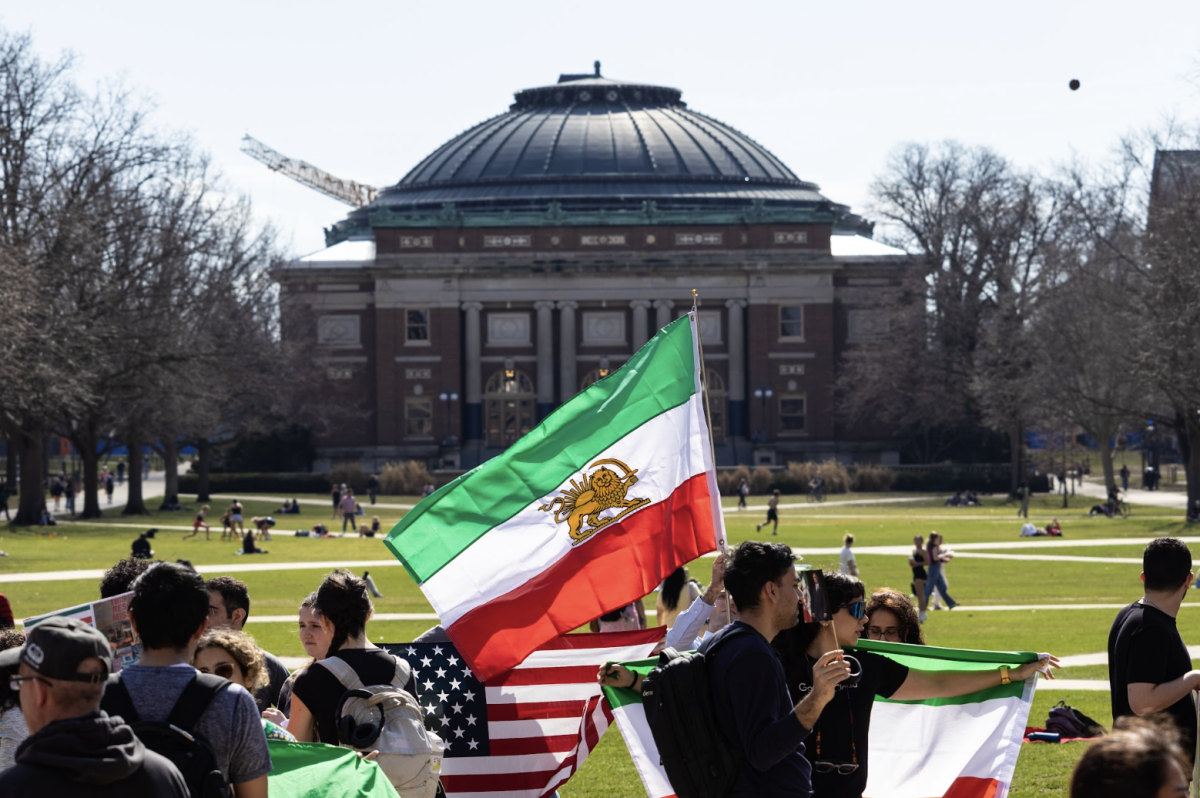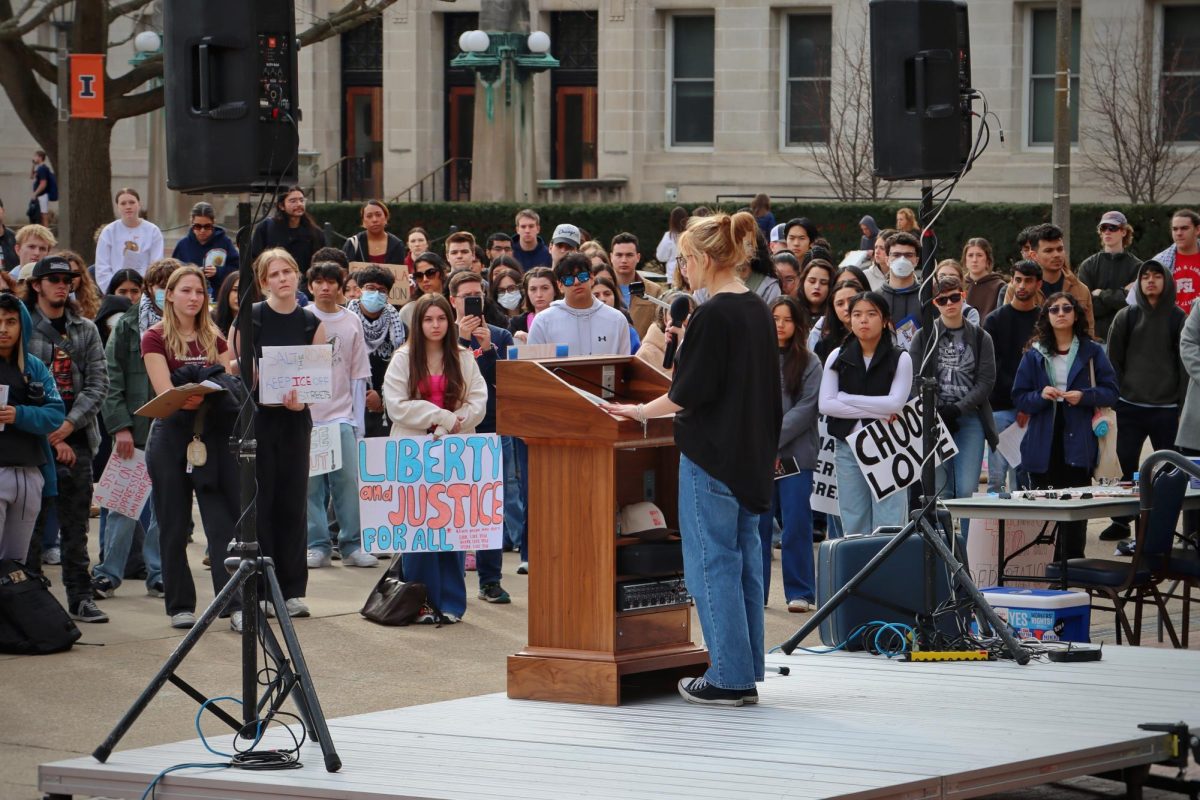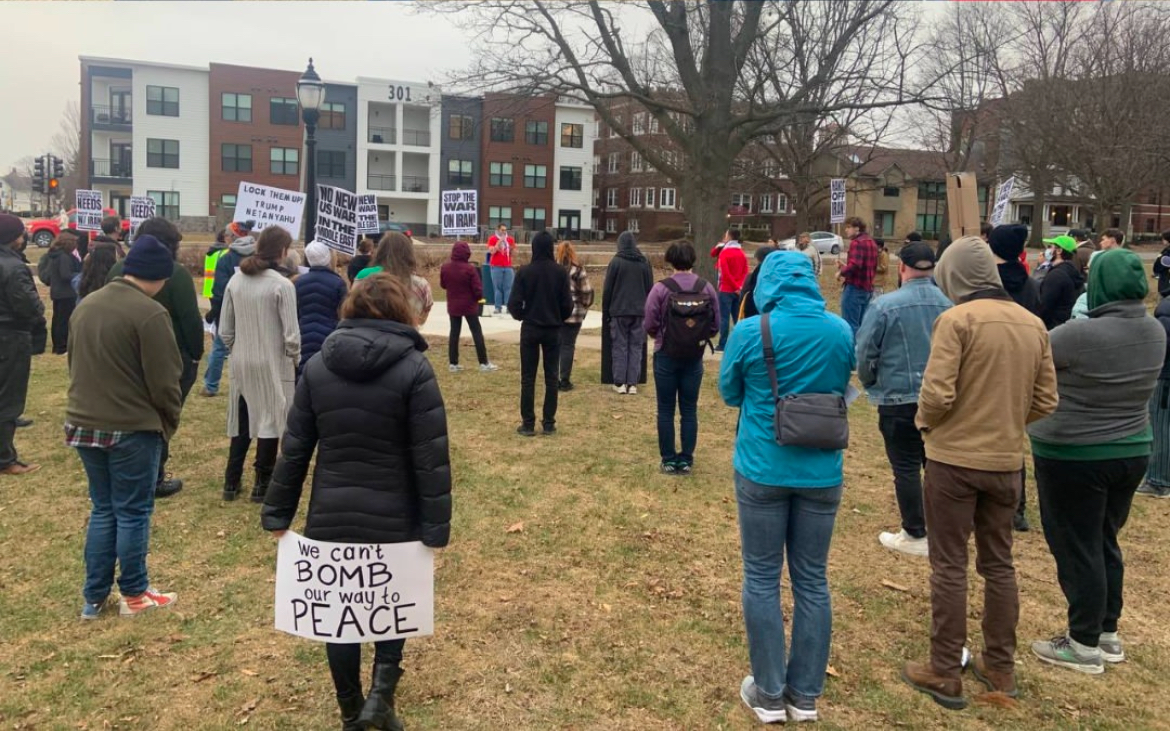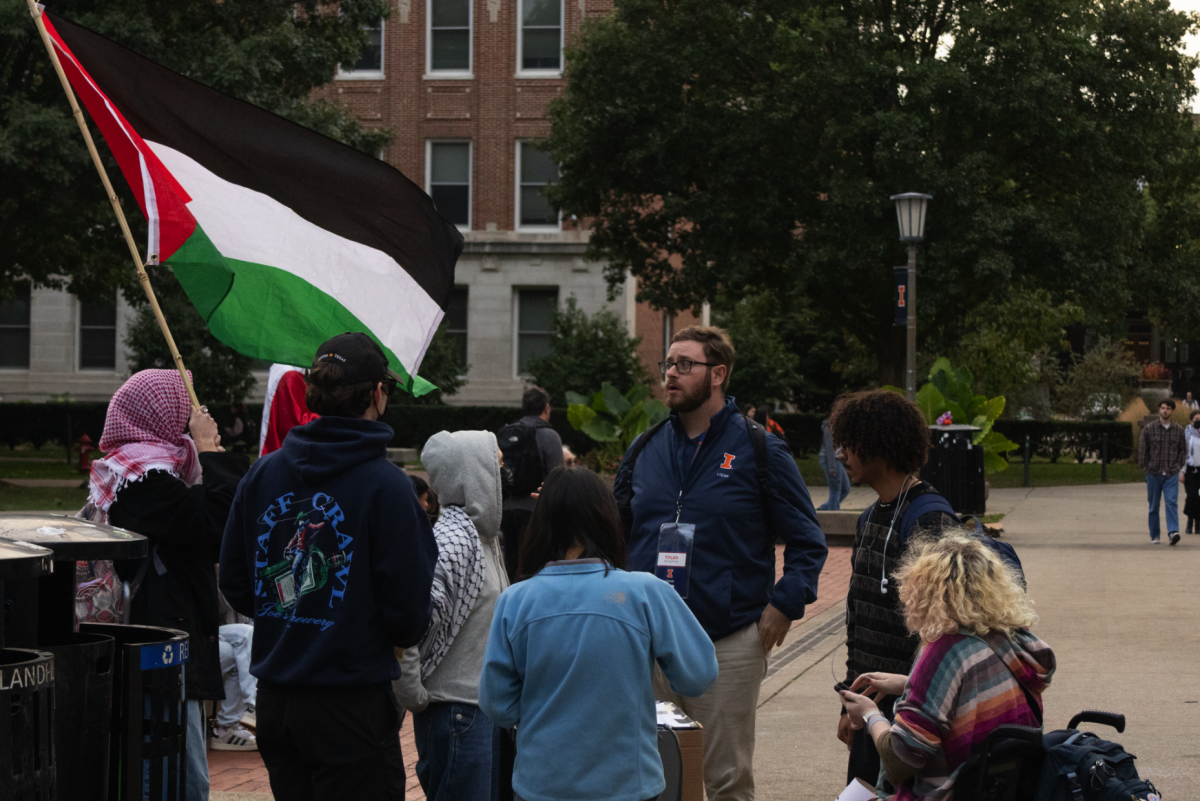
The University’s I-Team bills itself as a group of staffers charged with protecting the right of First Amendment expression on campus. Overseen by the Office of the Dean of Students and the Office of the Vice Chancellor for Finance and Administration, the I-Team was created in 2024 in tandem with drastic changes made to policies relating to expressive activity on campus. Since then, the I-Team has been a staple at campus protests.
With over a year since their creation, The Daily Illini investigated documents about the I-Team from the ODS, obtained via the Freedom of Information Act, to paint a picture of the I-Team’s roles and responsibilities.
I-Team roles and responsibilities
The I-Team is composed of 25 staff members, with three members on standby every week to monitor scheduled or unscheduled events. The I-Team staff is full-time and receives $750 per semester “for successfully meeting the expectations of this role” according to the organizing documents obtained by The DI.
All members of the I-Team are required to wear identifiable apparel such as branded jackets or shirts as well as a lanyard badge. If possible, an I-Team member will introduce themselves to event organizers before an event. They are expected to explain the purpose of the I-Team to all organizers.
Get The Daily Illini in your inbox!
Members of the I-Team go through training in de-escalation tactics. They are expected to monitor protests but also participate in any “post-event debriefing with designated university staff,” according to the document.
In addition, I-Team members are supposed to be ready to explain the parameters of the policy regarding Expressive Activity on Campus.
An I-Team member is also expected to “respectfully approach” and request a cease in behavior of those who are engaging in actions that are intended to “silence protected speech.”
Additionally, they are expected to remain neutral at events when they are serving in the I-Team role. I-Team members, according to the documents, should not behave as if they are spokespersons for the university. They are charged with engaging “professionally and respectfully with organizers, participants and attendees.”
Criticism of the I-Team
Free speech advocates at times have accused the I-Team of existing for the purpose of suppressing free speech on campus. The I-Team was a central figure at this past spring’s Right to Protest Rally.
The I-Team was founded at the beginning of the Fall 2024 semester, when the University revised its Expressive Activity on Campus policies — months after the student encampment protesting for Palestine. Numerous student organizations objected to the University’s revision the policies over the summer, arguing it was implemented while students and faculty were away in order to avoid pushback on the change.
The ACLU of Illinois issued a 2025 warning to the University over free speech concerns that grew out of the new policies.
I-Team’s role is supervisory, not enforcement
According to the I-Team’s website and the University’s Demonstration Response Plan, it is “outside the normal purview of the I-Team role for I-Teamers to confront students with demands for compliance with university policy and then to formally document non-compliance for follow up through the university’s disciplinary mechanisms.”
The DRP states that “an I-Team member is on-site to monitor dynamics during the event and be sensitive to potential escalations that could lead to violations of university policies or could create hostile interactions between opposing parties.”
Only UIPD is responsible for intervention and enforcement of criminal law. No University entity besides UIPD is expressly charged with the enforcement of University policy at demonstrations.
One campus political advocacy group accused the I-Team of requesting identification from demonstration attendees. In a publication by the UIUC chapter of Young Democratic Socialists of America, it stated that I-Team members rarely identify themselves but ask for identification from others.
Pursuant to the University’s Student Code, students are required to present their i-Card under certain circumstances.
Section 1-304 states, “The ID card (i-Card) must be presented for identification purposes at the request of an agent of the university when the agent is acting in the performance of their supervisory or security function.”
The DI reached out to the University’s Associate Vice Chancellor for Student Advocacy and Dean of Students, Stephen Bryan, under whose authority the I-Team falls, for clarification.
When asked if members of the I-Team qualify as an “agent of the university … acting in the performance of their supervisory or security function” when monitoring campus demonstrations, Bryan did not directly address the question.
He did, however, state that he knew of “no situation where an I-Team member has ‘compelled’ anyone’s name,” and added that I-Team members attempt to introduce themselves to event organizers before the event begins.
Bryan wrote in a statement to The DI that “it would be expected for I-Team members to ask an event organizer’s name as they make that greeting — it’s simple courtesy.”
The DI examined the I-Team’s stated goals and responsibilities to determine if students are obligated to identify themselves to members of the I-Team when prompted to or not. It is unclear whether or not a student must identify themselves, but according to the University Student Code, the I-Team is not listed as a supervisory or security body.
The University’s policies on expressive activity and the I-Team also fall under different governing authorities. The I-Team is overseen by a collaboration between the ODS and the OVCFA. The University’s campus expressive activity policies are under the Office of the Vice Chancellor for Administration and Operations.
Robin Kaler, chief of staff and vice chancellor for administrative strategy, stated in a February 2025 statement to The DI that the policies seek to maximize students’ safety while protecting their right to free expression.
“Recent revisions to campus policies were intended to clarify the boundary between lawful exercise of First Amendment rights and activity that creates safety hazards or disrupts educational activities, while also providing students and others with resources to make their voices heard,” Kaler wrote.
Correction — Monday, 12:30 p.m: An earlier version of this article stated the I-Team was created in Fall 2025; the University created it in Fall 2024. The article also previously omitted one of the campus administrative bodies that governs the I-Team — the Office of the Vice Chancellor for Finance and Administration. Further, the article originally stated that a University administrator, Stephen Bryan, declined to comment on a specific question, when he did not.