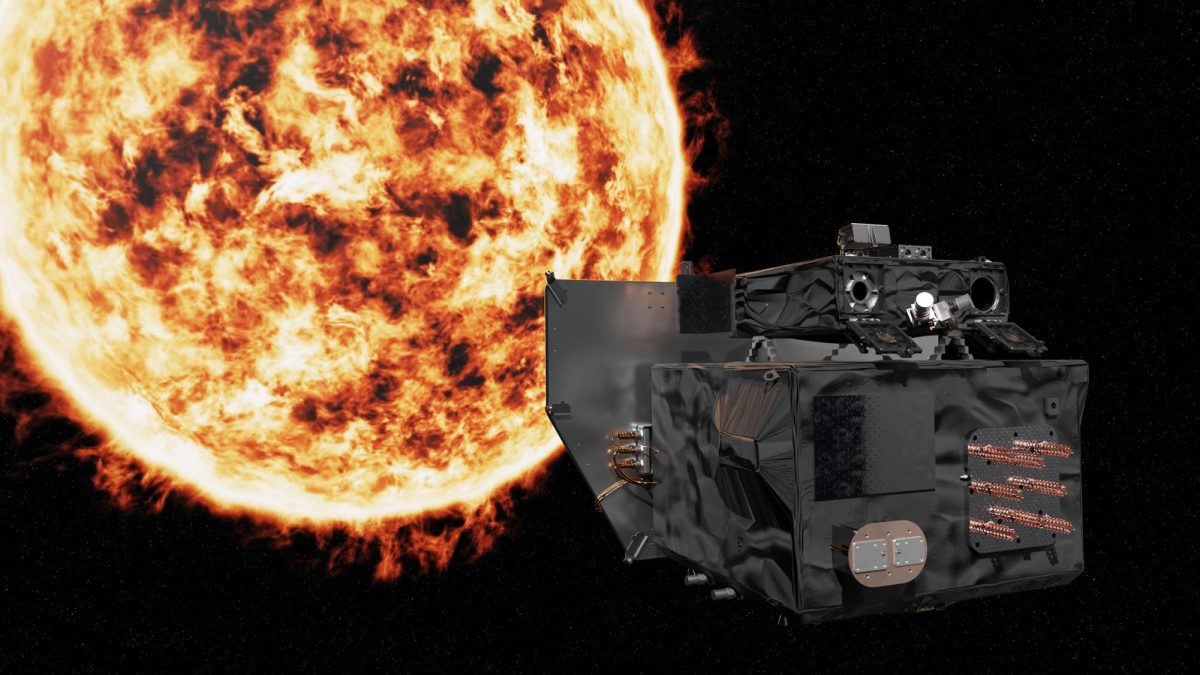
Lara Waldrop, professor in Engineering, will lead the first National Aeronautics and Space Administration mission directed by a University researcher. The Carruthers Geocorona Observatory will launch from Kennedy Space Center on Tuesday, aiming to capture images of the outer layer of the atmosphere, or the exosphere.
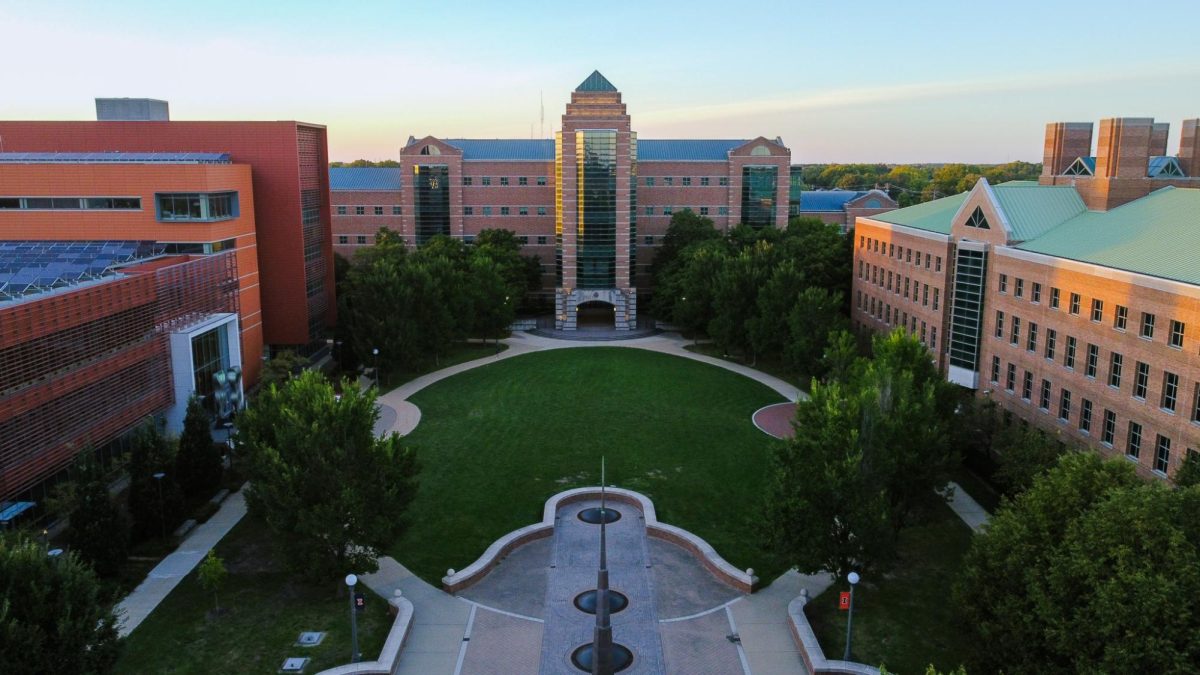
The Grainger College of Engineering will host a free viewing party at the Campus Instructional Facility’s Monumental Study Steps beginning at 6:30 a.m., when the spacecraft is scheduled to lift off.
Attendees can watch the launch live over coffee, take home space-themed giveaways and sample astronaut freeze-dried fruit. A virtual broadcast will also be available.
The Observatory will travel to a zone called the L1 Lagrange point, about 932,000 miles from Earth, where the gravitational pull of Earth and the Sun is equal and opposite, according to NASA. There, the spacecraft can enter the sun’s orbit.
NASA says the mission seeks to continuously image Earth’s exosphere, offering insights into space weather, atmospheric water loss and planetary habitability. The craft uses ultraviolet cameras to examine details of the exosphere’s behavior, like its shape, size and density.
Get The Daily Illini in your inbox!
The reason scientists care about this atmospheric region, Waldrop said, is because it plays an important role in how Earth responds to storms from the sun — solar weather. These weather events can disrupt power grids and satellites.
“Being able to predict these kinds of events and Earth’s response to it is really important for humanity,” Waldrop told The Daily Illini in an interview. “One of the biggest uncertainties in our ability to predict it is knowledge of this outer exosphere.”
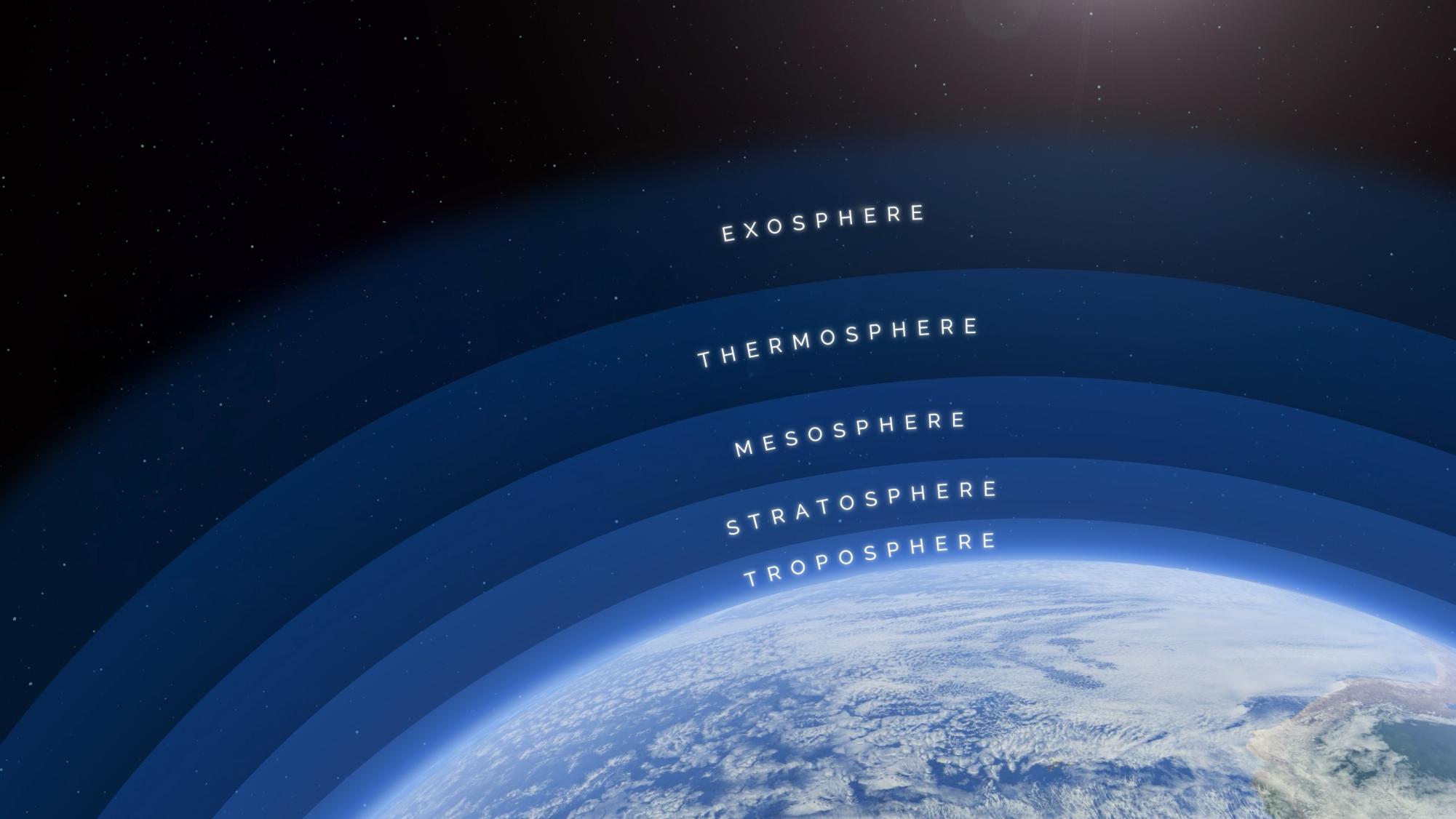
After reaching the L1 Lagrange point, the Observatory will turn and face the Earth’s exosphere to capture the ultraviolet images.
“They have really wide fields of view,” Waldrop said. “We need a special camera because it’s not visible to human eyes.”
Waldrop said the Observatory is named after George Carruthers, University alum and space physicist who developed the first ultraviolet camera. The camera was deployed by astronauts on NASA’s Apollo 16 mission in 1972.
“Illinois’ first NASA mission will be the second ultraviolet image of this region ever acquired,” Waldrop said. “The first one was an Illinois alum, the second one is an Illinois mission. There’s a lot of amazing coincidences there.”
Other institutions and companies, including the University of California, Berkeley, and BAE Systems also contributed to the mission’s development. After the Observatory collects data, Waldrop said, several institutions will help with the interpretation and analysis.
At noon Tuesday, Waldrop will share “behind-the-scenes insights, discuss the mission’s early progress and answer student questions regarding the project and its impact,” in a Q&A.
Before becoming a professor, Waldrop joined the University’s department of Electrical and Computer Engineering as a postdoctoral fellow in 2004. In 2017, Waldrop was named Y.T. Lo Fellow in Electrical and Computer Engineering.
Her research interests include remote sensing of atmospheric state parameters, space plasma diagnostics, computational modeling of radiative processes and small satellite mission concept definition, according to her faculty webpage.
Waldrop also has taught several courses, including a graduate-level course covering the space environment. But the upcoming NASA mission has kept her busy.
“I don’t teach a full load very often,” Waldrop said. “Getting this mission developed and ready for launch has taken a lot of my attention.”
Waldrop said the mission will take about 10-15 years before the Observatory runs out of fuel. After that, the Observatory will drift off into space and orbit the sun indefinitely. Looking forward, Waldrop hopes to see more University-led NASA missions.
“I would love to see Illinois grow in this area,” Waldrop said. “It’s Illinois’ first NASA mission, and I would love to turn that around and have NASA become a leader in this area.”



![A single corn (Zea mays) stoma captured at 50x magnification with a two-photon laser scanning confocal microscope while the leaf was manipulated inside a gas exchange system with high light and tightly controlled [CO2] and humidity conditions in the Institute for Genomic Biology Core Facilities in 2025.](https://dailyillini.com/wp-content/uploads/2026/03/TOC-icon.jpg)