A team led by Madhu Khanna, professor in ACES and director of the Institute for Sustainability, Energy and Environment, published a research paper on agricultural policy changes, encouraging farmers to adopt climate-smart practices when growing crops used in the development of biofuel for transportation and aviation.
The paper highlights the importance of including information about how the feedstock was produced to avoid inaccurate estimates of total carbon emissions in biofuel production.
The total carbon emissions from biofuel production are affected by the feedstock production process. However, current estimates do not account for this part of the process.
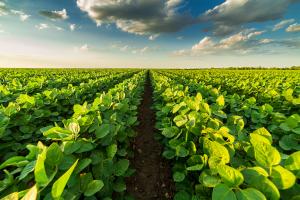
Biofuel is produced from feedstock like corn and soybean.
“Current policies, which are trying to incentivize low-carbon biofuels, don’t consider the soil carbon sequestration component,” Khanna said.
Get The Daily Illini in your inbox!
Feedstocks produced with climate-smart practices are not distinguished from those produced without them. Therefore, the group proposed a policy change to incentivize farmers to adopt more carbon-neutral practices which would help decarbonize biofuel agriculture.
Commonly used feedstock, including corn, has alternate production methods that would reduce greenhouse gas emissions and increase the amount of carbon stored in the soil.
Unfortunately, the easily reversible nature of storing soil carbon means some farmers may take advantage of monetary incentives by storing carbon for only short periods before releasing it into the atmosphere again.
“If the farmers plant crops in certain ways, it may increase soil carbon, but then if they change those practices, it can release the soil carbon,” Khanna said.
Khanna and her team have proposed a model incentivizing the use of sustainable practices in feedstock production, as well as measuring the duration of time they keep carbon in the soil.
Farmers who keep carbon in the soil for longer durations would receive higher incentives.
Agriculture accounts for around 10% of total greenhouse gas emissions in the U.S. and transportation contributes over 28%. With aims to meet a net-zero target by 2050, these sectors are trying to move away from fossil fuels. Biofuel offers an important renewable energy source that would positively impact both sectors.
“There’s only so much that solar and wind can provide, particularly when looking at some of the centers which are hard to electrify like aviation or maritime vehicles,” Khanna said.
The research paper was inspired by the ‘40B’ Sustainable Aviation Fuel tax credit of 2023-2024 in which the US government instituted a policy to reward corn and soybean production for aviation fuel that used climate-smart practices.
“What this paper is trying to do is proposing to generalize that policy to all biofuels, not just sustainable aviation fuel,” Khanna said.
Chemical contamination of bodies of water and loss of soil fertility are other negative environmental impacts that modern agricultural practices can have.
“Conventional practices can be quite harmful to the environment, but we know that there are many better ways to do crop management,” Khanna said.
Climate-smart practices like no-till farming, cover cropping, precision farming, biochar and perennial crop use would all be incentivized through the proposed policy.
No-till farming and cover cropping are highly common climate-smart practices. To increase soil carbon and increase soil health, farmers may plant crops without disturbing the soil through tillage or plant non-cash crops.
Precision farming utilizes an exact amount of fertilizer, herbicides and pesticides on a site-specific level, while also taking into account the type of plant, soil, and weather conditions. This practice can help reduce the over-application of fertilizer.
Biochar is a material that can be added to soil to capture and sequester carbon, removing it from the atmosphere and locking it in the soil.
Perennial energy crops are being grown at the University’s Crop Science Research and Education Center, also known as the South Farms. These crops have high rates of carbon sequestration and can be used in place of other feedstocks to produce low-carbon-emission biofuels.
Incentivizing climate-smart practices in biofuel production is only the beginning for Khanna and her research team.
“This is the way that we propose to get started, develop the methods, and then they can be applied more widely to the rest of agriculture,” Khanna said.





![A single corn (Zea mays) stoma captured at 50x magnification with a two-photon laser scanning confocal microscope while the leaf was manipulated inside a gas exchange system with high light and tightly controlled [CO2] and humidity conditions in the Institute for Genomic Biology Core Facilities in 2025.](https://dailyillini.com/wp-content/uploads/2026/03/TOC-icon.jpg)