Last updated on Oct. 5, 2025 at 01:15 p.m.
A team of researchers from the University published a study last month finding that roughly 72% of Illinois wetlands are now unprotected. Without protection, these wetlands are vulnerable to being filled in or drained for agricultural and urban development.
The Clean Water Act had long extended federal protection to wetlands across the U.S., but the 2023 Supreme Court decision, Sackett v. EPA, narrowed the scope of these protections. To be eligible for federal protection, the decision states that wetlands must have a “continuous surface connection” to “waters of the United States.”
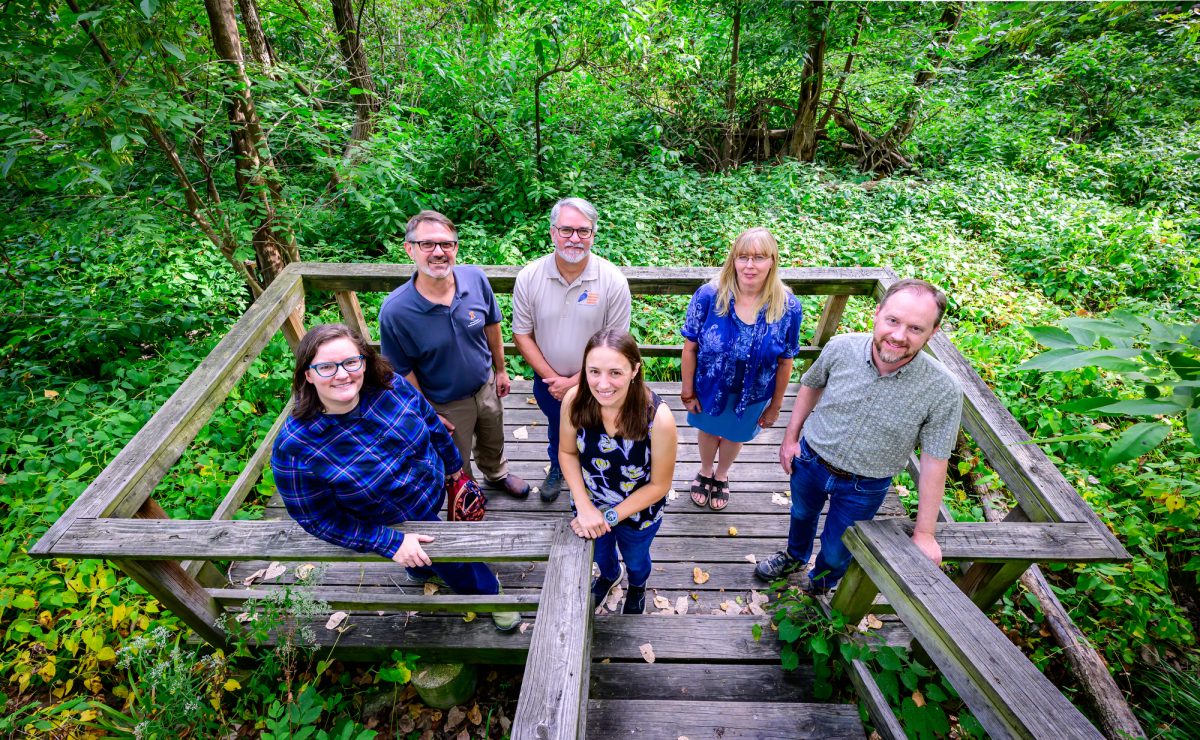
Chelsea Peterson, a graduate student studying natural resources & environmental sciences, was the lead author of the study, working with Jeffrey Matthews, a professor in ACES, who served as principal investigator. The team also included Jessica Monson and Geoffrey Pociask, research scientists at the Illinois State Geological Survey, along with Paul Marcum and Julie Nieset, research scientists at the Illinois Natural History Survey.
The team used data analysis and spatial modeling techniques to identify areas that have lost federal protections, as well as those that continue to have countywide protections.
Get The Daily Illini in your inbox!
“A wetland is a transitional ecosystem between the land and water, where there is flooding at or near the soil surface … it can be a short interval to permanent flooding,” Peterson said. “In that flooding leads to low-oxygen soils, and it selects for plants and animals that are adapted to saturated conditions.”
Though wetlands range from being permanently saturated to being rarely flooded, the language used in the Sackett decision strips protections from those that flood infrequently or are cut off from permanent streams.
Matthews explained that wetlands reduce flooding, filter water, recharge underground aquifers and serve as habitats for animals. Beyond having ecological importance, wetlands provide financial benefits to nearby communities by protecting homes, businesses and farms from flood damage. The team estimated that now-unprotected wetlands in Illinois provide roughly $220 million per year in flood control benefits.
Researchers determined that around 700,000 acres of wetlands across the state are no longer protected by the Clean Water Act. However, they also found that 100,000 of those acres are protected by other means, including parks, nature preserves or local county ordinances.
The most vulnerable wetlands are concentrated in southern Illinois, where there has historically been less agricultural and urban development.
“There are hot spots throughout those areas that have significant overlap between climate-induced risk of flooding and wetland loss,” Peterson said. “So there’s this potential for wetland loss to compound these preexisting vulnerabilities to flooding, especially in these flood plain areas where there isn’t some kind of county ordinance.”
In other regions throughout Illinois, urban and agricultural development has severely depleted the total acreage of wetlands.
“Historically, Champaign County had vast seasonal wetlands, mostly wet prairies,” Matthews said. “Most of that has been drained and converted to agriculture, but you’ll still find a lot of wetlands along streams, in small pockets along roadsides or on the edges of farm fields.”
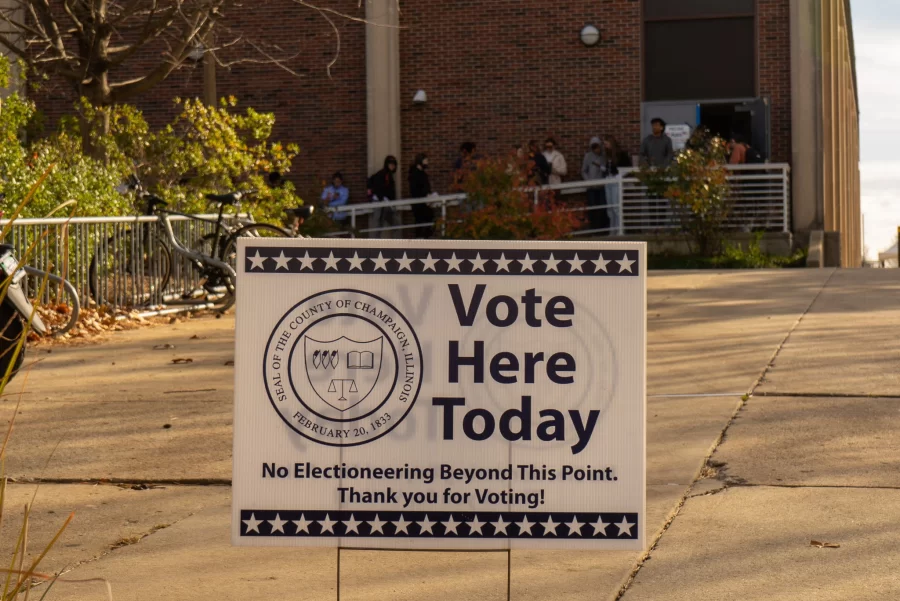
Locations near campus, like Busey Woods and Meadowbrook Park, house wetlands, according to Matthews. As Champaign County does not provide countywide protections for wetlands, these sites are now vulnerable to development.
The full study is available to read here.

![A single corn (Zea mays) stoma captured at 50x magnification with a two-photon laser scanning confocal microscope while the leaf was manipulated inside a gas exchange system with high light and tightly controlled [CO2] and humidity conditions in the Institute for Genomic Biology Core Facilities in 2025.](https://dailyillini.com/wp-content/uploads/2026/03/TOC-icon.jpg)