Researchers at the Carle Illinois College of Medicine are using artificial intelligence to explore methods of identifying treatments for neurological conditions.
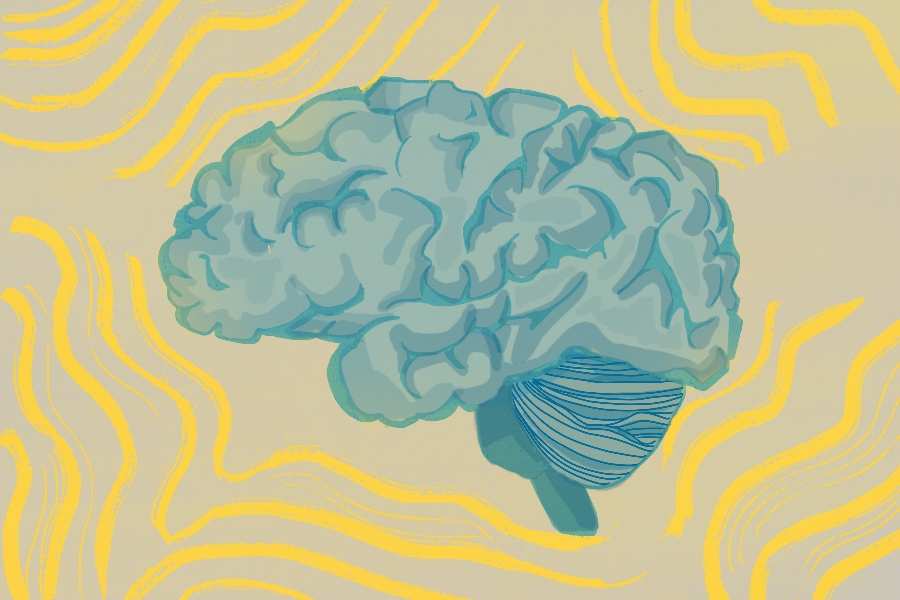
With support from researchers at Emory University, their focus is on using AI to predict which drugs are more likely to penetrate the blood-brain barrier, which is outlined in their 2025 article as a significant hurdle to effective treatment of neurological conditions.
Megan Lim, student in the College of Medicine and the first author of the paper, discussed the justification behind using computational techniques for drug discovery.
“When you do machine learning and deep learning, you can screen thousands of compounds at a time to see whether or not they cross through the blood-brain barrier,” Lim said. “What was pretty novel about our study is that we did use machine learning, but we also used deep learning and transfer learning.”
Although modeling the permeability of the blood-brain barrier has historically posed difficulties, the technique of transfer learning predicted this quantity with 89.08% accuracy. According to Lim, this technique was chosen for its accuracy in analyzing a dataset from Emory University.
Get The Daily Illini in your inbox!
“In my third year of med school, I went over to Emory in Atlanta, and we chose 18 compounds out of an in-house Emory dataset … to validate the performance of the machine learning models that we built,” Lim said. “We found that transfer learning performed the best.”
Since the publication of the 2025 article, Lim said the researchers have also considered validating their computational results with in vivo and in vitro experiments.
“I think there are a lot of different ways … how we would take this to the next step,” Lim said. “One would be running more in vitro experiments in the lab to curate a larger dataset. The second would be moving to in vivo models, like on animals, to run experiments on compounds that we just don’t know about in the literature, whether or not those drugs are permeable.”
Lim also discussed the future of AI in medical research.
“With the advent of AI, we’ve seen how powerful computational technologies can be,” Lim said. “I do think that computational chemistry will continue to have a very powerful role within drug discovery.”
Lim said she hopes to continue to bridge computational chemistry and neurosurgery in the future.
“I do think that we have all the resources today to make that possible,” Lim said. “We have the computational power. We have the GPUs, the hardware, and we have the data. We have a lot of chemical data and biological data that’s coming up. But I think that we need people who are going to recognize this and continue to push it forward.”
![A single corn (Zea mays) stoma captured at 50x magnification with a two-photon laser scanning confocal microscope while the leaf was manipulated inside a gas exchange system with high light and tightly controlled [CO2] and humidity conditions in the Institute for Genomic Biology Core Facilities in 2025.](https://dailyillini.com/wp-content/uploads/2026/03/TOC-icon.jpg)