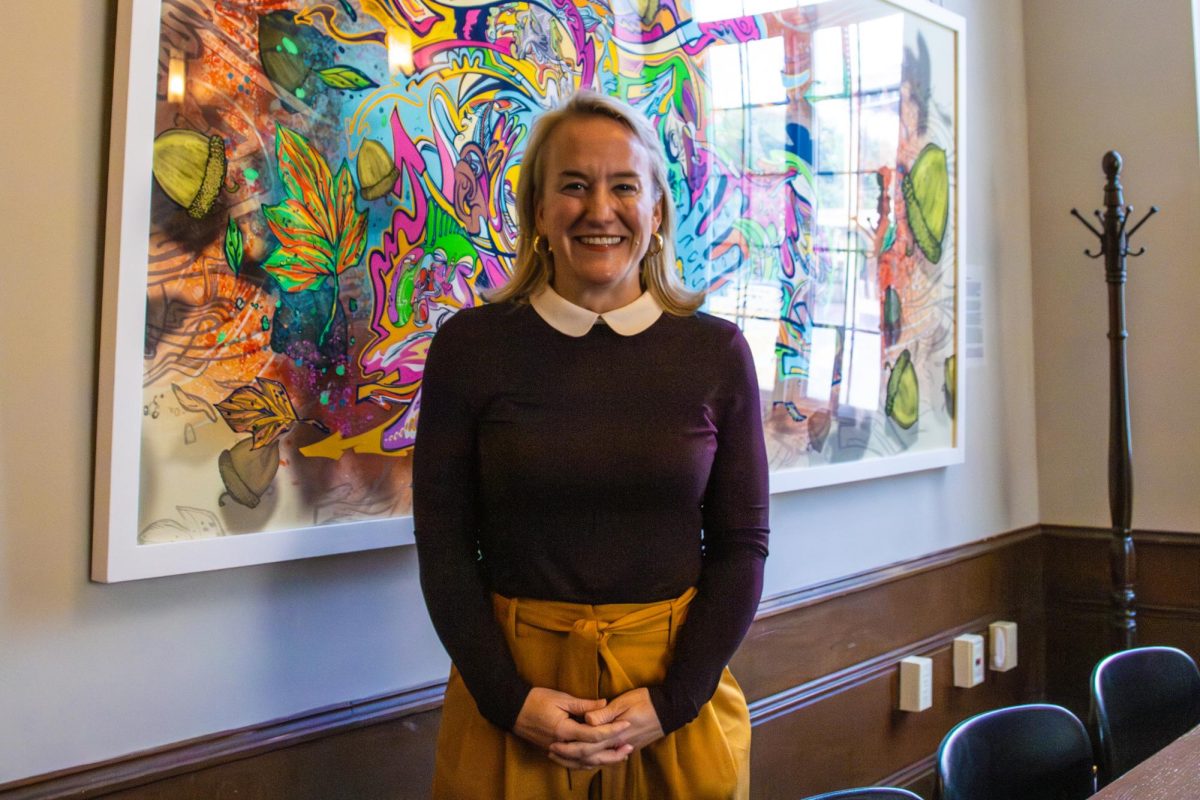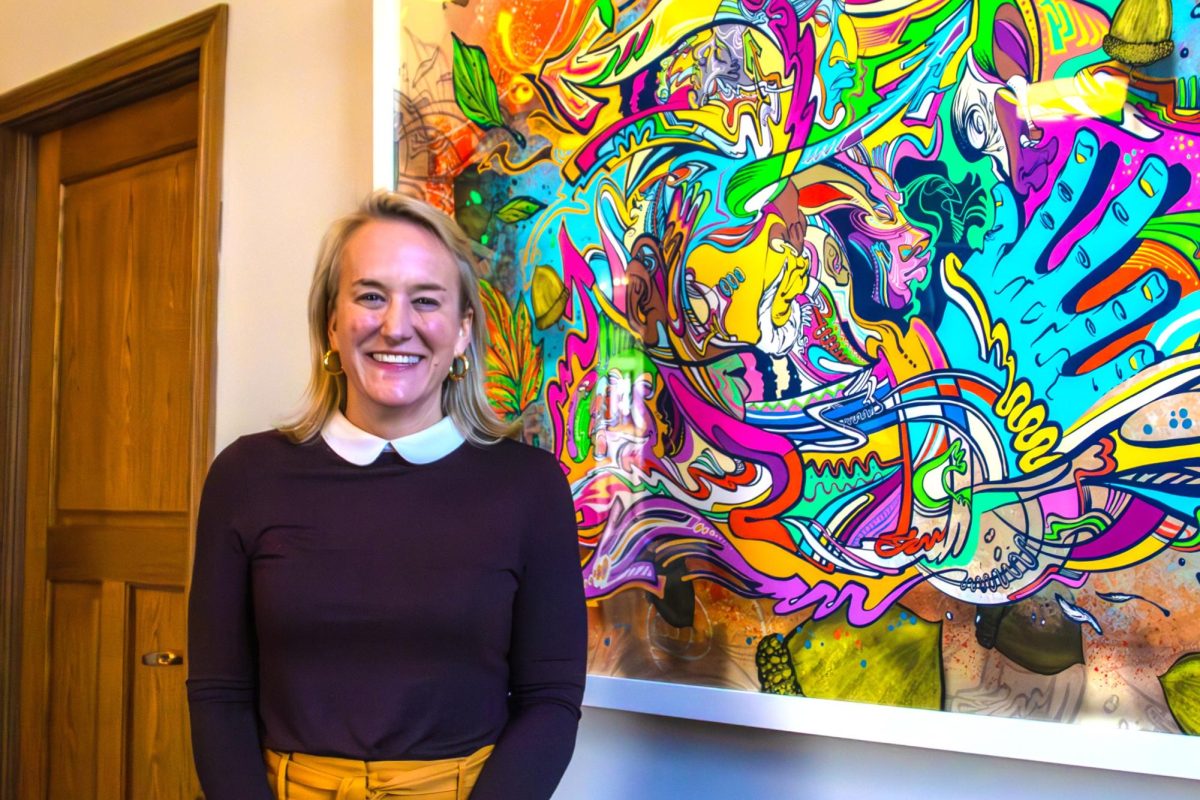
U.S. Rep. Nikki Budzinski, a Democrat representing Illinois’ 13th Congressional District and University alum, spoke to The Daily Illini last Tuesday about her stances on federal funding, higher education, affordability, Israel’s military campaign and other issues impacting students and community members.
Federal funding and ‘Silicorn Valley’
Since taking the position in 2023, Budzinski said her office has helped secure more than $680 million in federal funding for the district, which spans a large portion of central Illinois. Among the greatest allocations is a $51 million grant for the Illinois Fermentation and Agriculture Biomanufacturing Hub in Champaign, part of a growing industry she dubbed “Silicorn Valley.”
The initiative aims to build a bioeconomy in the region by converting agricultural waste into sustainable alternatives for products like fuel, textiles, plastics and packaging materials.
“We see some of these dollars already transforming different parts of the campus or the community itself,” Budzinski said. “We’re going to see a transformation of a new $200 billion industry, right here.”
Get The Daily Illini in your inbox!
Budzinski also raised concerns about the Trump administration’s review of Department of Transportation discretionary grants, which could delay fund distribution. She pointed to Urbana’s $10 million Florida Avenue Corridor infrastructure project as an example, saying that awarded but uncommitted money remains at risk.
“I have been very concerned about the Trump administration’s freezing of some of these grants that we won, specifically the one for the city of Urbana,” Budzinski said.
In January, DOT Secretary Sean Duffy placed thousands of previously approved infrastructure awards under review. Duffy said their goal was to reevaluate woke policies, pausing grants related to Diversity, Equity, Inclusion and climate.
The Trump administration changed the criteria with which DOT infrastructure money is reviewed, requiring districts to disclose their birth rates, marriage rates and if they’re cooperating with ICE prior to receiving already-awarded grants.
“This is a ridiculous and draconian change of course for the federal government,” Budzinski said.
Higher education and student loans
The Trump administration’s omnibus spending bill cut funding for Pell Grants, eliminated Grad PLUS loans, decreased lifetime student loan limits and consolidated repayment programs. Budzinski said the changes will make higher education less accessible, particularly for low-income and first-generation students.
“I’m going to continue to advocate that we double Pell Grants,” Budzinski said. “What you see with this big ugly bill is (that) it’s actually making college more expensive … it’s going to create a limited opportunity for students to access a variety of low-interest programs for loans.”
She highlighted the importance of federal research funding at the University, pointing to National Institutes of Health and agricultural grants that support both faculty and student opportunities.
Budzinski also said her office has been working with the University to address concerns among international students after federal visa cancellations and reinstatements created confusion over program eligibility.
“There was an initial uptick in the administration sending notices to students that might create worry that (those students) might no longer be able to stay or are no longer welcomed,” Budzinski said. “We don’t accept that.”
Affordability and cost of living
Budzinski identified affordability as one of her top priorities, pointing to rising rent prices and increasing energy costs across the district. She said boosting housing development is critical to lowering prices for students and families in Champaign-Urbana.
“We need to increase the build that we have so that there are more options for students and there’s not a consolidation of the housing market, which leads to increased prices,” Budzinski said. “More competition, more building, more options — I think that will help affordability.”
The second-term congresswoman also addressed rising energy costs, noting Ameren Illinois rates increased by at least 20% in Illinois this summer. She criticized the elimination of federal clean energy tax credits, saying additional investment in renewable energy projects is needed to stabilize prices and increase energy generation through wind and solar power.
Medicaid, SNAP and Head Start
Budzinski opposed the omnibus bill’s $1.2 trillion in cuts to Medicaid and the Supplemental Nutrition Assistance Program benefits, saying the reductions will disproportionately impact families in central Illinois. She said food banks in C-U and Decatur are already experiencing increased demand and warned the situation will worsen.
“I’m speaking out as loud as I possibly can on what the effects of these cuts are going to mean,” Budzinski said. “When I meet with the food banks here in Champaign and in Decatur, they are saying there is increased need, skyrocketing need … We’re going to see more families in our communities that are hungry and more children going to bed hungry.”
She also said reductions to SNAP will create ripple effects for families relying on Head Start, an early childhood education program tied to nutrition benefits. In August, Budzinski secured $6.4 million in funding for Champaign County’s Head Start program.
“When a family qualifies for SNAP, they are automatically enrolled in Head Start,” Budzinski said. “But, what families don’t know is, if they fall off the SNAP rolls, that means they also have fallen off the Head Start rolls.”
Israel-Palestine and Gaza famine
Budzinski addressed her position on Israel’s military campaign in Gaza, which has killed more than 60,000 Palestinians. She said she supports Israel’s right to defend itself but considers the humanitarian crisis in Gaza unacceptable. In May 2024, Budzinski faced scrutiny over her support for Israel’s invasion and military campaign in Gaza.
Budzinski cited a World Health Organization report confirming famine conditions in Gaza and criticized Israeli Prime Minister Benjamin Netanyahu’s government for creating the crisis.
“This (famine) is man-made,” Budzinski said. “It is man-made by Netanyahu.”
In July, more than 12,000 children under five years old in Gaza were identified as acutely malnourished, according to the United Nations.
Budzinski said she has signed congressional letters urging the United States to expand humanitarian aid, specifically requesting that it include medical supplies and baby formula. Meanwhile, she questions the U.S.’s provision of offensive weapons to Israel.
“While we need to eradicate Hamas — and I do believe that — that is not going to happen by starving the children of Gaza,” Budzinski said. “Right now, I’ve prioritized making sure aid is getting to where it needs to be, which is directly to the people of Gaza.”
Regarding Palestinians killed by Israeli troops while seeking humanitarian aid, Budzinski said, “That’s not OK.”
Reproductive rights
Budzinski said she was committed to protecting reproductive rights in Illinois. She criticized Trump’s omnibus bill’s defunding of Planned Parenthood, which she said threatens access to a wide range of services beyond abortion.
She added that Planned Parenthood clinics provide essential healthcare — including mammograms, STD testing and reproductive screenings — for many Illinois residents.
“In the big bill, they defunded Planned Parenthood,” Budzinski said. “At every turn, they have tried to make it more difficult for a woman to exercise her right to make her own decisions about her own body.”
Looking ahead
Budzinski said many of the policy fights over funding, student loans, reproductive rights and foreign aid will depend on how Congress shifts after the next election.
“This is where elections matter,” Budzinski said. “If we are able to retake control of the House of Representatives in the November 2026 election, we get to control the issues that get to the floor — that’s the power of the majority.”