Last updated on Feb. 8, 2026 at 10:01 p.m.
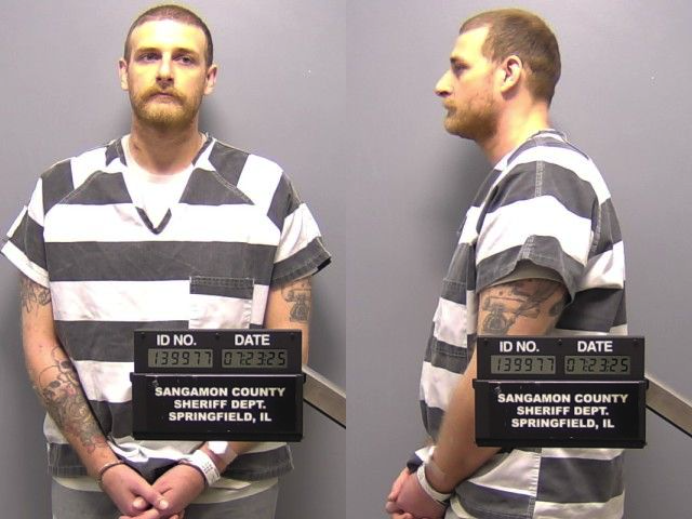
Former Sangamon County Sheriff’s Deputy Sean Grayson was found guilty of second-degree murder on Thursday in the killing of 36-year-old Sonya Massey. Grayson shot Massey, a Springfield, Illinois, mother of two, inside her home in 2024 after she called 911 to report a suspected prowler.
Grayson was initially charged with first-degree murder, to which he pleaded not guilty, claiming he acted in self-defense. After the week-long trial, jurors opted for the lesser charge of second-degree murder, which carries a sentence of four to 20 years.
The trial began Oct. 22 with opening statements and the presentation of full, unedited body camera footage from the morning of the shooting.
The footage, which was key evidence throughout the trial, showed a confrontation between Grayson and Massey over a pot of boiling water on Massey’s stove.
Get The Daily Illini in your inbox!
After Grayson ordered the pot removed, the two exchanged words before Massey said, “I rebuke you in the name of Jesus.” Grayson then drew his weapon, threatened to shoot and fired three times, striking her head once after Massey apologized and ducked behind a counter.
According to The Associated Press, during opening statements, Sangamon County State’s Attorney John Milhiser told the jury the video would prove Massey posed no threat, saying, “(Grayson) did not follow his training. He did not follow police principles.”
Grayson’s defense attorney argued he fired in self-defense, fearing Massey might throw the boiling water.
Dawson Farley, the second deputy present that morning, later testified that although he drew his weapon after Grayson, he neither saw nor heard anything that made him view Massey as a threat. However, Farley — who did not shoot — admitted he first told investigators he felt threatened by the hot water.
In a rare move for a murder defendant, Grayson took the stand in his own defense. He testified he had considered using his Taser to restrain Massey, but feared it would not be effective due to the distance and the counter between them.
Grayson said he decided Massey posed a threat and drew his 9 mm pistol only after she repeated her “rebuke” twice — though prosecutors noted she did so because he had not heard her the first time and asked her to repeat herself.
Jury deliberations began Tuesday morning. By Wednesday, jurors concluded that Grayson’s actions did not meet the threshold for first-degree murder and instead convicted him of second-degree murder.
Under Illinois law, first-degree murder, which carries a potential sentence of 45 years to life in prison, typically involves willful, deliberate and premeditated killing. Second-degree murder, while still intentional, recognizes mitigating circumstances such as sudden provocation or an unreasonable belief in self-defense.
“The question I’m sure they were debating was, did he genuinely believe that he was in danger?” said Andrew Leipold, professor in Law. “And if he honestly thought he was in danger, was it unreasonable for him to think so?”
Grayson now faces four to 20 years in prison, though he is also eligible for probation with no prison time. Sentencing will be held in Sangamon County on Jan. 29.
Prior to the week’s proceedings, the court approved relocating the trial from Springfield, Illinois, to Peoria County, fearing pretrial publicity would infringe on a fair trial. Legal experts say such decisions can often carry emotional and political weight within a community.
“If the victim lives in a particular community, people want to see the trial conducted in that community, if at all possible,” said Kenworthey Bilz, professor in Law. “Where you prosecute does have an effect on how satisfying and how legitimate the verdict is perceived.”
The public reaction to Massey’s killing and the subsequent trial unfolded amid a broader national reckoning over police accountability and officer hiring standards.
Prior to the trial, the Massey family received a $10 million wrongful death settlement from the Sangamon County Sheriff’s Office in what would be the largest civil lawsuit settlement of any kind in the county.
Before working for Sangamon County, Grayson had been employed by six agencies since 2020.
While working at the Logan County Sheriff’s Office in 2022, Grayson was disciplined for disobeying his superiors and engaging in a 110 mph police chase, according to records obtained by WAND-TV. The chase, which Grayson’s superior had called off, resulted in Grayson striking a deer and damaging a police cruiser.
Grayson was not fired for the incident but instead recommended for “high-stress decision making” classes, among other training.
Grayson was previously discharged from the U.S. Army for serious misconduct, according to Illinois Public Media. It is unclear what the misconduct entailed. Offenses that can lead to a finding of misconduct can include drug abuse, sexual assault and going absent without official leave.
Anthony Ghiotto, professor in Law, explained the significance of Grayson’s personal record.
“Grayson had been discharged from the military for serious misconduct,” Ghiotto said. “He had two DUIs. He had bounced around different police departments. They should not have hired him.”
Grayson’s record led to the introduction of the Sonya Massey Bill, which aims to establish a task force meant to identify methods for preventing unqualified candidates from becoming law enforcement officers. The task force seeks to explore strategies for reducing unnecessary deaths caused by law enforcement.
The Massey family’s attorneys, Ben Crump and Antonio Romanucci, released a statement following Wednesday’s verdict, according to NPR.
“While we believe Grayson’s actions deserved a first-degree conviction, today’s verdict is still a measure of justice for Sonya Massey,” the attorneys wrote. “Accountability has begun, and we now hope the court will impose a meaningful sentence that reflects the severity of these crimes and the life that was lost.”
As the community continues to process the verdict, Ghiotto said the case may reflect a slow but meaningful cultural shift in how prosecutors, juries and departments as a whole handle use-of-force cases.
“I think 15, 20 years ago, I’m not quite sure Sangamon County brings this case to trial,” Ghiotto said. “Whatever the result is, I think (the trial) is an indication that the bend is moving toward accountability, at least in Illinois.”
Editor’s note: This article was updated to correct Sonya Massey’s age. The Daily Illini regrets the error.