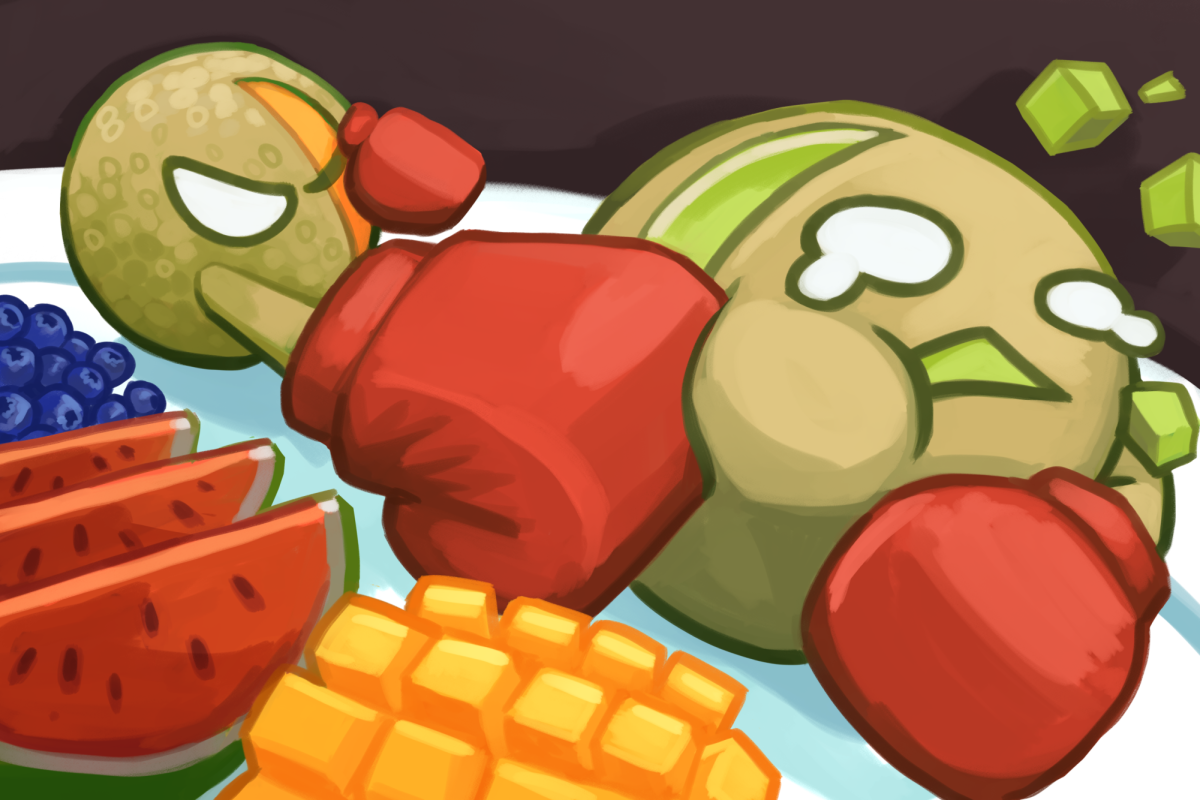
Honeydew and cantaloupe are staples of the fruit bowl. Often called “filler fruit,” they are typically settled on the bottom and provide a foundation for sweeter delicacies like blueberries and grapes.
You may come across these and other filler fruits—like watermelon and pineapple—in pre-packaged containers at the store or on buffet fruit platters.
And there is a very pressing, polarizing question: Which is better, honeydew or cantaloupe?
Both honeydew and cantaloupe are proud members of the Cucumis melo species — melon. Their growing season is from about mid-summer to October. California is the leading domestic producer of honeydew and cantaloupe in the United States.
Honeydew has a greener color and is served in cube form. On the flip side, cantaloupe is orange and, while also primarily served cubed, is at times shaped into balls by hand. For those interested in balling cantaloupe — or cantaloupe-balling, if you will — consider purchasing a stainless steel melon baller.
Get The Daily Illini in your inbox!
Honeydew is known for being firmer compared to cantaloupe’s softer, more welcoming texture. The former has a smooth, light-colored rind that contrasts with the latter’s darker, netted rind.
According to registered dietitian SaVanna Shoemaker, “Both honeydew and cantaloupe are rich in fiber, vitamins, minerals, and plant polyphenols.” They can also help decrease body inflammation and improve skin health.
These melons are identical in water content — 90% — and similar in calories, fat, protein, carbs and fiber. However, cantaloupe far surpasses honeydew in vitamin C, with a one-cup serving having 95% of the recommended daily value compared to 51%, respectively. Despite cantaloupe’s clear edge in nutritional value, its netted rind makes it prone to bacterial contamination.
For those fruit lovers out there looking for the best of both worlds, never fear! Scientists have crossbred the best of honeydew and cantaloupe into a third fruit: the Galia melon. According to Agri Exotic Trading, “The musky quality of the cantaloupe is tamed in favor of its honeyed flavor.” Released in 1973, the Galia melon has a latticed rind and light-green flesh. Morocco, Turkey and Spain are the main Galia melon producers in the world.
I agree with Jerry Seinfeld when he asks, “What kind of scientists do this type of work? … Other scientists working on AIDS, cancer, heart disease — these guys are going, ‘No, I’m going to devote myself to melon.’”
While there are pros and cons to both, I see a clear answer to which is the superior filler fruit.
It’s cantaloupe. Whether it be balled or cubed, there’s no debate. The soft, unassuming cantaloupe is far superior to the crunchy, flavorless honeydew.
In a fruit bowl, the filler fruits must be large and tasty. The cantaloupe does just this: It’s got a little sweetness to it, a little character. But it doesn’t stand out; it’s easy to down without thinking too much about it.
On the other hand, honeydew makes you think because of its uselessness. I’ll bite into it and think, “Wait, I didn’t know air was crunchy?” Most of the time, I just eat around it.
Honeydew has no taste, not to mention its far lower vitamin content. It has no right to be in the same league as cantaloupe — it’s not even in the same ballpark. It’s not even playing the same sport.
Cantaloupe beats honeydew in all categories and kicks it in its flavorless green flesh.
We should kick honeydew out of the running for fruit bowl fillers. Perhaps we could bring in its close relative, the Galia melon, to replace it in a contentious, nepotistic changing-of-the-guard. Watermelon and pineapple can also serve as delicious platforms for blueberries, blackberries, kiwis and other low-percentage fruits.
If I’m going on Amazon and spending $12 on a melon baller, I certainly will not waste its precious stainless steel on the vegetable-esque, nutritionally inferior honeydew.
Next time you’re at a buffet or the store or maybe need to fill the awkward silence in the elevator, ask yourself and the person next to you: Which is the better filler fruit? Honeydew or cantaloupe?
And answer correctly.
Alex is a freshman in Business.