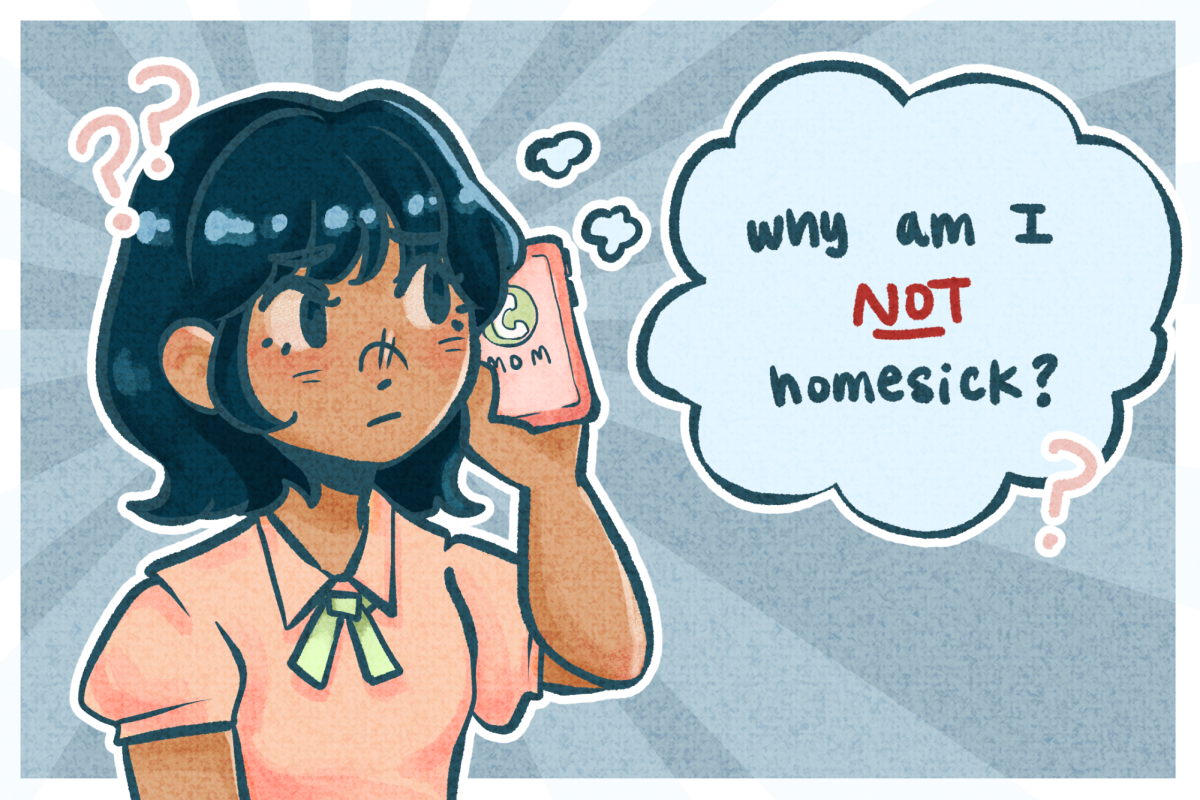
It’s officially the sixth week of the new semester here at the University — or, by the time you read this, the start of the seventh. How’s everything going? Fortunately, I have made quite a bit of progress in adapting to courses, clubs and social life — except when it comes to staying connected with my family.
For international freshmen like me, living alone in a foreign country means placing a vast ocean — both physical and emotional — between yourself and the people you’ve grown up with. The only thread that connects us now is often a video call. Over time, the distance begins to take a toll, quietly settling into a deep sense of homesickness.
Or does it? Strangely, that feeling of nostalgia hasn’t happened to me.
In fact, things haven’t unfolded the way I expected. I’m not overwhelmed with tears during family calls, nor do I feel the emotional distance that so many of my peers describe. My days have been packed with new friendships, midterm exams and an endless string of activities. College life is so full that I’ve barely had the time — or the mental space — to reflect on how I feel about my parents, now a world away across the Pacific Ocean.
That probably sounds like an excuse, maybe one masking a lack of compassion. After all, my parents certainly don’t see it that way. During our weekly check-ins, they always try to keep me on the line longer.
Get The Daily Illini in your inbox!
They ask the same questions: “How often are you running these days?” or “Tell us more about your roommate.” They offer long-winded advice on nutrition and sleep — neither of which currently tops my priority list — and sometimes they just sit quietly, smiling faintly at me through the screen.
Their concern is genuine. In contrast, I often come off as distant, and I’m painfully aware of how that sounds. It’s not that I don’t love my family. It’s just that we’re experiencing this transition very differently. The tension between building a new life and feeling obligated to perform nostalgia for the old one has become a quiet, persistent emotional dilemma.
But after six weeks of reflection, I’ve come to terms with something that may feel uncomfortable to say aloud: I don’t feel homesick. And that’s OK.
Here’s what I’ve learned about how to maintain a natural connection with your family, even when you’re not always eager to carve out time, and what I hope might resonate with others navigating the same emotional contradiction.
- Understand why family connection can feel emotionally distant
Staying connected with family can feel like stepping back into a version of ourselves we’ve worked hard to outgrow.
Before college, our time was often dictated by parental expectations, from how we spent weekends to what we ate to the hobbies we pursued. In many households, decisions were made for us long before we were trusted to make them ourselves.
College represents the opposite: freedom, autonomy and ownership of our time and identity. It’s thrilling, and sometimes, staying in close contact with home feels like a return to a more constrained self, one we’re not eager to revisit.
That dissonance doesn’t make you heartless. It makes you honest. It means you’re evolving — and noticing where your past and present sometimes clash.
- Consider what it means for your family
Yes, it’s a cliché, but placing yourself in your family’s shoes is more than just a sentimental exercise. It’s a necessary act of empathy.
Regardless of how strict or protective your family may have been, their rules were (in most cases) rooted in love. They helped you reach this stage safely, with the intention of one day letting you go. That day has arrived.
While it may be thrilling for you, it can feel like a quiet loss to them. What you experience as a beginning, they may feel as an ending, or even a sudden pause.
Understanding grief doesn’t require guilt. But it does offer something important: a bridge between your new life and the one that shaped you. It’s a chance to reconcile with the past, not by reliving the restrictions, but by honoring the care that came with them.
- Reframe what “staying in touch” really means
For me, staying in contact with my family used to feel like a compulsory assignment, as if I owed them a detailed report of my week, regardless of whether anything new had happened. I felt pressured to come up with stories, updates or “proof” that I was thriving.
But here’s the truth: Our families aren’t expecting a TED Talk.
They don’t need a script. They don’t want headlines. They just want reassurance. They want to know we’re safe, healthy and becoming who we set out to be.
Connection isn’t an obligation. It’s not surveillance, but a thread that quietly binds us to where we came from. It’s a canal, carrying love, care and history in both directions, or a blanket, woven slowly by every call, every smile, every awkward silence. Rather than a burden for the child or a duty for the parent, family connection is a shared responsibility, carried gently by both sides.
So, on the Saturday evening of the sixth week, I picked up my phone — not out of guilt, not to perform, but simply to be present. I let the screen glow, waited for their familiar faces to appear, and smiled.
Yueran is a freshman in Media.