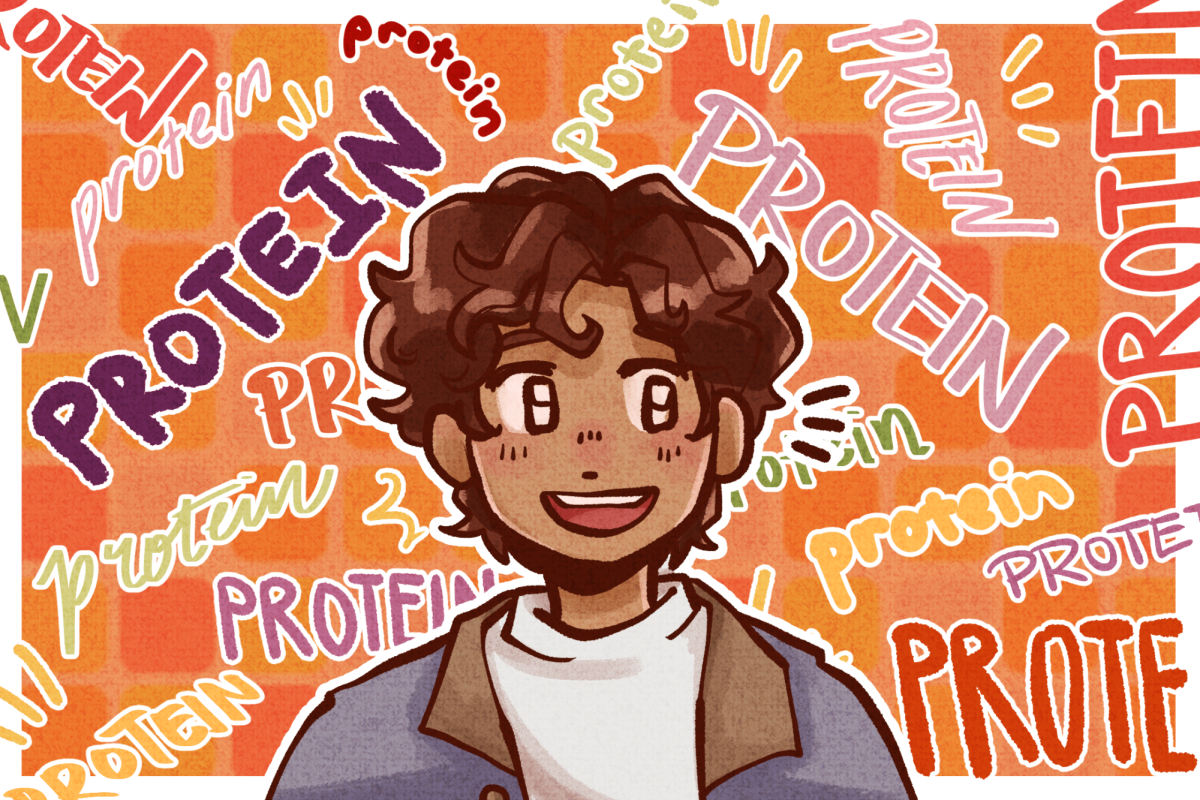
It’s 2026 and you’re strolling through the Target grocery aisles, your eyes lighting up at every sight of the people’s new favorite word: “protein.”
You fill your cart up with the epitome of health: protein waffles, protein popcorn, protein pasta, protein Pop-Tarts and a few bottles of protein water. You skip the produce aisle because there’s no “protein” label on the broccoli, so it can’t be that important. You bag up your haul and leave. Maybe you swing by Starbucks for a protein latte because you’ve only had 70 grams of protein today — and it’s already noon!
Although this is an exaggerated representation of the current American’s grocery habits, it’s undeniable that protein has us in a chokehold. Fitness influencers, food brands and society as a whole have convinced us that no matter what your diet is, you need to be eating more protein.
“Protein-maxxing” has become so normalized that it’s easy to fall victim to the fad. But, at the center of the craze, it’s more than just influencer culture and brands pandering to consumer trends — it’s political. What feels like a new phenomenon is actually closely tied to traditional values that have snuck their way back into popularity with the recent rise of conservatism.
Protein’s political power today is best understood when looking back at what was, in a way, its opposite: veganism. The plant-based diet was at its height recently, with meat substitutes popping up in grocery stores similarly to how protein-enriched foods are today.
Get The Daily Illini in your inbox!
Although veganism was associated with health and wellness, with the vegan diet being associated with lower blood pressure and cholesterol, its popularity was about more than just health. It was rooted in reducing one’s participation in a system that mistreated animals and polluted the planet, which is why veganism became so associated with “wokeness.”
Prioritizing the well-being of animals or the health of the planet, or other values aligning with woke or liberal ideals, no longer aligns with current dominant politics in a world of rising conservatism.
Wellness culture has since shifted to centering protein, which is highly linked to the consumption of meat and animal products — the most protein-rich foods you can get. Meanwhile, veganism is losing popularity and vegan restaurants are closing. Although the politics in a protein-maximizing diet aren’t as immediately clear as with veganism, they’re still there, and it comes down to conservative ideals of manhood and womanhood.
Protein has appealed to men with promises of strength and muscle growth, things we associate with masculinity. Protein has enticed women as consuming it can keep you fuller for longer, thus creating less desire to eat and contributing to weight loss. There are exceptions to this, but these are some of the reasons why protein gained so much traction on social media and then among food retailers.
Conservatism is tied to traditional gender roles, and our physical bodies are a significant aspect of that. Strength and physical masculinity are expected for men to fulfill their traditional roles as hunters, protectors and providers.
The way conservatism is tied to standards of thinness for women comes down to keeping women submissive, obedient and in other words, easy to control. Feminism and conservatism are also often clashing, and promoting difficult-to-achieve beauty standards is another tool to distract women in a system that oppresses them so they don’t focus on organizing for change.
The conservative beliefs of what men and women should look like can also be seen in the way non-conformists, namely many queer and trans individuals, receive backlash for their bodies and presentation, or how conservatives are fighting against “gender ideology” as a whole while promoting traditional views of masculinity and femininity.
Many people who are participating in the protein craze are likely unaware of the politics at play; they’re doing it for their personal health since that’s what it is marketed as.
But at the end of the day, the protein craze as a whole can’t be attributed to just wellness. The reality is most people are already hitting their protein goals based on what nutritionists recommend. The minimum amount of daily protein that people need varies between studies, but is generally considered to be around 0.8 grams per kilogram of body weight, 0.36 grams per pound or more for older people, pregnant individuals and athletes.
This means that an approximately 150-pound individual would need about 55 grams of protein daily, a number that many people hit easily, especially those who eat foods like meat, eggs and Greek yogurt regularly.
It’s never bad to make healthy choices when it comes to food. But, it’s important to do it mindfully and understand your own needs and dietary habits without jumping onto wellness trends promoted by influencers rather than nutritionists.
It’s also important to remember that wellness trends are political because food is political — politics affects the food people have access to, the food they can afford, where they buy it and the food they ultimately choose to consume.
Participating in wellness culture fads may not feel like a political decision, but it can be the first step down the path to developing a strong political identity on either end of the spectrum. It opens doors for more influencers and trends with political agendas and subtexts to push politics into our daily lives, whether we realize it or not.
Makenna is a junior in LAS.