The scariest thing about greenwashing isn’t that it exists. It’s that it’s working.
Walk down any aisle, and you’ll see the same comforting story: eco-friendly, planet-positive, conscious, sustainable. It’s a chorus of corporate reassurance at the exact moment the climate is getting uglier, not prettier.
Here’s the uncomfortable truth: Sustainability has become a marketing aesthetic, and brands have learned they can sell you “green” without actually changing much of anything.
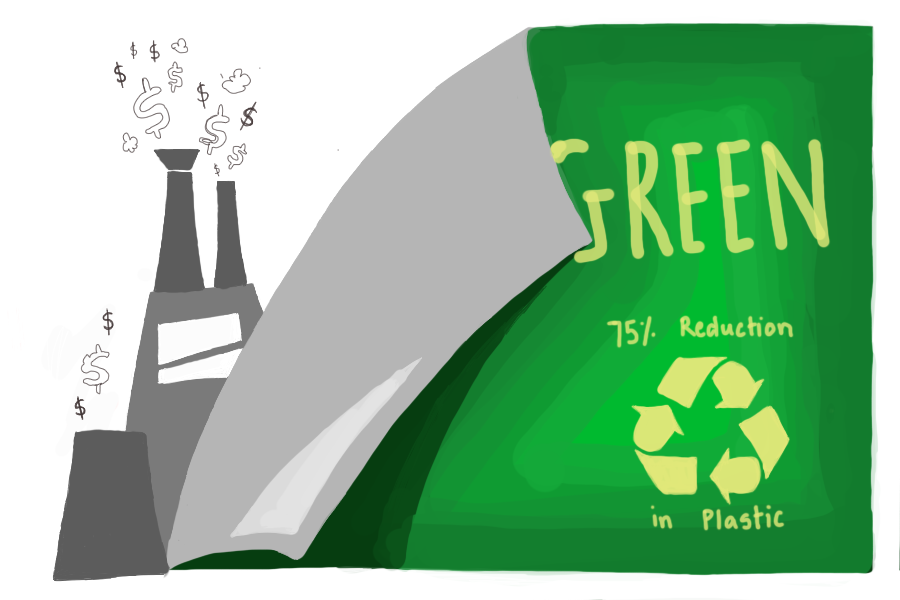
Greenwashing is when a company implies environmental virtue that its products, processes or impact don’t support. It’s not just a few bad labels. It’s a system where vague claims and glossy campaigns distract from overproduction — while consumers pay extra for the illusion.
European regulators have already put numbers on the problem. In a European Economic Area-wide sweep coordinated by the European Commission and carried out by the Consumer Protection Cooperation Network, authorities assessed 344 online sustainability claims.
Get The Daily Illini in your inbox!
They found that in 57.5% of cases, traders did not provide sufficient information for consumers to assess the claim’s accuracy. In 37% of cases, claims used vague terms (e.g., “eco-friendly” and “sustainable”) to give the impression that a product or business activity had no negative — or only positive — environmental impact.
That vagueness is the whole game. A label like “made with sustainable materials” can mean some recycled content, in one component, for one product line, while the business continues scaling output and burning fossil fuels worldwide.
The tragedy is that consumers are trying to reduce their environmental impact through what they buy. PwC’s 2024 Voice of the Consumer survey found that consumers say they’ll pay a sustainability premium — an average of 9.7% above the price of conventional alternatives — when they believe products meet environmental criteria. That willingness is supposed to reward real innovation, but greenwashing turns it into a tax on good intentions.
And consumers know they’re being played. Deloitte reports that 49% of shoppers question whether companies’ sustainability claims are genuine. Forty-six percent say they avoid paying a premium because the claims are confusing or difficult to verify.
When brands exaggerate their environmental credentials, they undermine the credibility of the entire market. This includes companies that are genuinely reducing their impact.
Fashion is where this theater is loudest, because the industry’s footprint is massive, and the marketing is relentless. The U.N. has warned that the fashion industry is responsible for up to 8% of global greenhouse gas emissions and contributes heavily to global water pollution.
Despite this environmental footprint, fashion brands continue to release heavily marketed “conscious” or “sustainable” collections that present clothing as environmentally responsible. Yet, the overall production model remains largely unchanged.
One reason fashion greenwashing thrives is that metrics can be weaponized. In 2022, reporting around H&M’s product “scorecards” tied to the Higg Index sparked a backlash over consumer-facing environmental ratings that were criticized as misleading and incomplete, prompting pauses and regulatory scrutiny. It was a perfect case study in how a shiny number can obscure what matters: total volume, material choices and end-of-life reality.
Regulators are starting to swat the worst offenders. On Dec. 3, the United Kingdom’s Advertising Standards Authority banned Google ads for Nike, Superdry and Lacoste after ruling that their unqualified “sustainable” claims exaggerated environmental benefits and risked misleading shoppers.
The same crackdown is hitting travel, where “sustainable flying” is the most ambitious oxymoron in modern advertising. In 2024, a Dutch court ruled that KLM’s “Fly Responsibly” campaign misled consumers by painting “an overly rosy picture” of measures like sustainable aviation fuel and reforestation. The court emphasized that future environmental claims must be “honest and concrete.”
Cases like KLM’s show how companies often spotlight small environmental initiatives while leaving the core impact of their business models largely unchanged. Then there’s packaging — where greenwashing often hides in plain sight behind “recyclable.”
The Organisation for Economic Co-operation and Development’s global plastics analysis is brutal: After accounting for losses, only 9% of plastic waste was ultimately recycled, with the rest incinerated, landfilled or mismanaged.
So, when a brand leans hard on recyclability as its main “eco” credential, it’s often selling a theoretical benefit that real infrastructure can’t deliver at scale.
Keurig is a textbook example of that mismatch. In 2024, the United States Securities and Exchange Commission fined Keurig Dr Pepper Inc. $1.5 million over deceptive statements about the recyclability of its K-Cup pods. The SEC said the company failed to disclose that major recycling firms had questioned their practical recyclability and had no plans to accept them.
That’s greenwashing in its modern form; it’s less about blatant lies and more about strategic omissions.
Plastic pollution also exposes the “we’re improving” narrative that collapses under simple counting. The Break Free From Plastic Movement’s 2023 Global Brand Audit again ranked Coca-Cola as the top global plastic polluter (with other major multinationals close behind). You can run a heartfelt “World Without Waste” campaign and still flood the world with disposable packaging.
So what does real sustainability look like, at minimum? Specific claims tied to measurable outcomes, backed by evidence you can inspect, not feelings you’re expected to trust.
It’s full-lifecycle thinking (materials, manufacturing, transport, use and end-of-life), not cherry-picked improvements in one sliver of the chain. And it’s also a restraint: fewer products, longer lifetimes, repairability and systems that make reuse normal rather than niche.
Some companies have begun experimenting with this approach. Outdoor apparel brand Patagonia, for example, encourages customers to repair and reuse clothing through its Worn Wear approach and designs products for longer lifetimes rather than rapid replacement.
While not perfect, initiatives like this attempt to reduce overall consumption rather than simply marketing a “greener” version of the same product.
Greenwashing survives because it’s cheap and effective. Real decarbonization is expensive and operationally painful — exactly the kind of work that doesn’t fit neatly into a three-word label.
The climate crisis does not need more brands expressing concern. It needs brands doing the boring, verifiable work — and being brave enough to publish the receipts.
Adi is a freshman in LAS.