There’s a phrase going around: “Women don’t want men anymore.” Men on the internet bristle at it, as though it’s a threat to their species. But what if it isn’t about rejection, but about change? About how women’s desires start to shift and evolve toward bisexuality when men lose the structural power they once held.
If longing were a landscape, it’s being redrawn. And this time, its boundaries are less “straight.”
For centuries, heterosexual pairing served a function: survival. A woman could marry, lean on a husband’s income and, in return, conform: nurture, reproduce and provide domestic care. True desire was secondary — necessity constrained attraction. In that world, heterosexuality wasn’t just a preference; it was a contract.
Today, that contract is unbinding. Women are breadwinners. Women own homes. Women’s labor is indispensable. As dependence loosens its grip, the psychic architecture that tied sexuality to utility begins to reconfigure itself.
Without economic coercion, the spectacle falters, and men have to compete differently. The old symbols of masculinity — the provider, the sovereign — no longer suffice. And when survival no longer demands compulsion, women’s desires start wandering in new directions, sometimes toward one another.
Get The Daily Illini in your inbox!
If you believe in evolution, it shouldn’t surprise you that sexuality evolves, too. I like to think of this in a Lamarckian light: Women’s increasing independence seeps into the next generation’s internal landscape. When women no longer have to orient their desire around men for survival, the attractions that remain are purer and more honest. The sexuality that bubbles up is less a performance, more a rewrite.
Psychologist Lisa Diamond has long argued that women’s sexuality is more fluid than men’s: more responsive to context, relationships and internal change. In other words, women’s desire is malleable. If the environment changes, the orientation doesn’t have to stay fixed. That isn’t to say orientation is shapeless, but that it has plasticity.
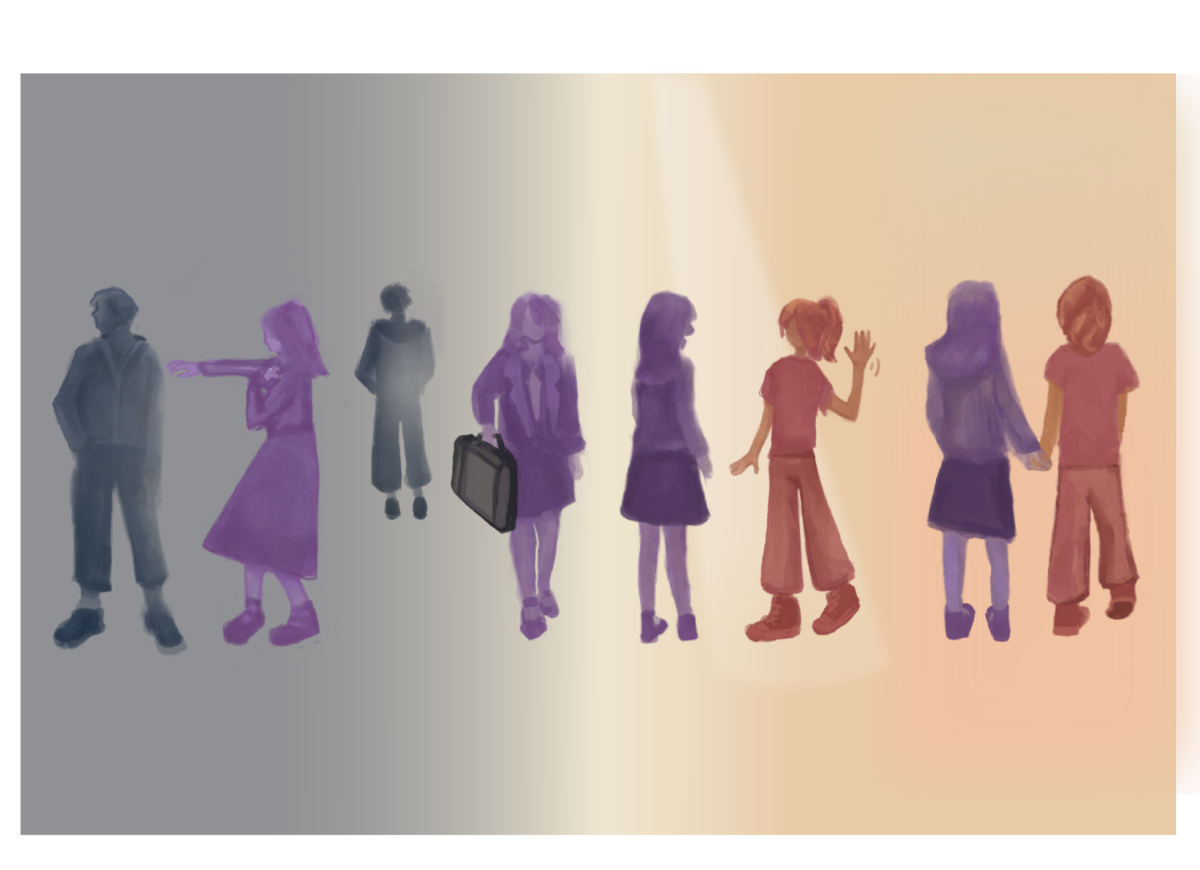
Another way to consider the change is as a matter of expression. In environments of constraint, attractions may lie dormant, unspoken. In environments of freedom, they can bloom.
Recent work backs this: A global study found that gynephilic (attraction to women and/or femininity) and non-heterosexual patterns in women varied widely, both explicitly and implicitly. Expression wasn’t uniform; it bent and stretched across cultures, shaped by what each society permitted women to say aloud.
A 28-nation survey reinforced this point, examining whether economic development or gender equality correlated with women’s orientation labels. Interestingly, the authors found no consistent association — a sign that orientation itself may have deep biological and psychological roots.
What changed wasn’t desire itself, but the space it was given — proof that biology may set the chords, but culture decides the volume. So what if we’re witnessing less “more women turning bisexual” and more “more women finally naming what was already there, when the constraints loosen”?
Regardless of the method, even as women’s autonomy expands, structural inequality tethers it. As a group, bisexual women often face higher economic and social vulnerabilities.
Studies show that bisexual women are more likely to live in poverty compared to straight women. The disparity underscores how intersecting systems of prejudice continue to penalize bisexual women, even as they gain autonomy.
Freedom isn’t free; the women who break the rules often pay for it in other currencies.
One of the heaviest costs bisexual women carry is the burden of proof: “Are you sure?” “Is this a phase?” “You’ll end up with a man anyway, right?” The insistence that same-sex attraction is curiosity, performance or experimentation. These questions are not asked out of interest, but rather as a boundary enforcement.
Age-old systems built on dominance fear a sexuality that doesn’t need it to exist. Instead of respecting choice, it demands confession. It refuses to trust female desire unless that desire circles back to men.
Ask: Why do women need to prove that they really like women?
Because the world is reluctant to let women choose women freely. Because when a system is built on your erasure, claiming your fluid self feels like rebellion.
That unspoken demand polices how women love long after the laws change. The demand to prove is itself a cage — invisible, but still built by patriarchy.
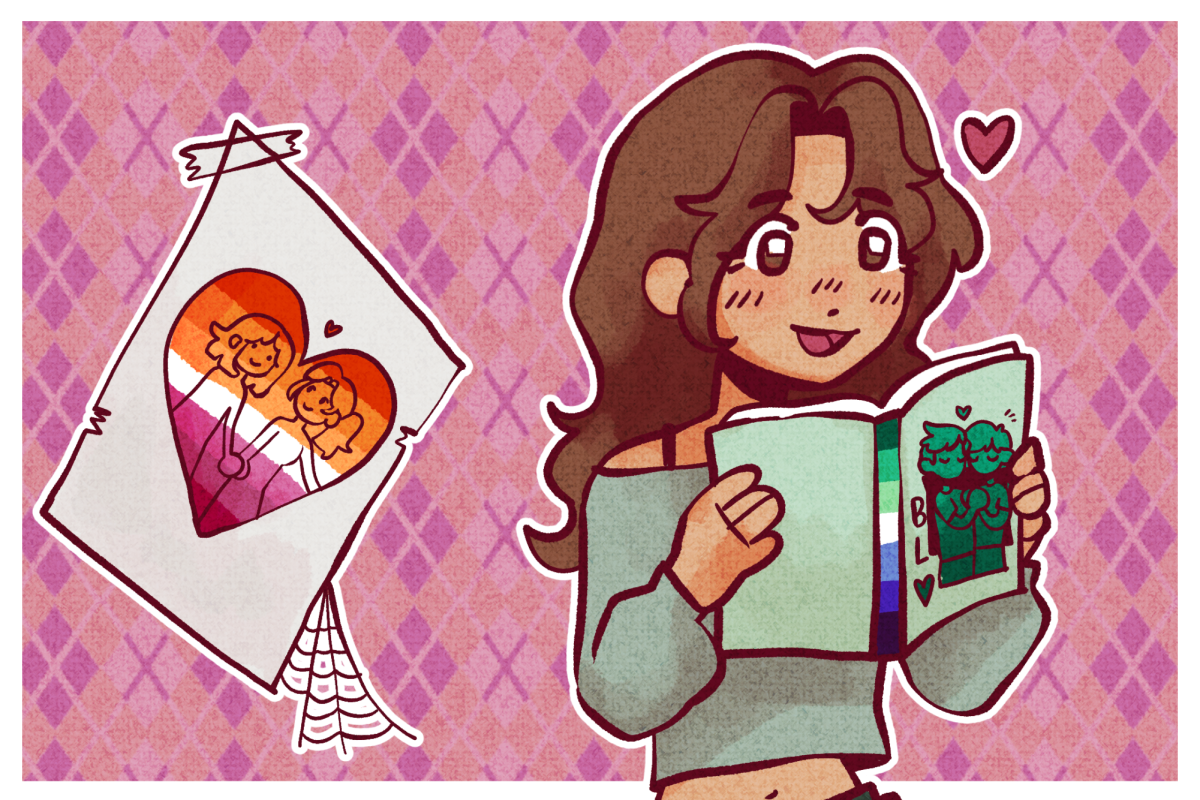
Not just that, the male gaze even made bisexuality into a fetish, not an identity. Men could enjoy the fantasy of “women who like women,” so long as it didn’t threaten their dominance. Bisexuality became aesthetic, not existential.
I don’t think this shift is about rejecting men out of spite. It is not an anthem of exclusion but rather a song of reclamation. Bisexuality emerges not because women suddenly hate men, but because women can now claim a spectrum of love without needing men’s permission.
Every time a bisexual woman stops performing for male approval, she rewires the scaffolding of desire. Every time she chooses a woman, she unravels centuries of logic that insisted her body’s purpose was provisioning.
When I say I’m bisexual, it’s not a protest; it’s peace. It’s not a loud warning at patriarchy’s door — it’s a quiet redrawing of the map.
This is fragile territory. Many men will resist. Many will argue that this “rise” is trendy, reactionary or a symptom of dating app fatigue. Others will accuse bisexual women of being promiscuous, disloyal and romantic nihilists. But perhaps what’s dawning isn’t radical refusal so much as evolutionary recalibration — desire unmoored from obligation.
I don’t know if a hundred years from now we’ll look back and see this as a fault line or a new foundation. What I do know is this: We are alive in the moment when desire starts speaking in a woman’s voice.
The next time someone whines, “Nobody wants men anymore,” I won’t bristle. I’ll nod. Because women have finally learned to want what they want, unshackled.
Naavya is a senior in LAS.