**Content warning: Mentions of sexual assault.**
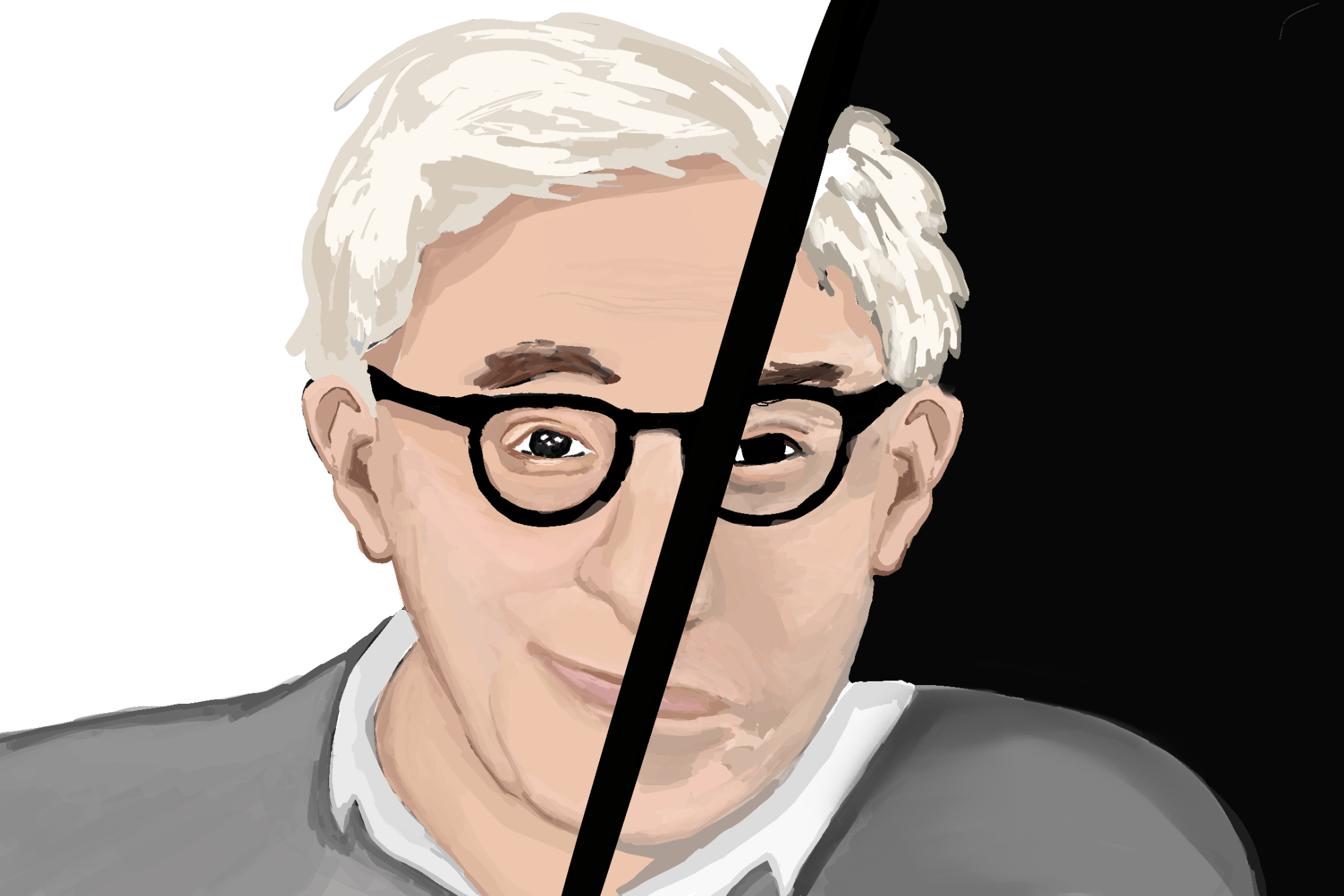
In August 1992, prolific filmmaker Woody Allen was accused by his former romantic partner and frequent film collaborator, Mia Farrow, of sexually molesting their 7-year-old adopted daughter, Dylan Farrow.
Seven months before that, Mia Farrow found nude photographs of her 21-year-old adopted daughter, Soon-Yi Previn, in Allen’s home. Allen confessed he had taken them. Previn was not Allen’s legally adopted daughter, nor did she consider him a father figure.
While Mia Farrow accused Allen of molestation, Previn accused her of being verbally abusive.
Get The Daily Illini in your inbox!
In 1997, 62-year-old Allen married 27-year-old Previn. Unusual? Yes. Illegal? By the accounts, not technically.
Allen is one of the most decorated and influential filmmakers in cinematic history. He has written and directed films like “Annie Hall,” “Crimes and Misdemeanors” and “Midnight in Paris.”
The scandals in the 1990s scarred Allen’s reputation. While he has continued making movies, he rarely receives media attention. Actors publicly regret working with him, and some critics say they can’t watch his movies anymore.
Should we dismiss Allen’s films because of the accusations? No.
This is not encouragement for perversion among artists, nor does it suggest Allen is exempt from the consequences of serious criminal acts because he is a celebrity. We should, in no way, condone artists’ personal actions as necessary for the creation of their work.
We should also not seek to dismantle great art as part of a narrative to diminish the works of less-than-great people.
In his essay “The Death of the Author,” French literary theorist Roland Barthes posits that the reader must separate the author from a text, or else it limits the potentially infinite meanings of a work of art.
Oliver Tearle, lecturer of English at Loughborough University, summarizes Barthes’ theory: “The meaning of a text lies ‘not in its origin but in its destination’ … we must do away with this idea that the author determines the meaning of the text.” Once a work of art is complete, the reader — or viewer — takes over. The art is open to any and all uses and interpretations of the consumer.
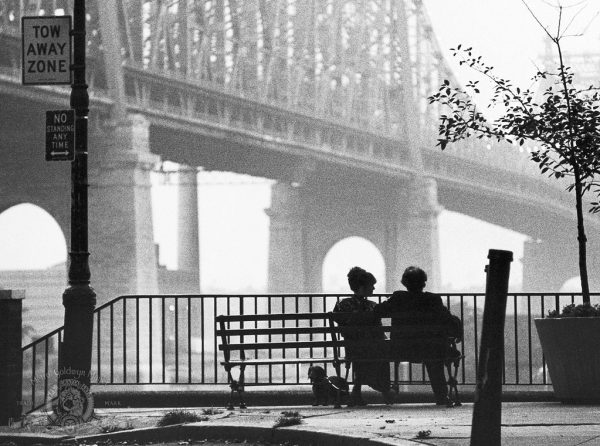
Allen’s “Manhattan” is a film about a neurotic TV writer, Isaac, whose wife left him for another woman. Isaac is dating a 17-year-old girl and has quit his job. He then finds himself in another relationship with his best friend’s mistress. That sounds familiar. And creepy.
“Manhattan” is also a visually and verbally beautiful film with universal themes of forbidden love, growing old and coping with a loss of control over one’s life. Regardless of how Allen conceived of such a script, the film contains important artistic material that need not be dragged down by its writer’s reputation.
There are numerous examples of celebrated art from artists with troubled backgrounds: John Lennon led the most popular band in history and abused his wife and son; Ernest Hemingway was a “faithless husband” and alcoholic and wrote “The Old Man and the Sea”; Harvey Weinstein was convicted of sexual assault and produced “The Lord of the Rings,” “Paddington” and “Pulp Fiction.”
It is easy to find connections between any work of art and a controversial person or belief. So where should we draw the line? Were moviegoers financially supporting sexual assault by buying a ticket to “Paddington?”
It is regressive — not progressive — for society to refrain from consuming art based on media reports of an artist’s reputation.
The media is fickle and fertile ground for polarizing content. It can be incredibly useful and also incredibly misused. On one hand, The New York Times’ investigative reporters worked tirelessly to reveal the truth of Weinstein’s sexual abuse and bring (some) justice for his horrid criminal actions. This is a good thing.
On the other hand, the media can supplant opinions based on entertainment algorithms and ideologically-charged narratives.
For example, the public has scrutinized actors Pedro Pascal and Ryan Reynolds for being touchy with female co-stars and snappy with young reporters, respectively. While these could be controversial actions and suggest deeper scandals at play, they are rather fruitless headlines — and yet generated significant negative publicity for both celebrities. This is a bad thing.
The media’s flexibility does not suggest these people are innocent or that their accusers are lying. Rather, it shows that our perception of artists’ reputations is the product of inherently second-hand media sources designed to provoke and tell us what we want to hear. Both producers and consumers, at times, misinterpret or skew the media to fit a desired narrative.
In some cases, like with Weinstein, the facts are clear. In other instances, like with Allen, the situation is more muddled despite a seemingly societal consensus of his guilt.
Then again, maybe I, as the author, am biased.
I grew up watching Allen’s movies and have consciously and subconsciously presented his case in a favorable light in this article. A reader unfamiliar with his case may take my side here, whereas someone more educated than I on the facts may disagree. My own bias proves even more so how there is seldom a definitive narrative of an artist’s reputation.
Relying on reports rooted in the media opens the doors to ideologically-charged censorship. If we use generalized notions of who’s “canceled” or not, we allow the sources of artists’ reputations — media outlets — to control what we do and don’t consume.
Acknowledging and judging a controversial artist’s work should be left to the individual consumer and handled on a case-by-case basis.
If you individually disagree with an artist’s reported beliefs or bigotry, or are personally aware of their criminal actions, it is your every right to refrain from consuming or supporting their work. However, people should not be judged for appreciating the works of controversial artists who, in some cases, we actually know next to nothing about.
It is trickier when the artist’s scarred reputation comes directly from them, as is the case with rapper and songwriter Ye. He repeatedly makes hate-filled comments on social media, promoting antisemitism, Nazism and misogyny. His work, however, is considered some of the best rap music ever made.
Consider Barthes’ theory to “kill” the author — in this case, the artist’s reputation — at the instant of consuming art.
We can respect an artist’s past work but not respect the artist, acknowledging their faults while appreciating their oeuvre. We can also do our best not to support them in the future. This can be not listening to their new albums, not watching their new films or bringing forth legal justice for their criminal or hate-filled actions.
Regardless, we should not rely on media reports and trending narratives to determine what we do and don’t consume, nor refuse to acknowledge past works that are rooted in our cultural history. If we allow second-hand sources to determine our cultural palette, we become vulnerable to totalitarian censorship.
There are more questions to be asked than answered here: What determines someone being “controversial?” Is a criminal act against one victim any different from a criminal act against 20 victims because of numerical inferiority? Is there a difference in perception of an artist’s criminal actions and an individual’s, as there is with politicians?
Why do we have to attach political associations — “conservative” — to being less sensitive about an artist’s background? What degree of connection is the end of the line for financially supporting a negative cause? Is innocence not just ignorance of hypocrisy?
We should appreciate the limitless possibilities of art beyond the limits of the artist. In doing so, we can glean important perspectives and entertaining experiences from great works of film, music and more — recycling art, instead of searching for and inevitably finding reasons to avoid it.
Alex is a sophomore in LAS.